
This was our sixth trip to the Boundary Waters Canoe Area Wilderness, and our third with our dog, Alpha. She is a pro now.
We almost did not go. Lightning started a string of wildfires north of Ely in July, a big piece of the wilderness closed, and we pushed our trip back. It landed in the middle of September instead, right after Labor Day, which happens to be our favorite time to be here. It was our best year yet.
This is the whole trip: why we go in September, the four-day loop we paddled from Snowbank Lake, what three trips have taught us about canoe camping with a dog, the gear we loved, and the gear that is staying home next year.
September 15–18, 2026 · Entry Point 27, Snowbank Lake · 3 nights · Outfitted by Piragis Northwoods Company in Ely
Why September Is Our Favorite Month in the Boundary Waters
Our favorite time to go is right after Labor Day. The mosquitoes are gone. The crowds are gone. The water is still warm enough to get in. And the weather this year was absolutely incredible.
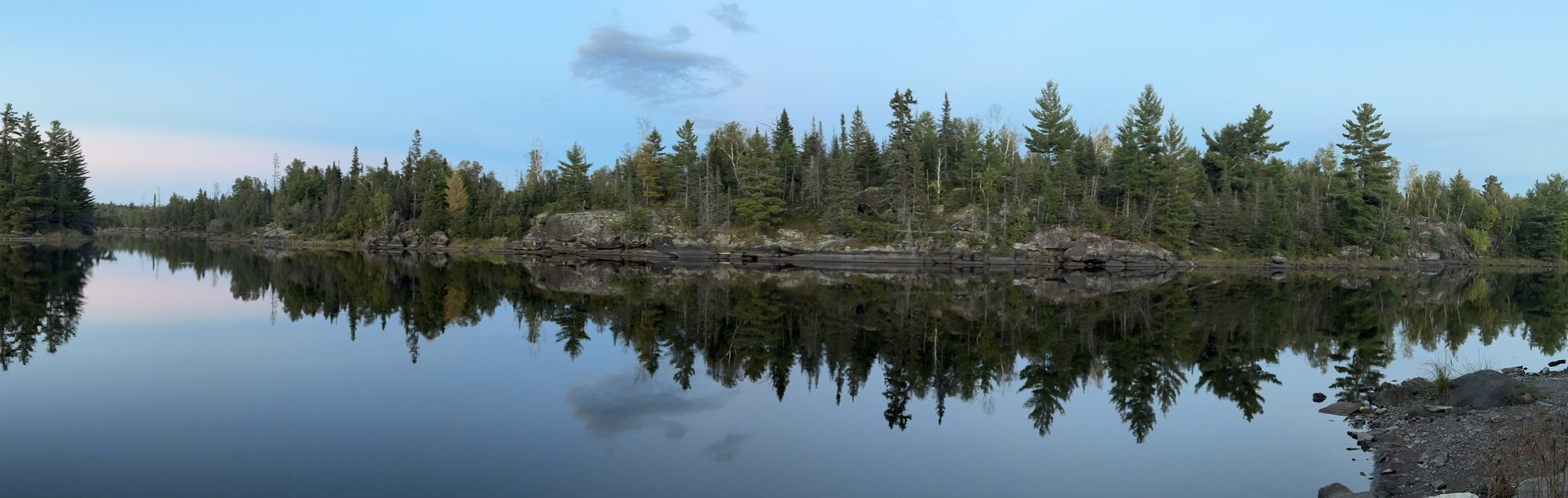
What Changes After Labor Day
| Midsummer | Mid-September | |
|---|---|---|
| Bugs | Black flies from late May through June, mosquitoes all summer | Gone |
| Crowds | The busiest stretch of the permit season | Gone home |
| Water | Warm | Still warm enough to get in |
| Daylight | About 16 hours in late June | About 12½ hours, with sunset a little after 7 pm |
| Days | Highs commonly in the 70s | Highs in the upper 60s on our trip |
| Nights | Lows in the high 40s to low 50s | Low 40s on our trip, and about 38 one night |
| Fall color | Not yet | Starting. Piragis puts the peak at mid-September through early October |
| Permits | Quota permit required | Quota permit still required through September 30 |
What to Plan For in September
- Cold nights. Ours were in the low 40s, and one got down to about 38. A warmer sleeping bag was the single biggest upgrade we made this year. More on that in the gear section.
- Shorter days. The sun sets a little after 7. Start looking for a campsite earlier than you would in July. Ask me how I know.
- A permit. Overnight trips need a quota permit through September 30, reserved on Recreation.gov for a specific entry point and date. It is $16 per adult for the trip, plus a reservation fee. From October 1 through April you fill out a self-issued permit instead.
- Fire restrictions and closures. Check the Superior National Forest alerts before you leave home, and again before you leave town.
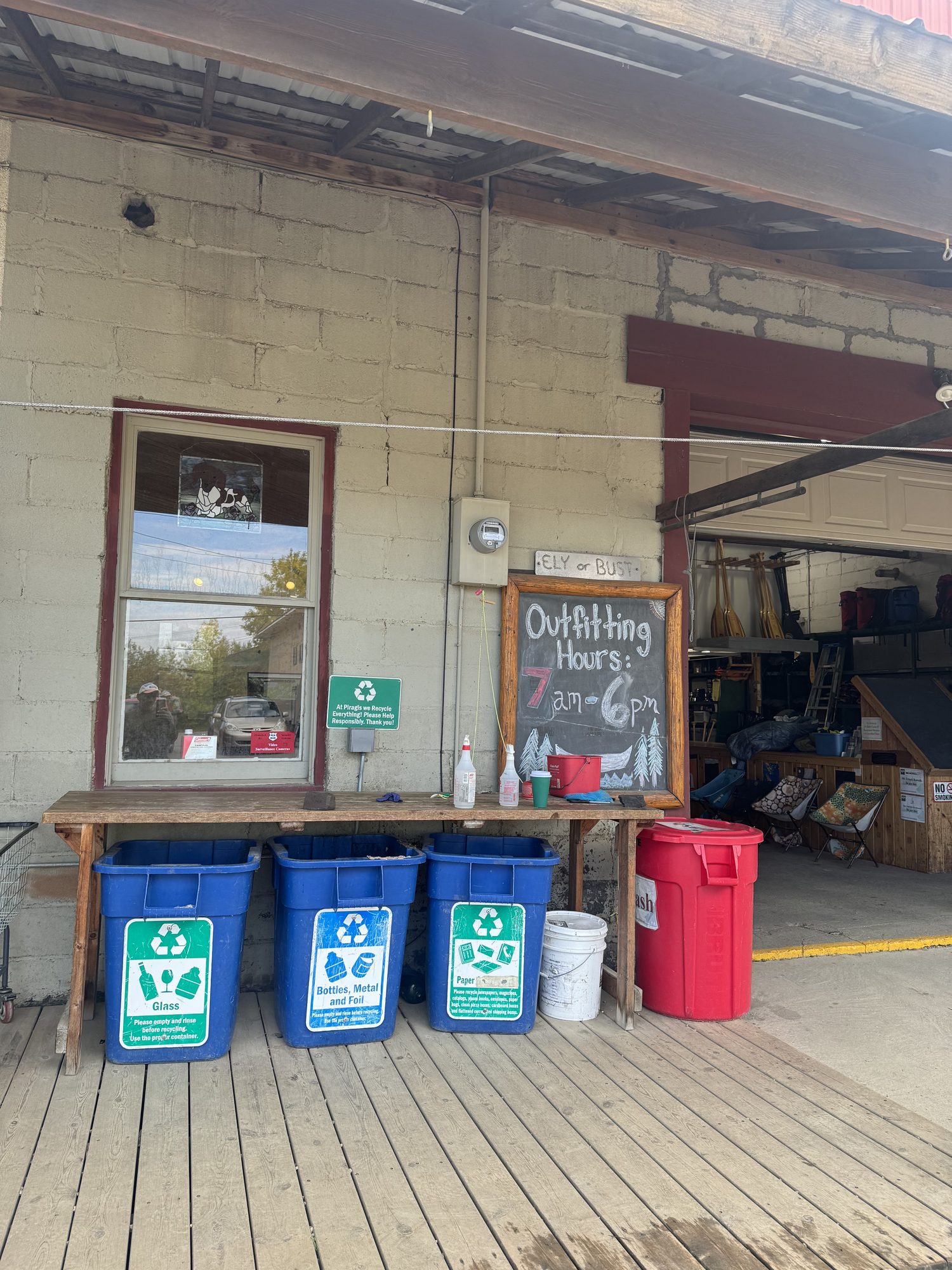
- Outfitter hours. They shorten late in the season. The board at Piragis read 7 am to 6 pm when we were there.
If this is your first trip, start with our Boundary Waters for Beginners guide. It covers permits, entry points and the best time to go in more detail.
After the 2026 Fires: Why We Went Anyway
On July 7, a lightning storm started a series of wildfires north of Ely. The Forest Service closed about 225,000 acres of the wilderness and the country along the Echo Trail, and banned campfires. Entry points reopened in stages through August and September.
We delayed our trip so we would not create more issues for the locals while they were dealing with the fires. We had not even booked a permit yet. Honestly, the later dates worked out well for us. But we truly wanted to make it up to Ely and the Boundary Waters this year, to support the people who support the wilderness.
So we spent money on purpose. Our outfitter, Piragis Northwoods Company, is a huge supporter of the Boundary Waters, so we rented extra gear from them and bought more in the store than we needed to. We ate in the restaurants. We drank the coffee. If you love a place, a hard year is a good year to show up.
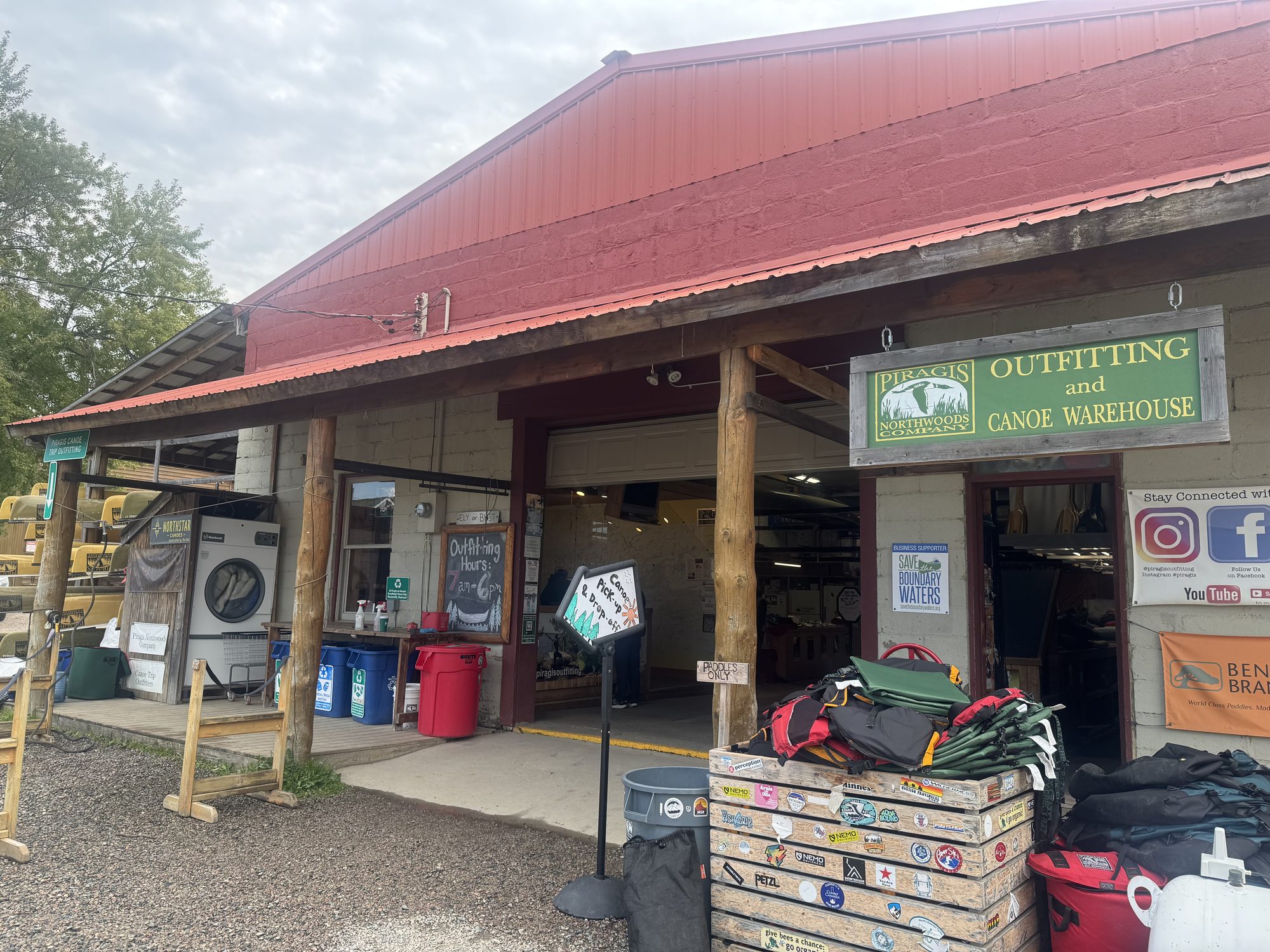
Our Outfitter
Piragis Northwoods Company
Dog FriendlyLocally OwnedKevlar Canoes
Canoe rentals from $45 a day, partial outfitting by the piece (sleeping bags, packs, tents, food storage), or complete outfitting where they pack everything.
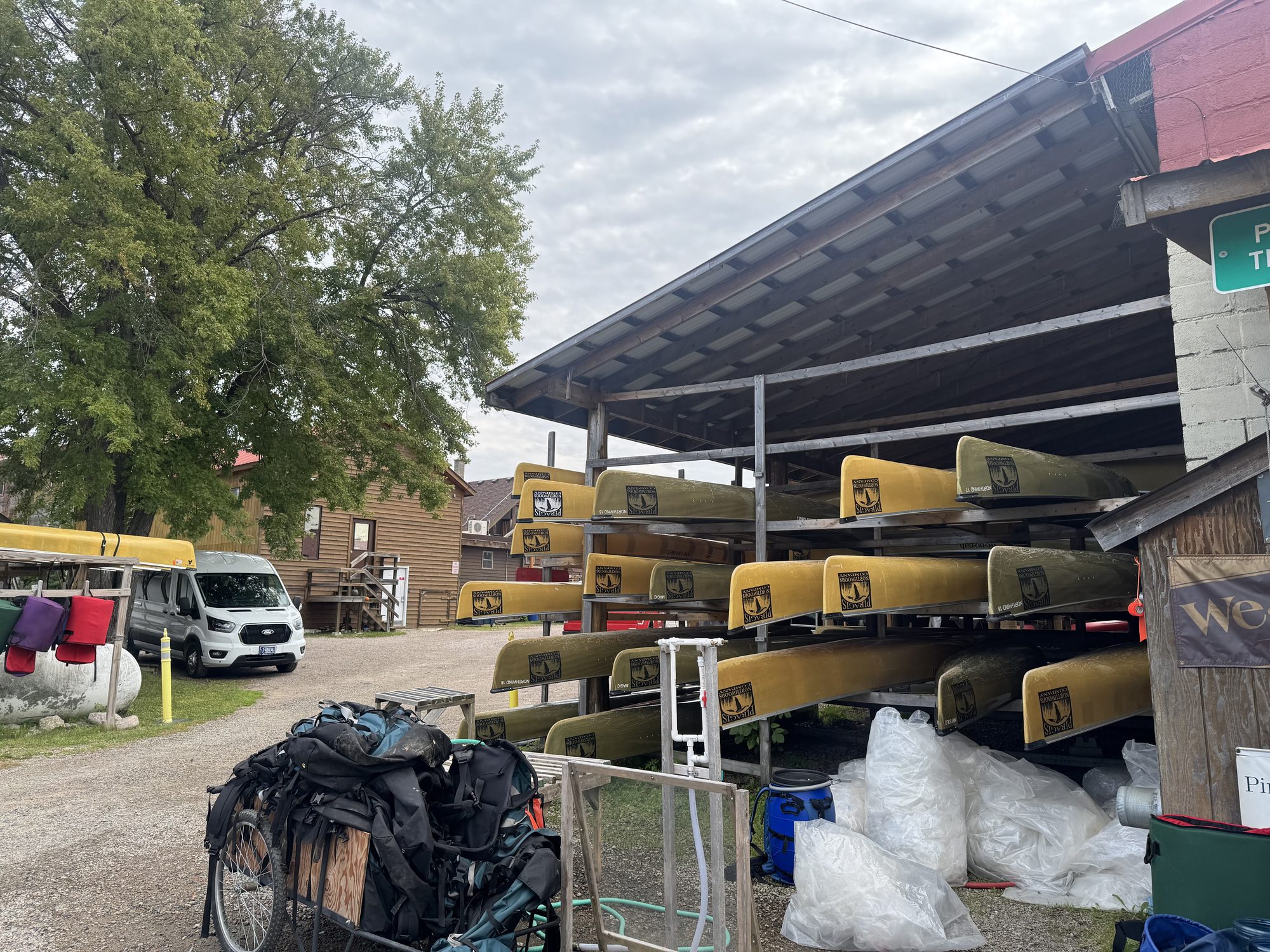
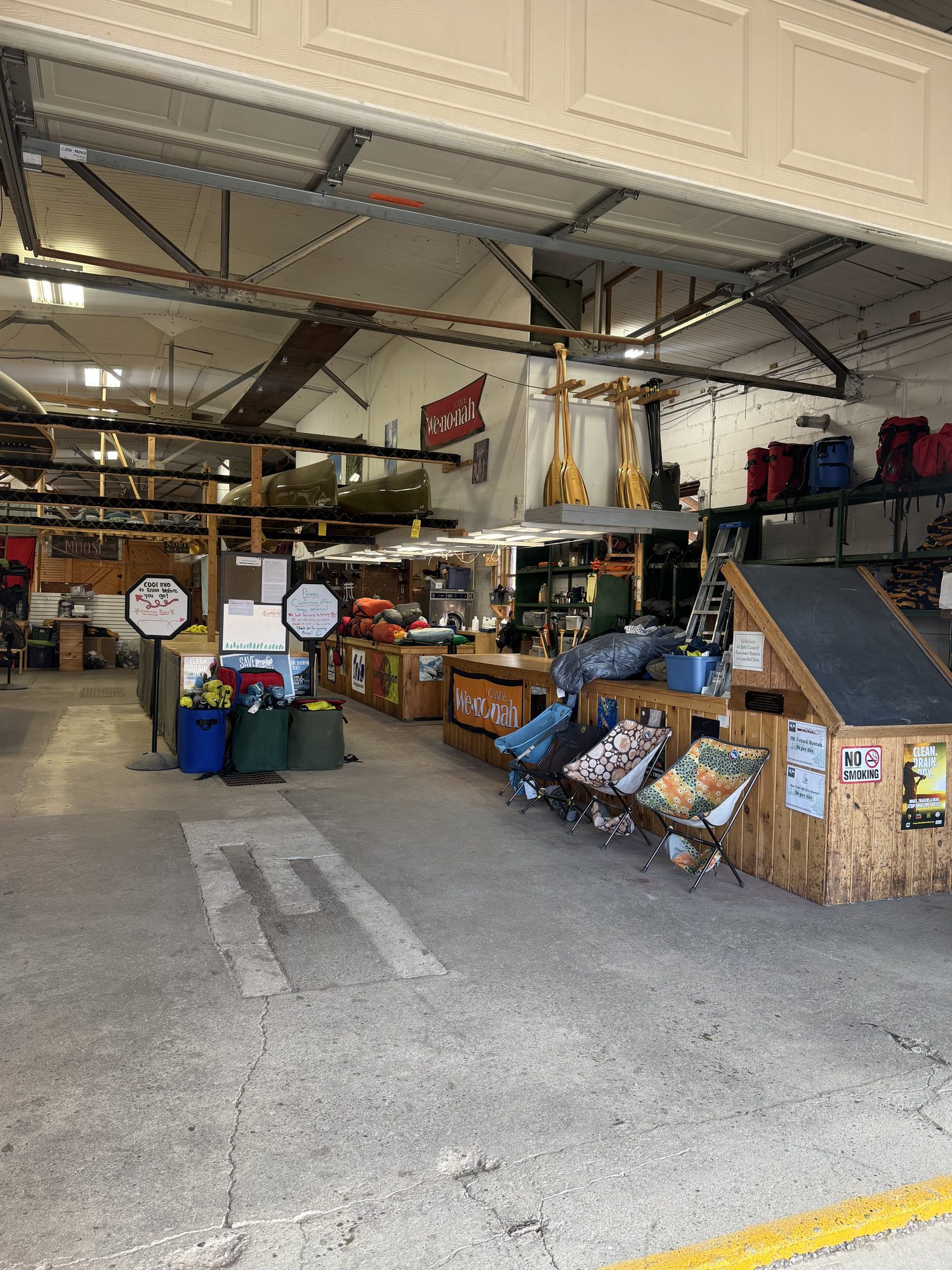
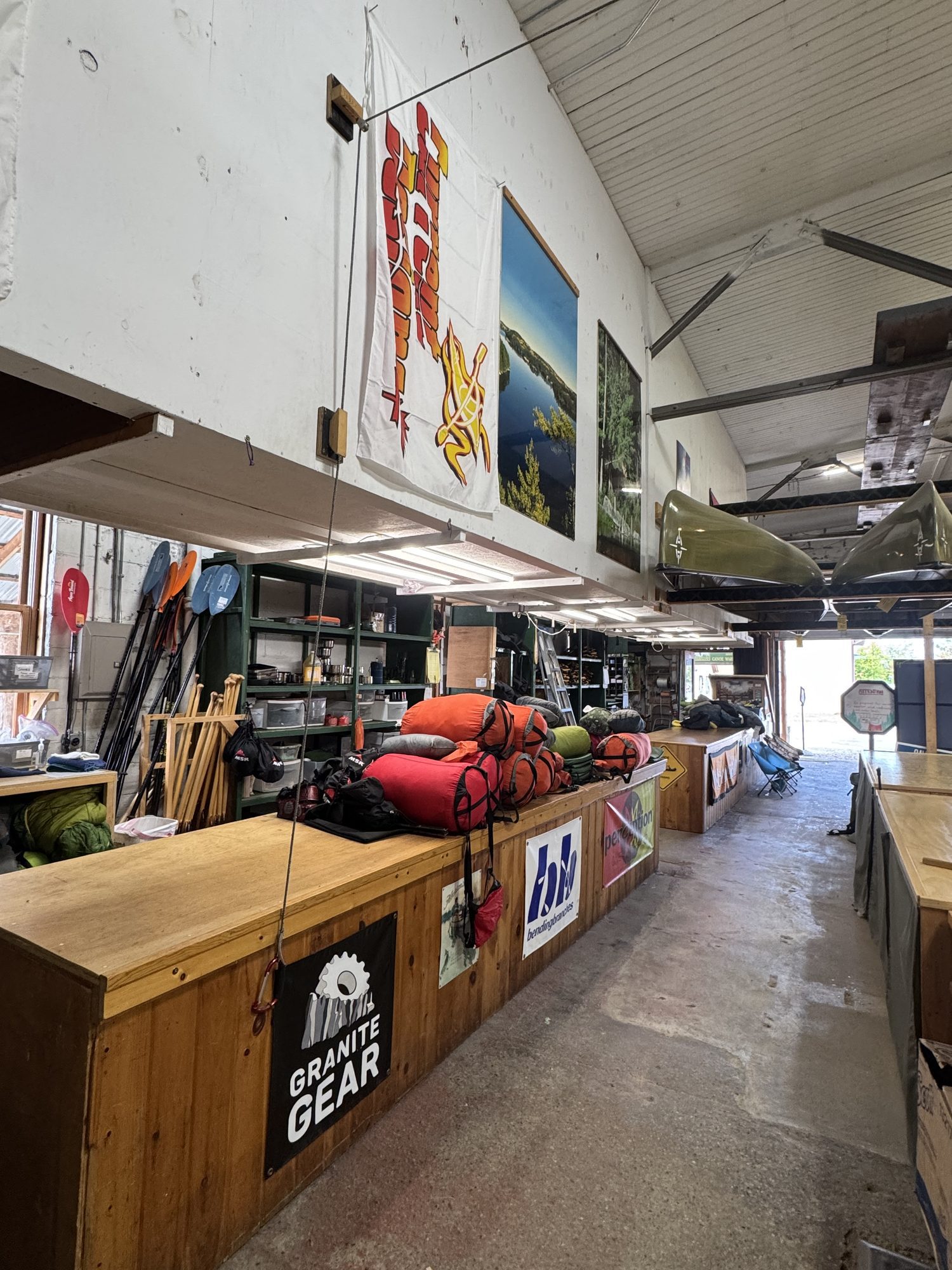
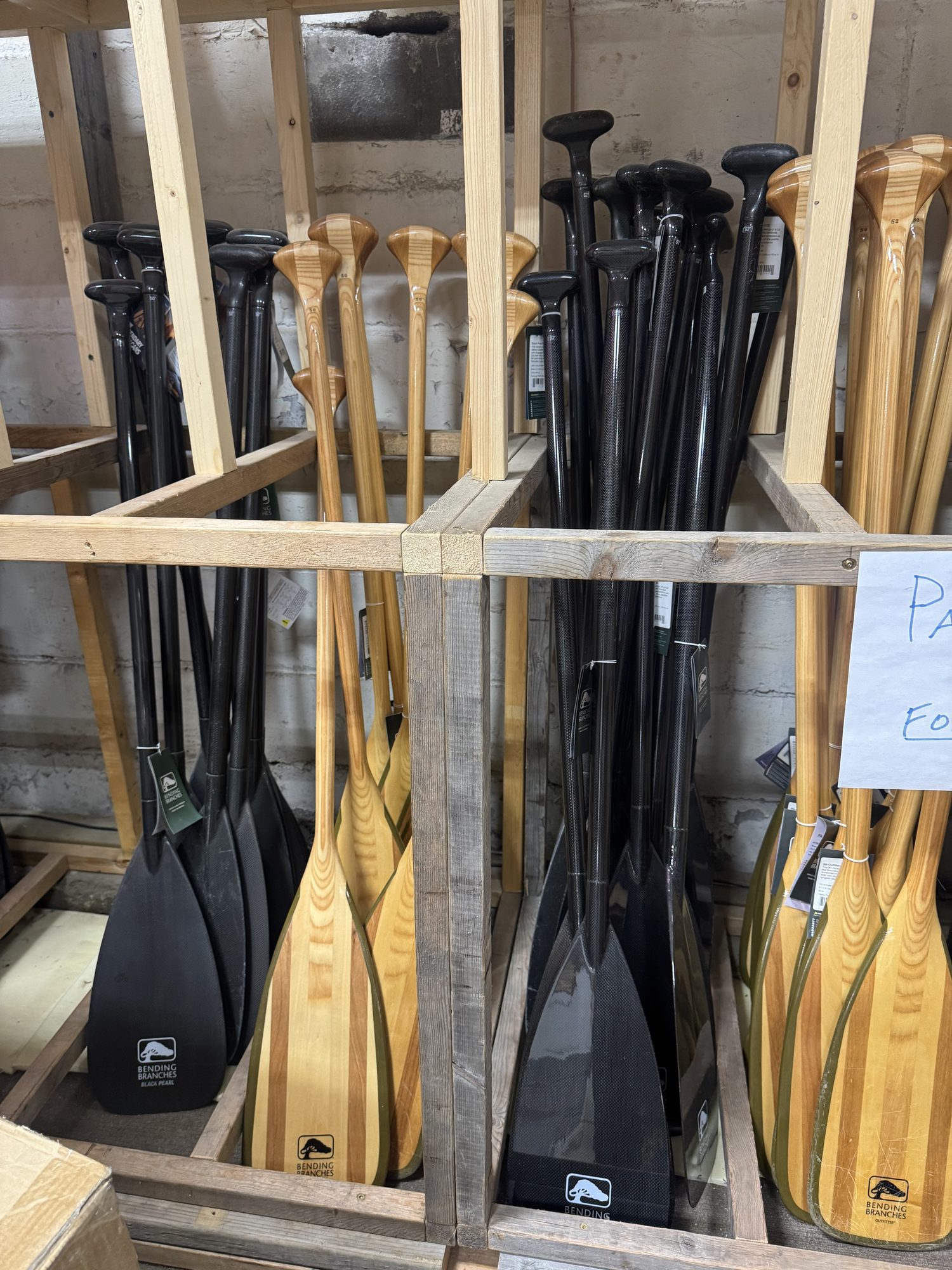
We sat down with the Piragis crew on the TripOutside Podcast a while back, and we wrote up what they offer in our outfitter feature. The episode is a good listen if you are planning your first trip.
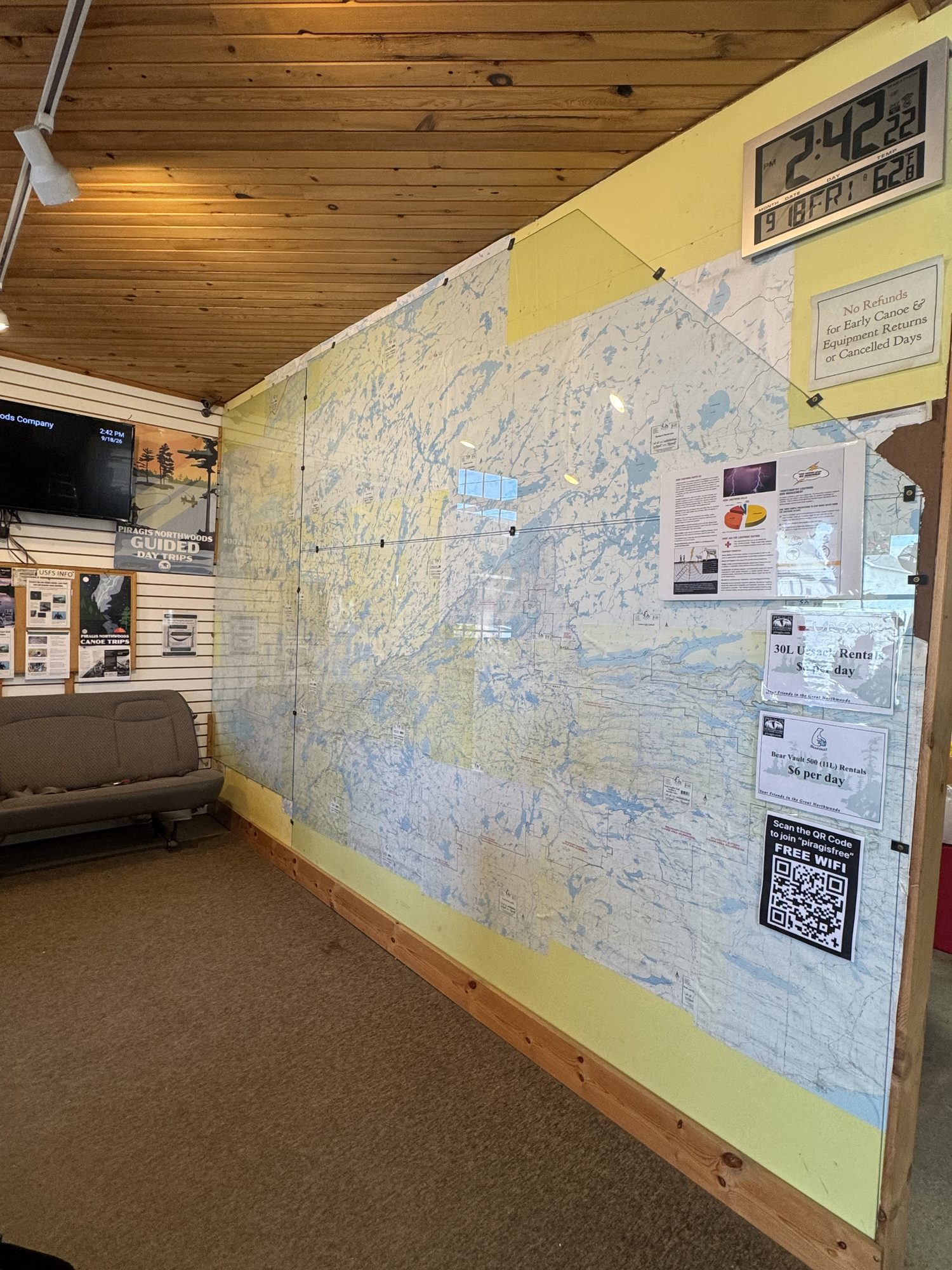
For where to eat, drink coffee and sleep in town, see our Ely destination guide.
Planning for 2027? A post-fire closure order covers the hardest-hit areas north of Ely from October 1, 2026 through April 1, 2027. As of November 2026, entry points 14, 15 and 19 were still closed.
Our Route: A 4-Day Snowbank Lake Loop
We put in at Snowbank Lake, Entry Point 27, roughly 20 miles east of Ely. From there we made a loop: east through Parent and Disappointment, up a chain of small lakes to Jordan, a day trip to Ima and Alworth, then home along the north side through Gibson, Abinodji and Boot. That is 14 lakes, 20 portages and about 21 miles of paddling.
- Day 1 · Sep 15
- Day 2 · Sep 16
- Day 3 · Sep 17
- Day 4 · Sep 18
- Portage
- Our campsites
Lines show the lakes and portages we traveled, drawn from OpenStreetMap data. They are not a GPS track.
| Day | Lakes | Paddled | Portages |
|---|---|---|---|
| 1 · Tue | Snowbank → Parent | 1.5 mi | 1 |
| 2 · Wed | Parent → Disappointment → Ahsub → Jitterbug → Adventure → Cattyman → Jordan | 5.9 mi | 6 |
| 3 · Thu | Jordan → Ima → Alworth and back | 6.5 mi | 6 |
| 4 · Fri | Jordan → Cattyman → Gibson → Swing → Abinodji → Haven → Boot → Snowbank | 6.9 mi | 7 |
| Total | 14 lakes | 20.8 mi | 20 (about 2.4 mi on foot) |
Portages here are measured in rods. A rod is 16.5 feet, about one canoe length, and 320 of them make a mile.
Day 1: Snowbank to Parent Lake
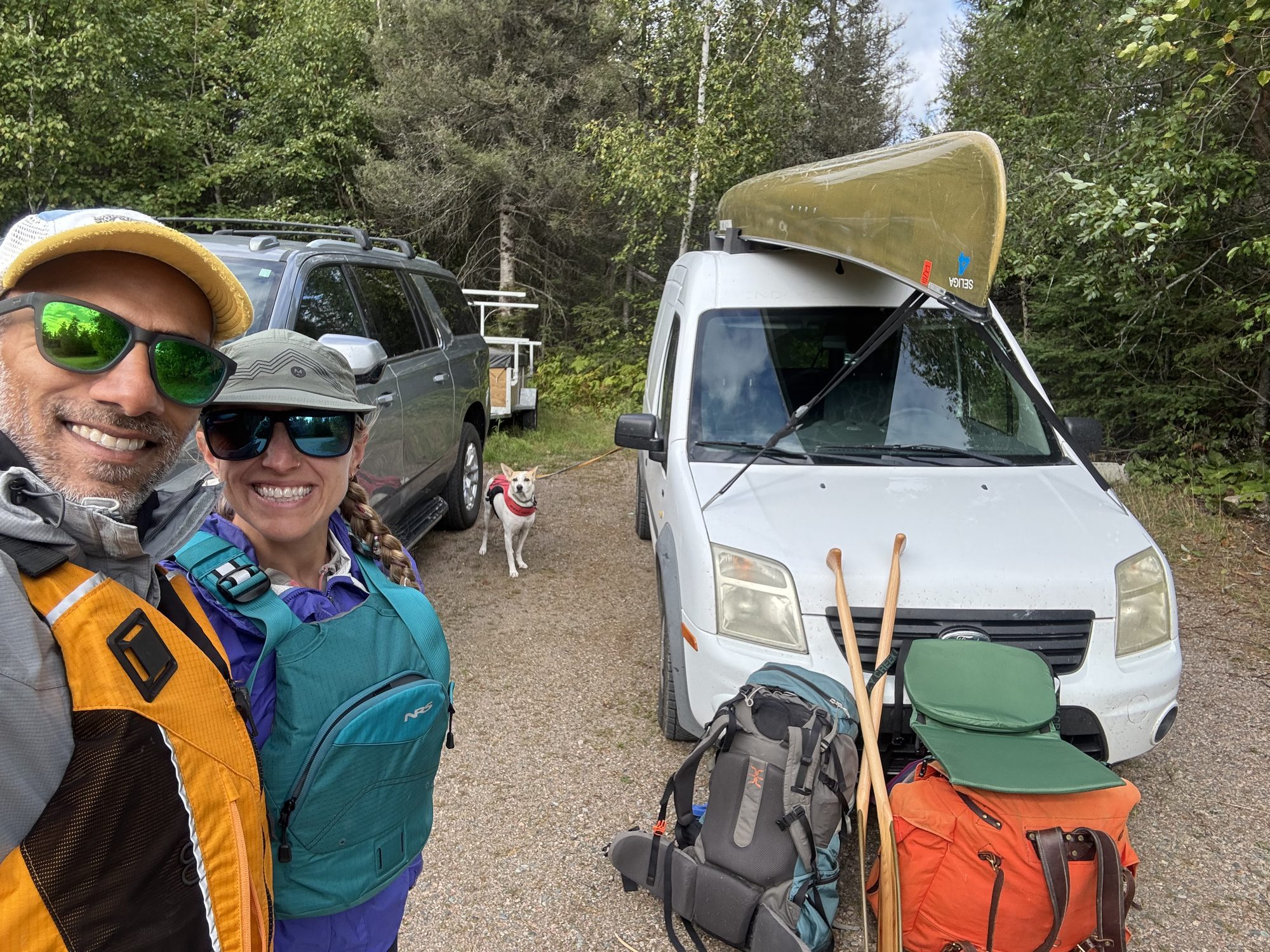
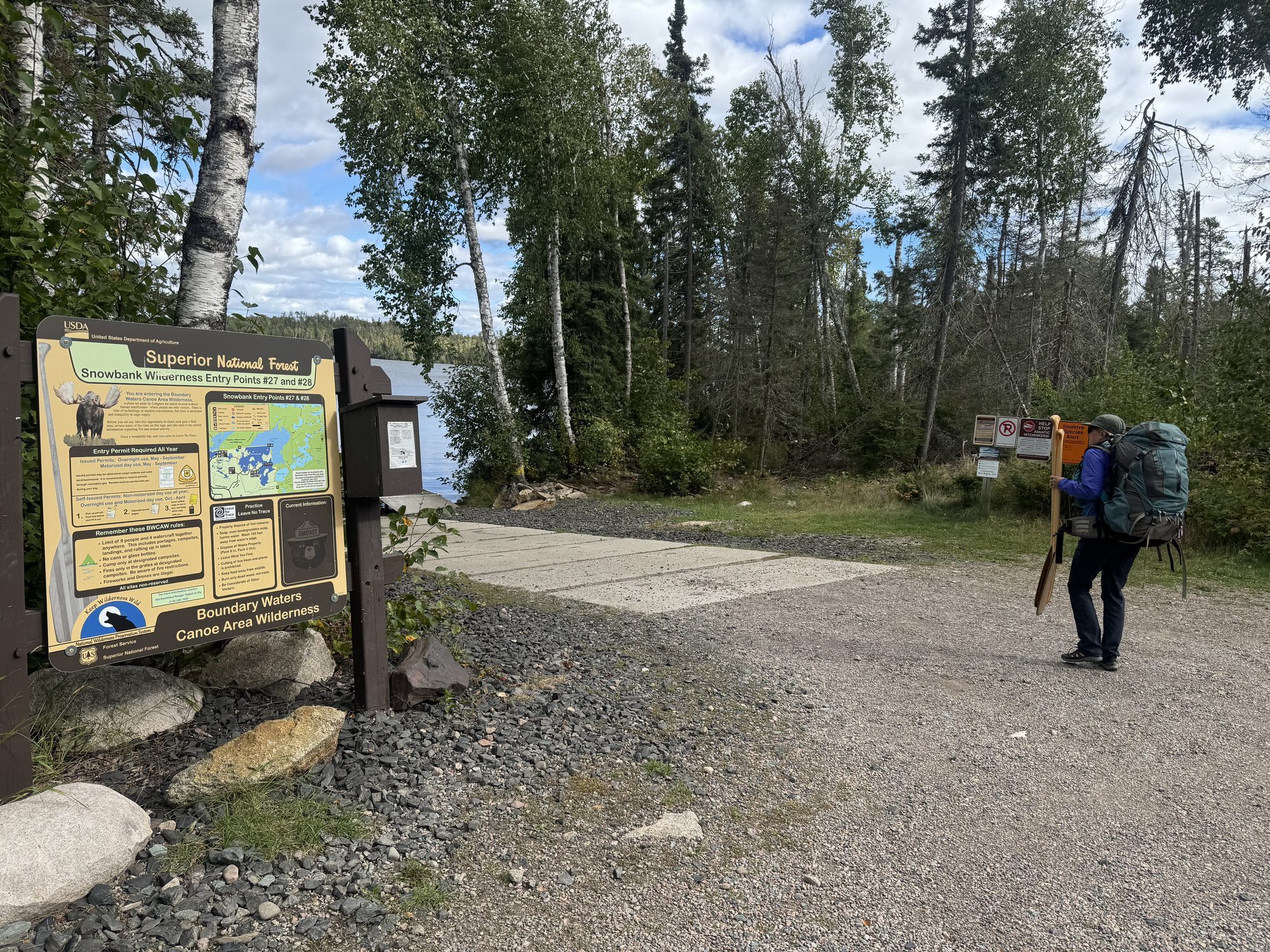
We got a late start, which is fine when the first day is short. We pushed off from the Snowbank landing around 3:30, paddled a mile and a half, carried one portage into Parent Lake, and had camp set up a little after 5.
Day 2: Parent to Jordan Lake
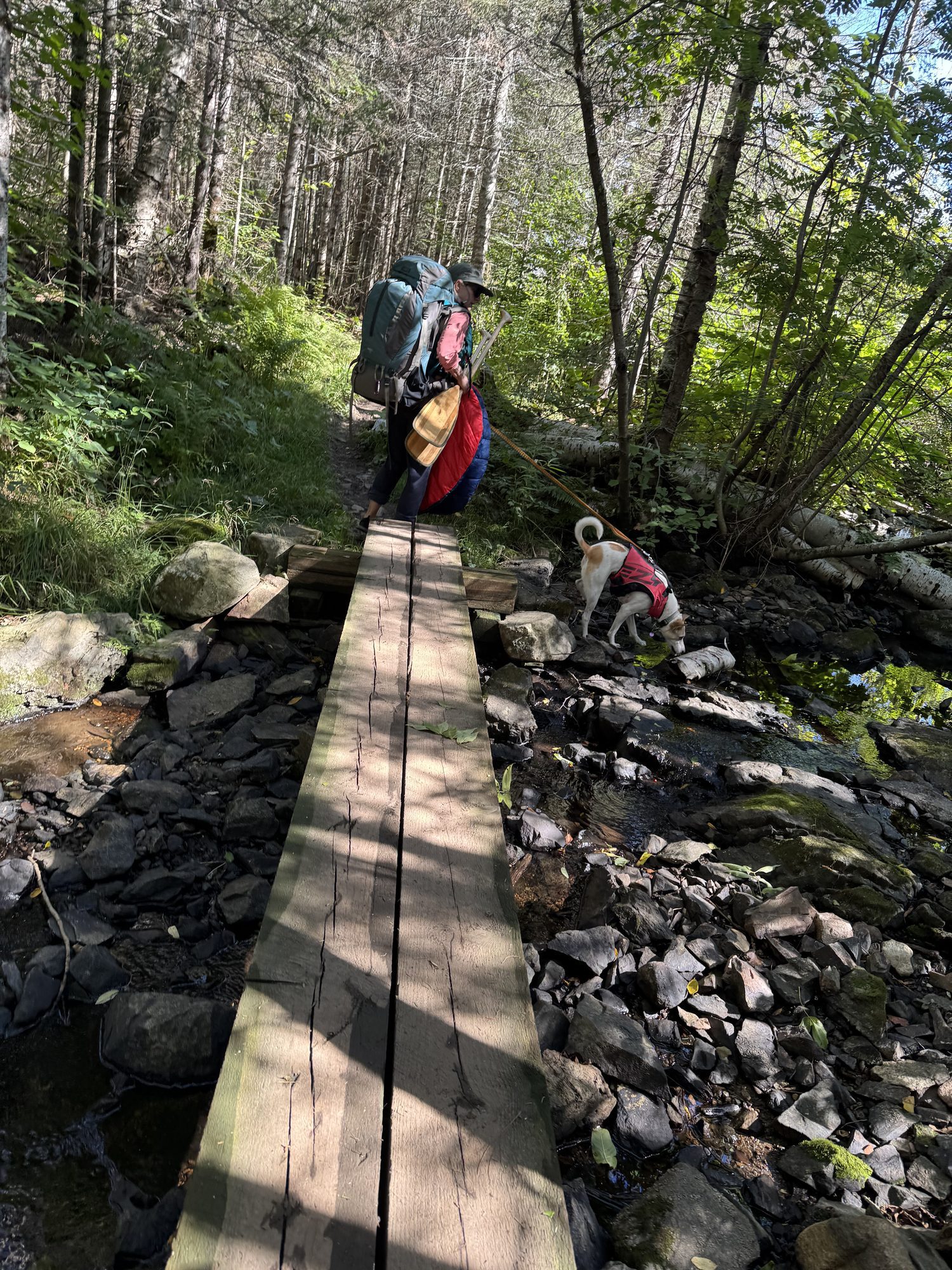
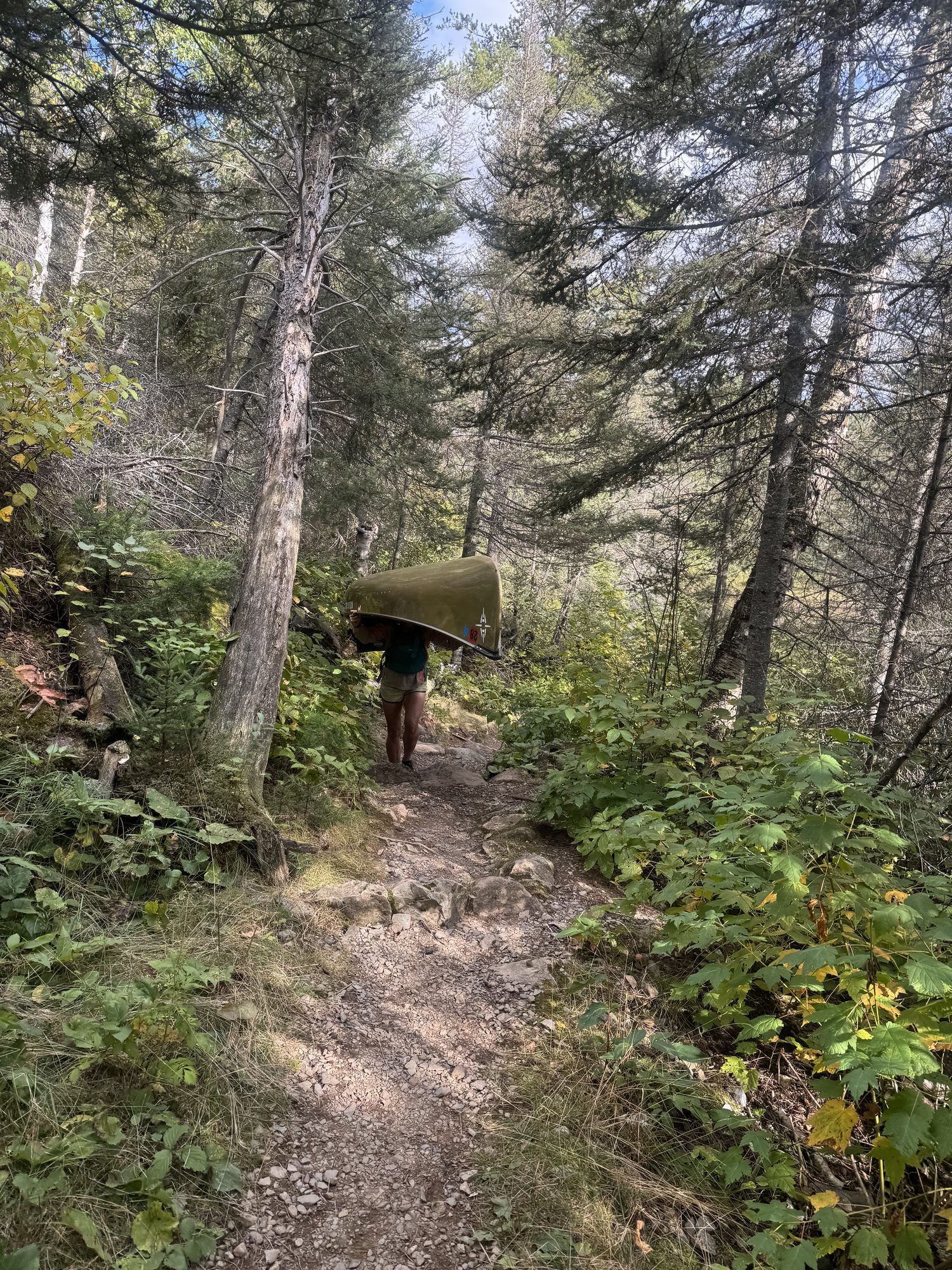
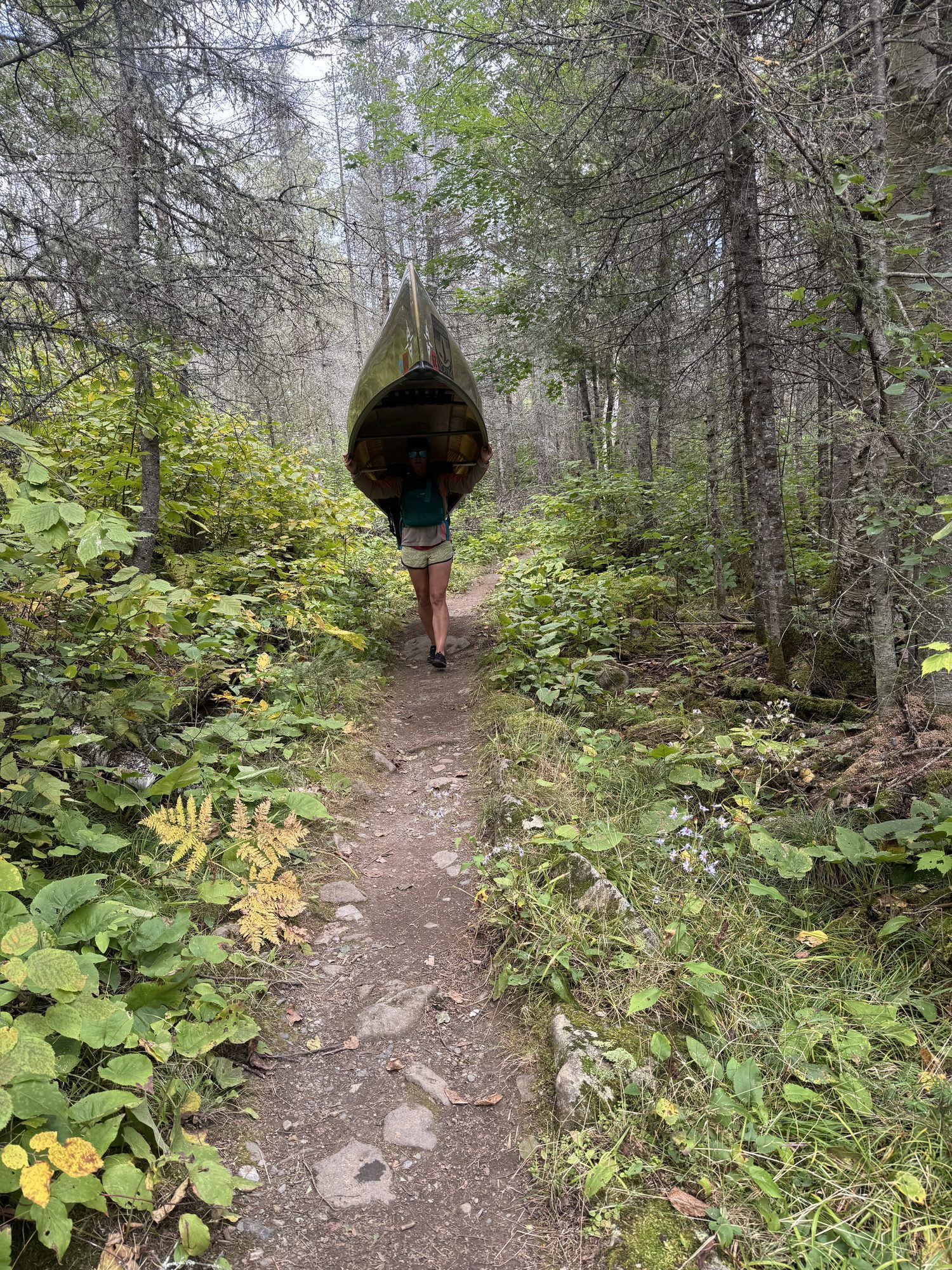
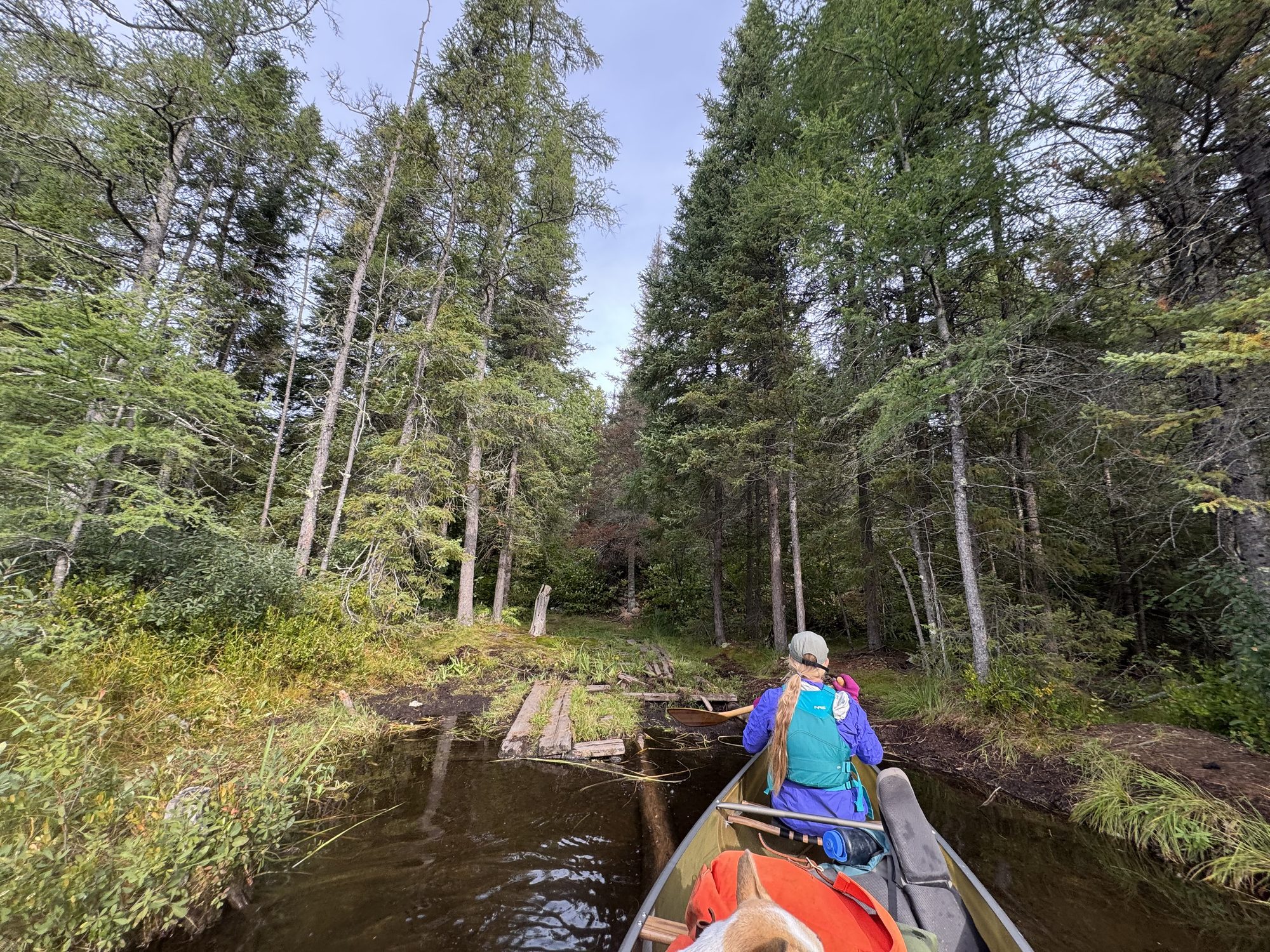
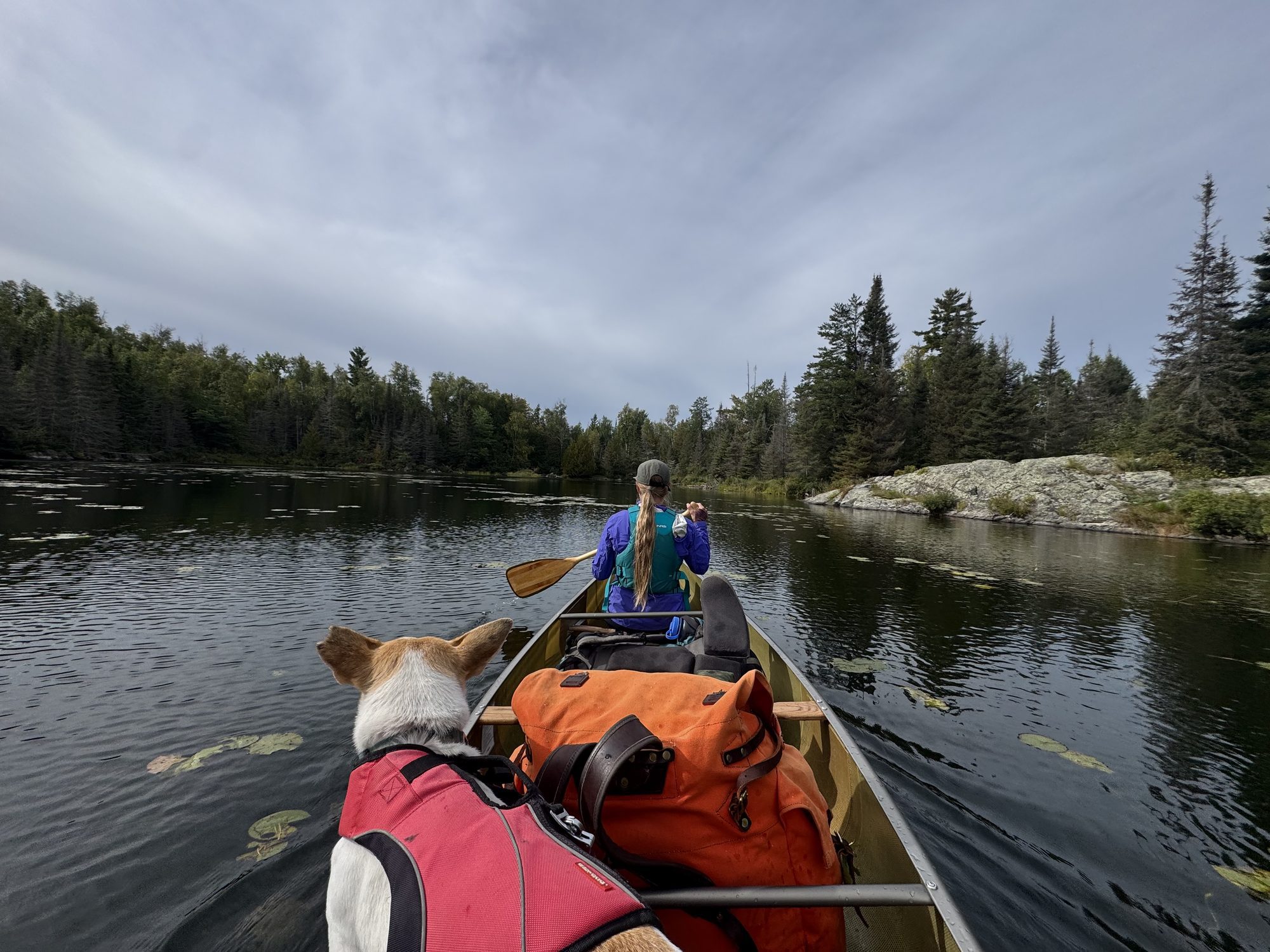
Day two was the big travel day: 6 portages and about six miles of paddling. From Parent we carried 91 rods into Disappointment Lake, which did not live up to its name, and paddled most of its length. A 26-rod portage took us to Ahsub Lake, then Jitterbug, then our favorite, Adventure Lake. One quick carry into little Cattyman, one last portage, and we were on Jordan.
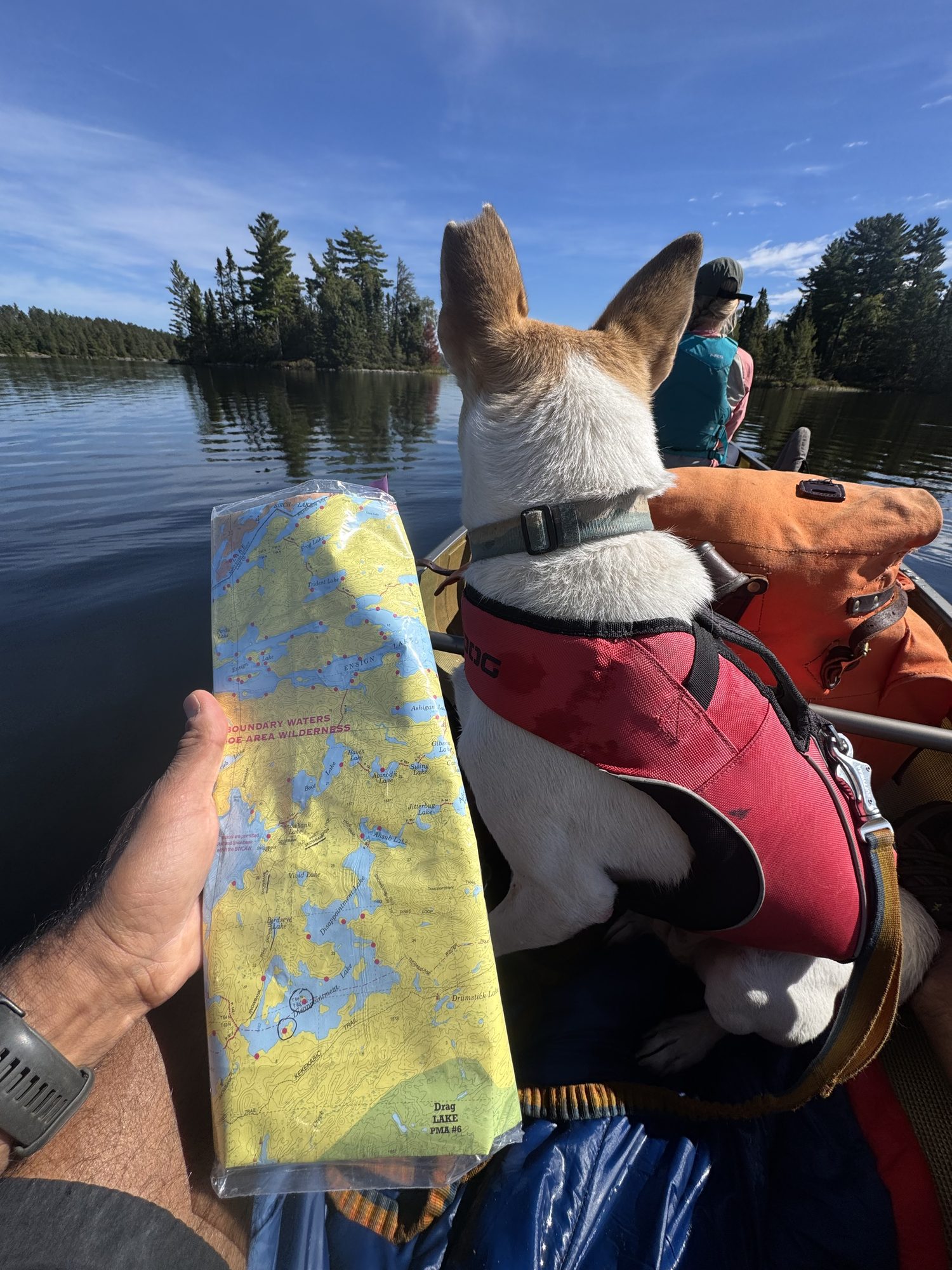
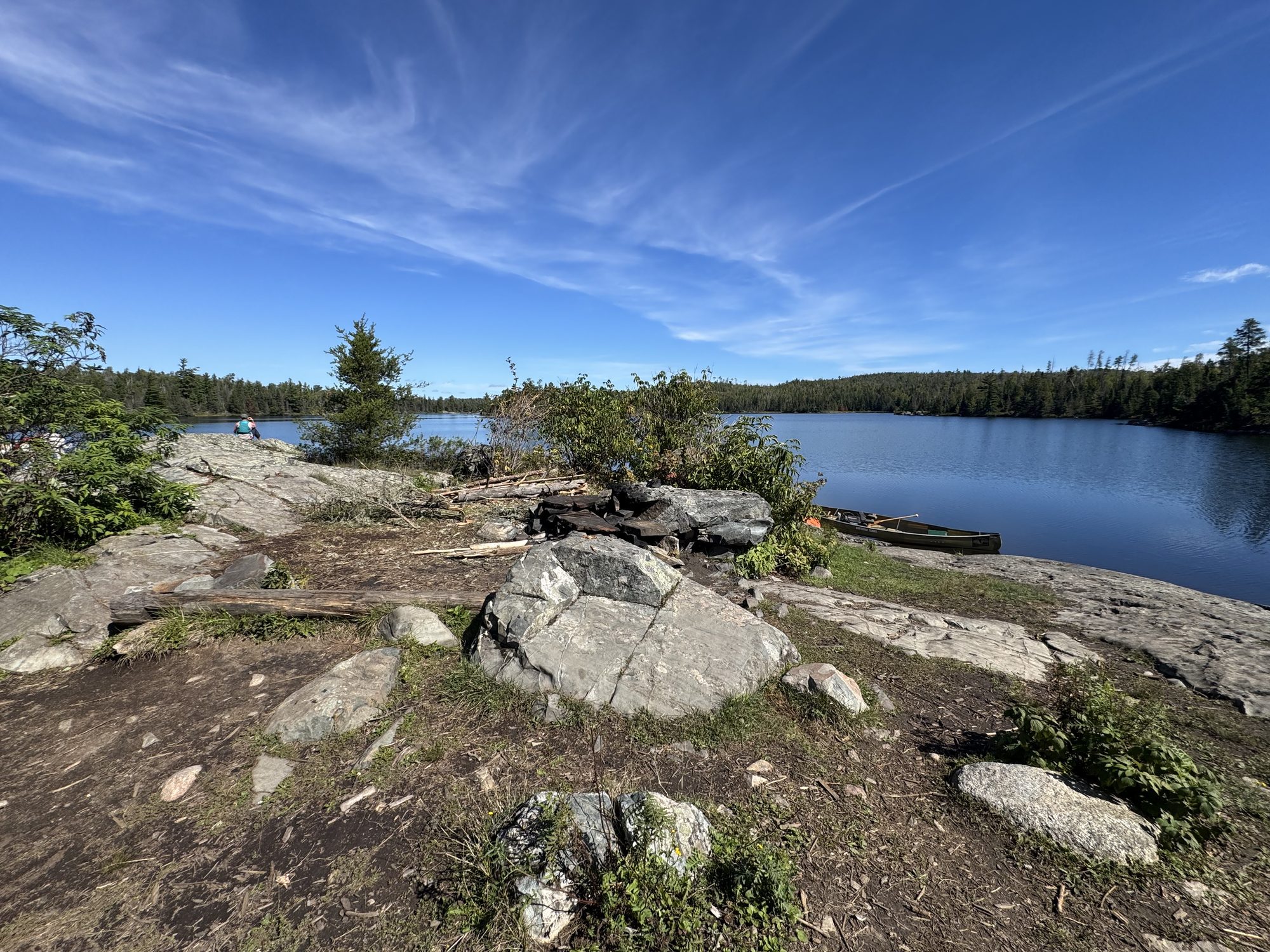
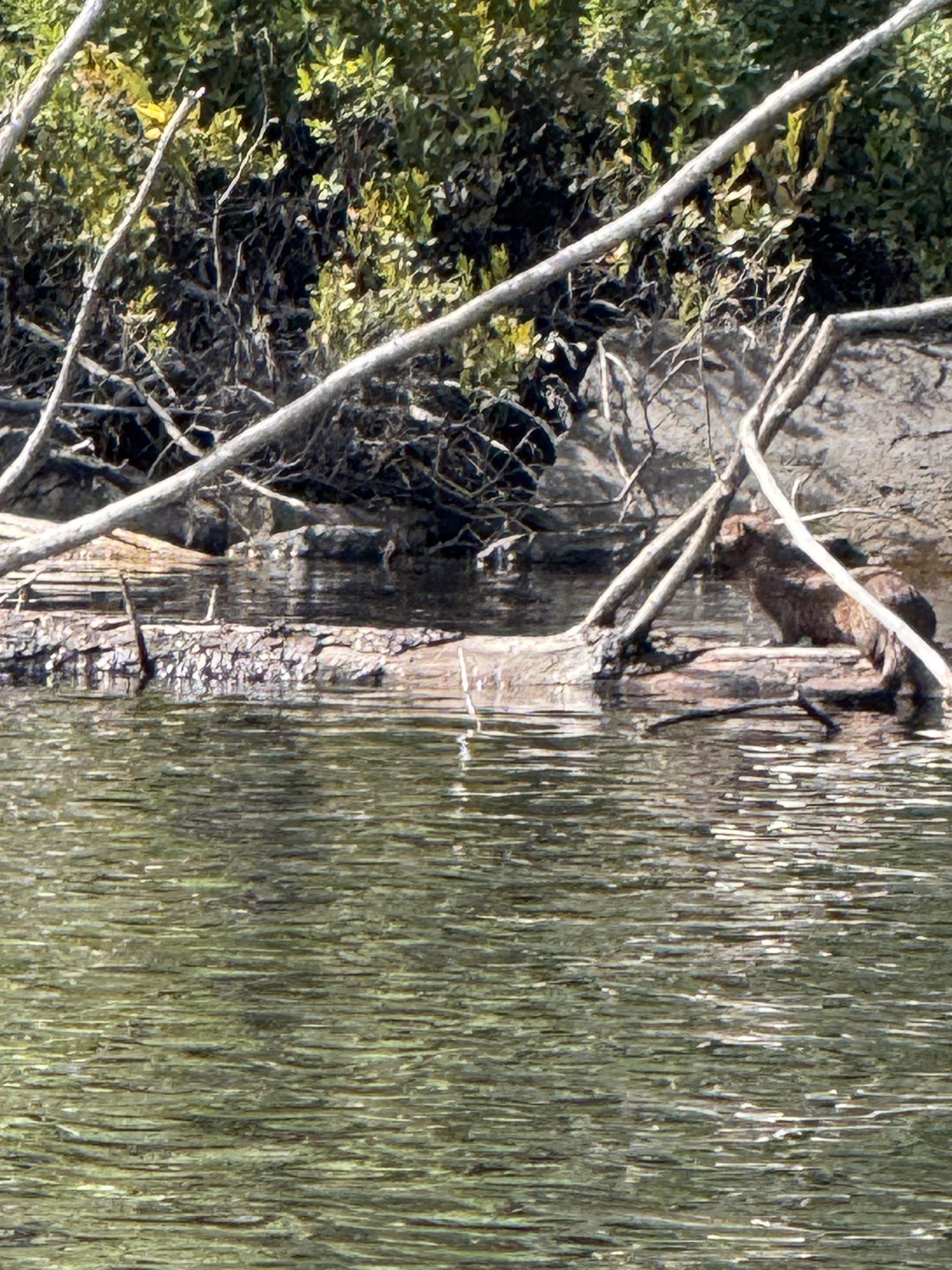
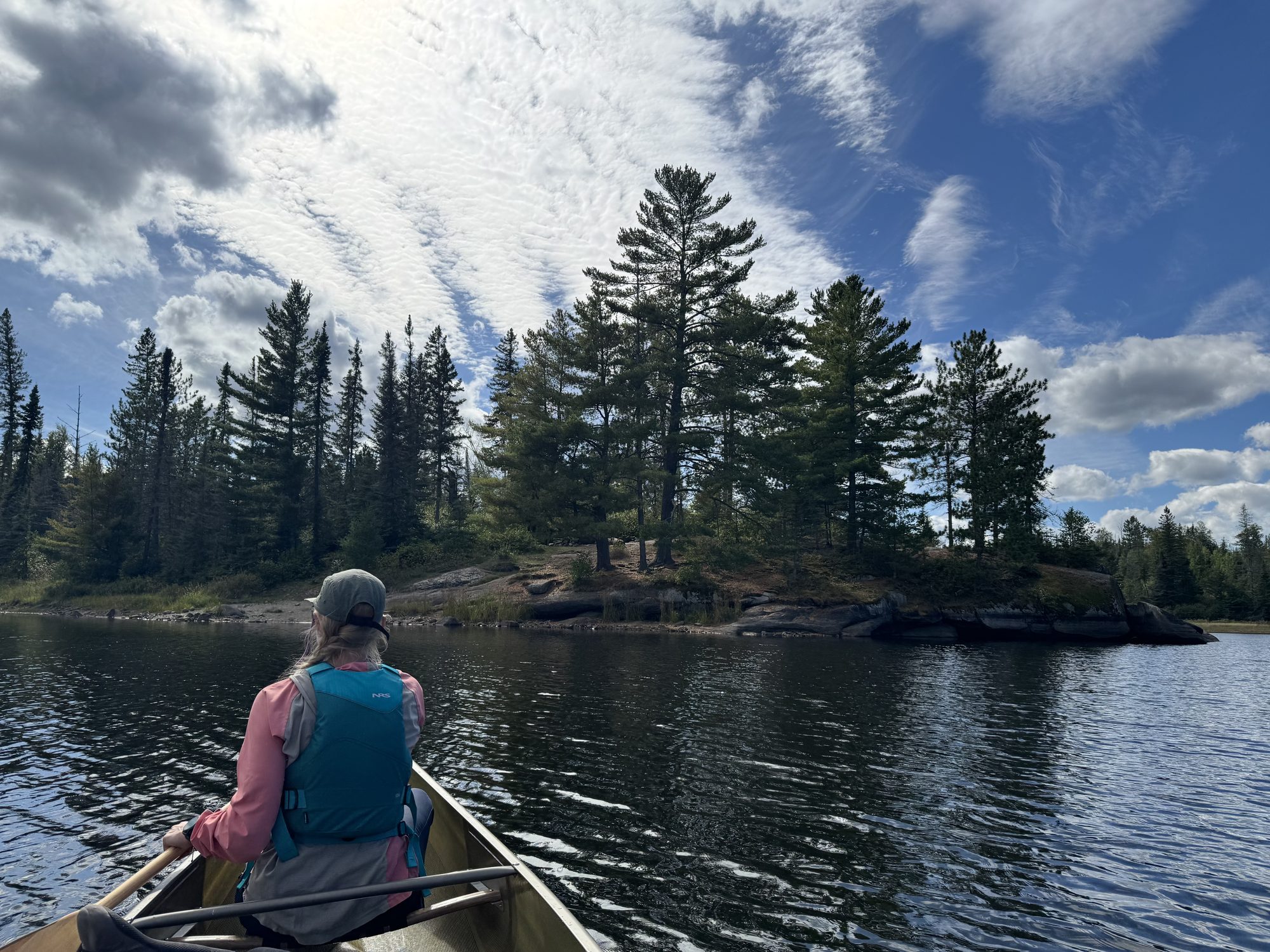
By the time we reached Jordan it was getting later in the day, and Jordan only has three campsites. I could feel a scarcity mindset creeping in. In 2021 I took a trip with a buddy and we got started late. We kept going, lake to lake to lake, and every campsite was taken, until it was dark, our headlamps were on and our toes were freezing. On Jordan I went straight back to that memory.
I have been focusing a lot on being present, and this time I caught myself. I relaxed. I let go of the fear-based thoughts and remembered my one goal for this trip: a positive attitude. Whatever happens is amazing.
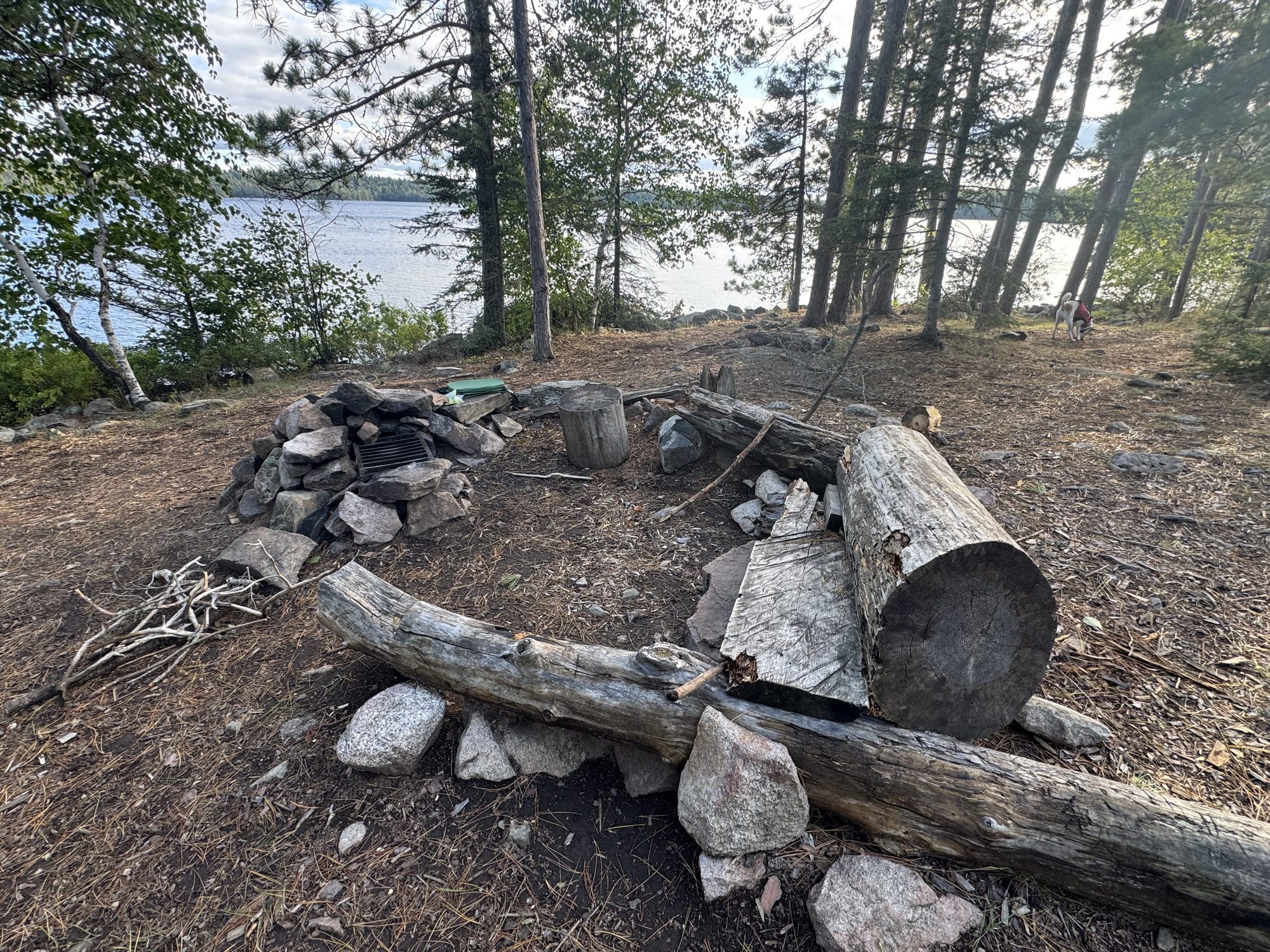
Then we came around a corner, paddled down to a dead-end campsite, and found it open. It was the most beautiful campsite we had come across all day.
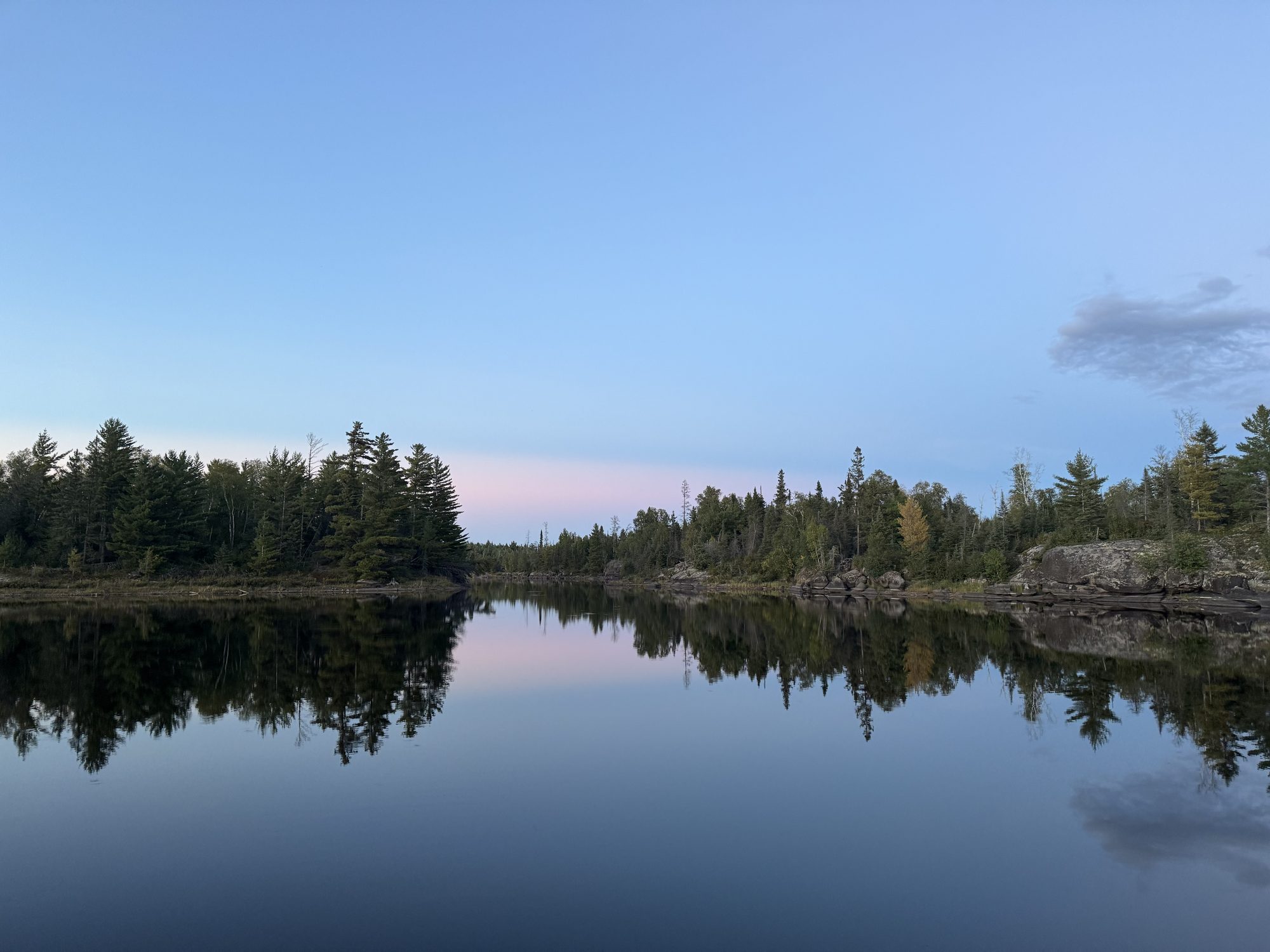
We were staying two nights, which meant no packing and unpacking in the morning. We had a long sunset and hung out at camp. Just as we finished setting up the tent and were zipping in for the night, it started to rain. Perfect timing. We fell asleep to raindrops on the tent.
Day 3: A Slow Day, Then Ima and Alworth
We woke up refreshed and took our time. We caught the sunrise from the overlook, meditated, did a little yoga and hung out on the beach.
Around 1 o’clock we headed out to explore the lakes around us, without the big packs. A short carry put us on Ima Lake. Our goal was to get out to one of the unmanaged areas beyond it, and we tried very hard, but we could not find the portage. Maybe another day. We ended up on Alworth Lake instead, where we had lunch. Alpha enjoyed the lighter portaging as much as we did.
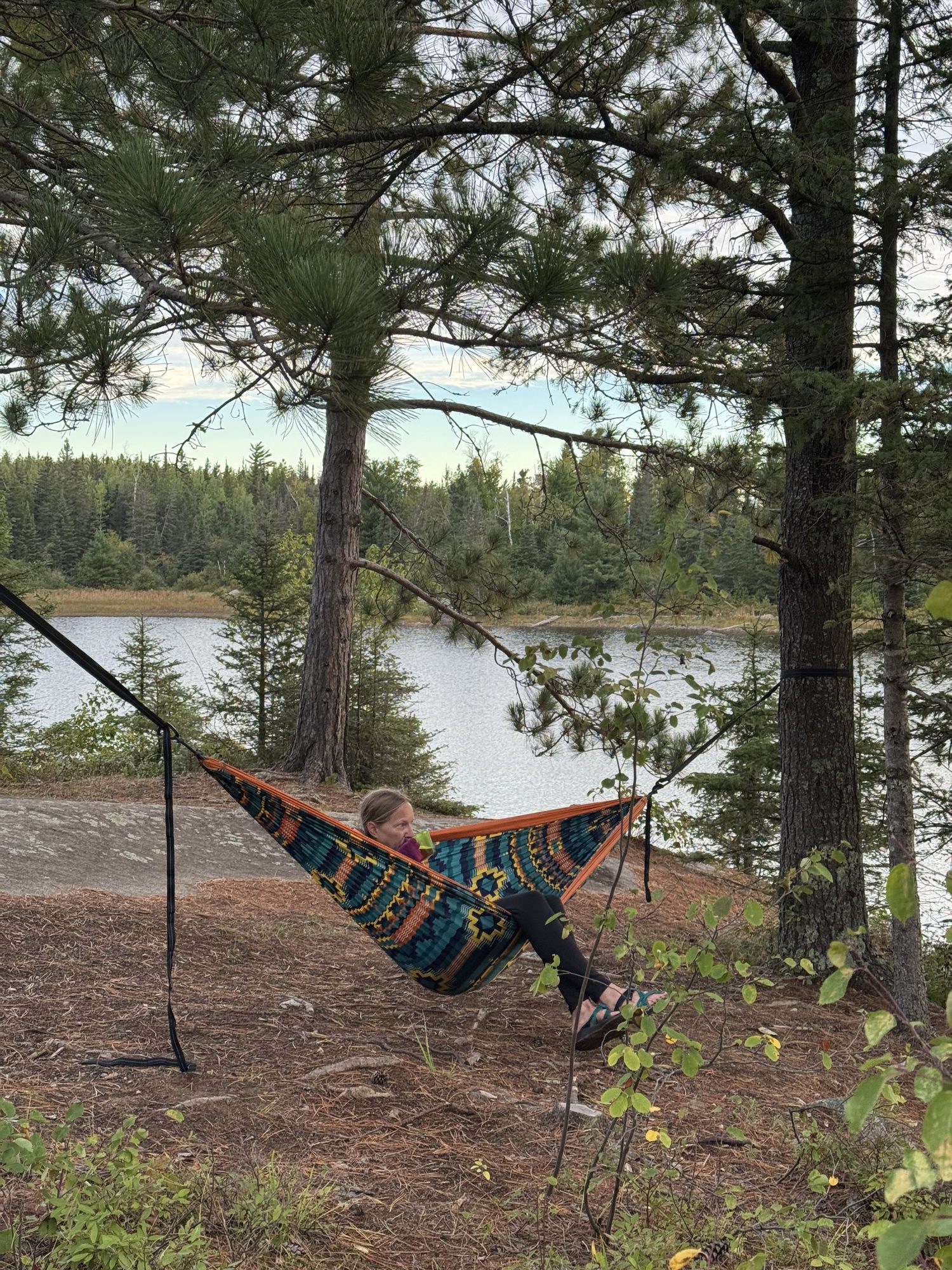
Back at camp, we lay in the hammocks for hours and watched the clouds. I let go of the old stories and the future planning and was just there. It is something I have been wanting to practice more, and it is a lot easier with a lake in front of you. It was an afternoon full of joy and appreciation for this place.
Day 4: The North Side Home
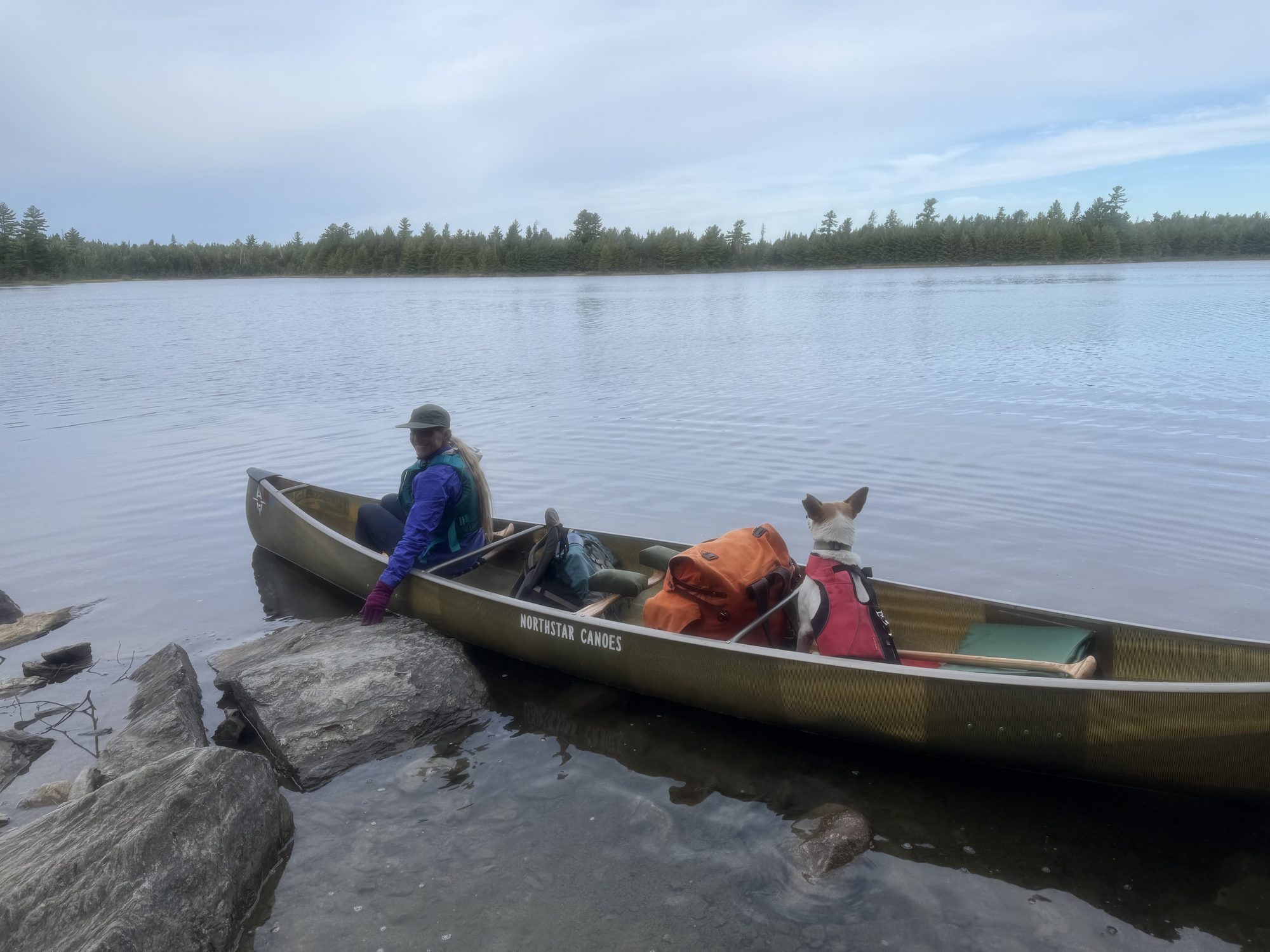
For the trip out we took a different way back: Cattyman, Gibson, Swing, Abinodji, Haven and Boot, then one last crossing of Snowbank. That is 7 portages and about seven miles. We were loading the canoe on Gibson Lake a little after 9.
We were expecting strong headwinds on Snowbank, because it is a big lake, and we got them. In the past it was easy to let wind or cold tip us into a mood about how hard everything is. Maybe it is the wisdom of getting older, or maybe it is coming back here again and again, but even the challenges seem to be fun now.
We were back in Ely by mid-afternoon.
Boundary Waters With a Dog: What Three Trips With Alpha Taught Us
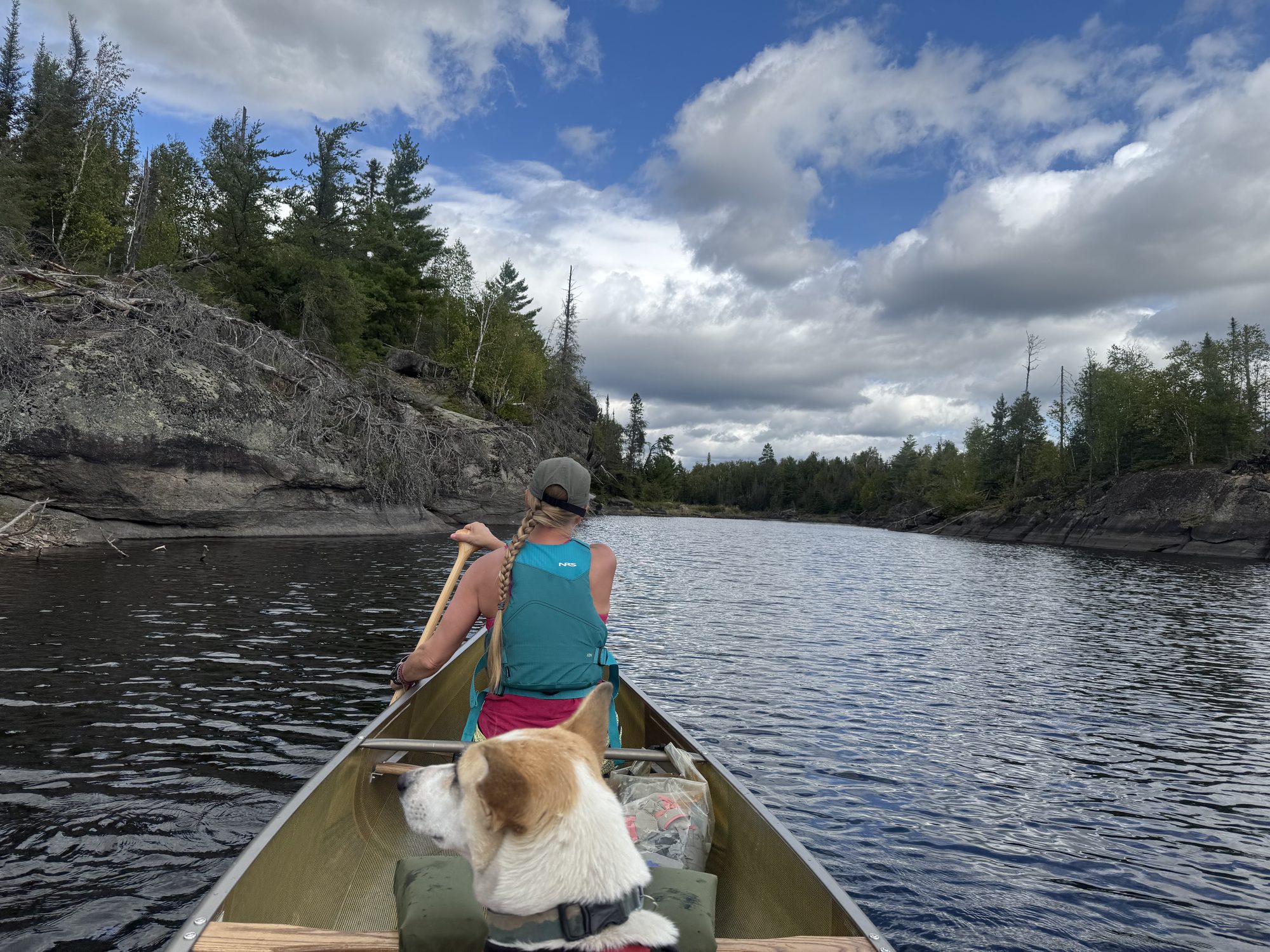
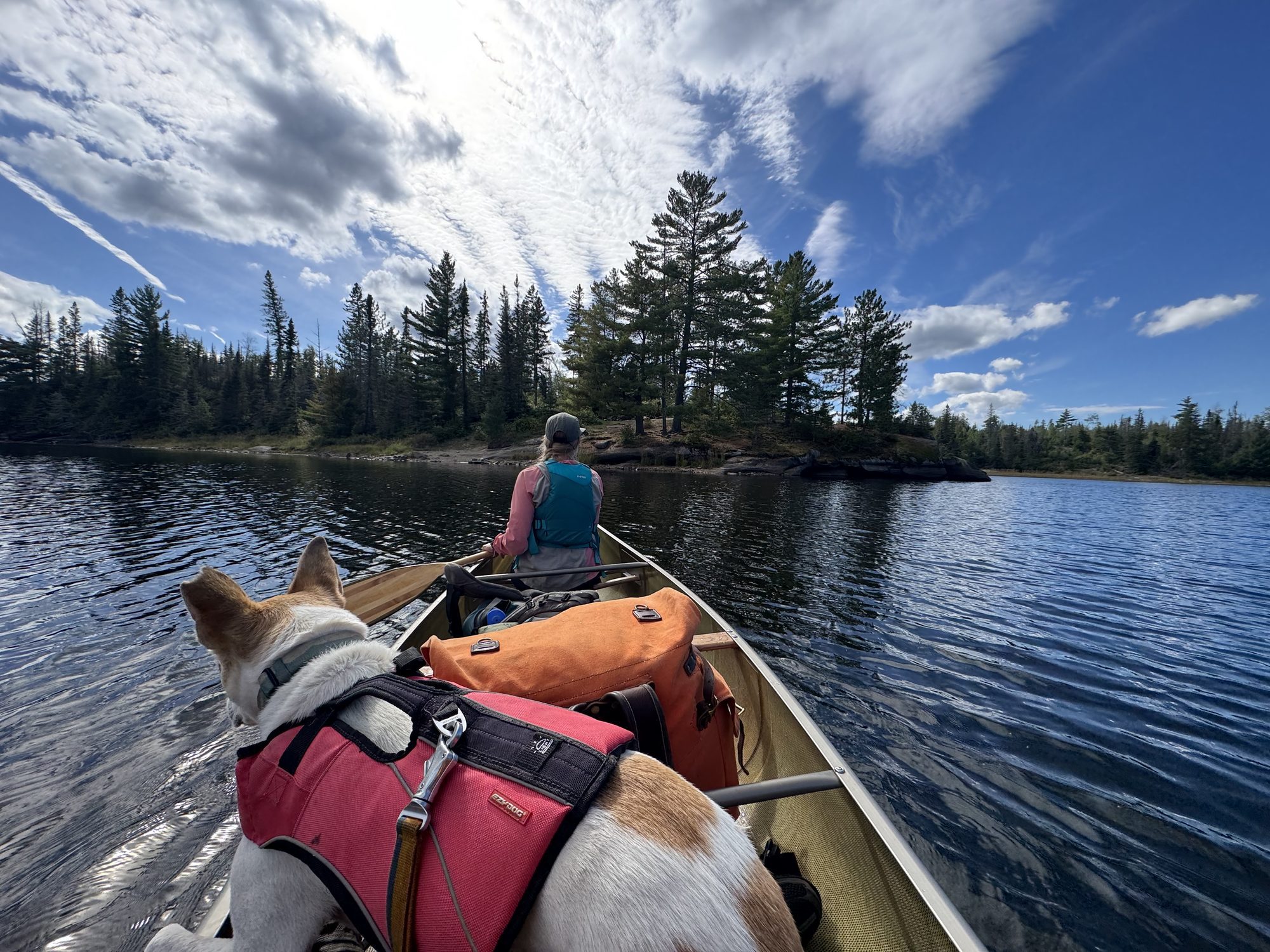
Alpha is a street dog from India that we rescued in 2020. Her breed, as far as anyone can tell, is non-GMO dog. She weighs 45 pounds and rides in the middle of our tandem canoe, between the packs.
Dogs are allowed in the Boundary Waters, and Alpha loves it here. She loves being in a tent and she loves being on a paddle craft. Here is what we have learned in three trips with her.
The Rules for Dogs
- Leash: six feet or shorter at campsites, portages, landings and on trails. Your canoe out on the lake does not count as one of those places.
- Noise: the Forest Service says it plainly: barking intrudes on the experience.
- Waste: bury or carry it at least 200 feet from water, campsites and portages, or put it in the latrine.
- Paperwork: Piragis recommends bringing a copy of the rabies certificate.
Source: Forest Service rules as clarified in 2024. Check the current rules before you go.
1. Know Whether Your Dog Is a Canoe Dog
We are lucky to have a dog that does not want to be in the water, so she is not looking for a reason to jump out. She is just as happy on a paddleboard as she is in a canoe. If you are not sure about your dog, find out on a short paddle close to home, not on the first day of a wilderness trip.
2. Bring a Leash That Leaves Your Hands Free
The most critical piece of dog gear we carry is an elastic leash that I can tie around my waist. On a portage my hands are full of canoe or packs, and she stays right with me. While we load and unload, I loop it over a tree branch.
3. Give Her a Place in the Boat and in the Tent
We bring a pad for her to lie on in the canoe and at camp. It is going to get wet, so quick-drying matters. She wears a life jacket whenever we are on the water. At night she sleeps in the tent with us, in a fleece, so she stays warm.
4. Look for Island Campsites
When we can, we pick campsites on islands. There is less wildlife wandering through and less for her to go investigate, so everybody relaxes. We were not so lucky this time.
5. Keep Your Impact on Wildlife and Other People Low
A leash protects the wildlife as much as it protects your dog. We also work at keeping the barking down. People come here for the loons.
6. Pack a Trowel
We bring a short shovel so we can bury her poop deep and well away from the water. The Forest Service standard is 200 feet from water, campsites and portages, or it can go in the campsite latrine.
Looking for more trips your dog can join? Browse dog-friendly adventures on TripOutside.
Gear We Loved in the Boundary Waters (and What Is Staying Home)
Warm Sleeping Bags, Finally
This is the one that changed the trip. Our old bags were warm-weather bags, only rated to 50 degrees. This year we rented NEMO synthetic bags rated to 20 degrees from Piragis, and I did not realize how much we had been missing in a warmer, softer bag. Julie and I both slept incredibly well all three nights. It was the best sleep we have ever gotten camping.
It has changed the way I think about camping altogether. For years I thought I just do not sleep well in a tent, and I would resist the whole idea because of it. It turns out I was just not comfortable. My bag was not warm enough, so I would put on a lot of clothes, and then the clothes made me uncomfortable.
So here is my encouragement: if something is not working for you in camping, keep testing gear and making changes until you sleep well. Start with your sleeping bag and your sleeping pad. Your reason may be different from mine.
A Hot Nalgene at Your Feet
A buddy recommended this one. Fill a Nalgene bottle with hot water at night and put it in the bottom of your sleeping bag. My feet do not get great circulation and always run cold, so this was a game changer. I stayed warm and slept so well.
NEMO Dragonfly Bikepack Tent
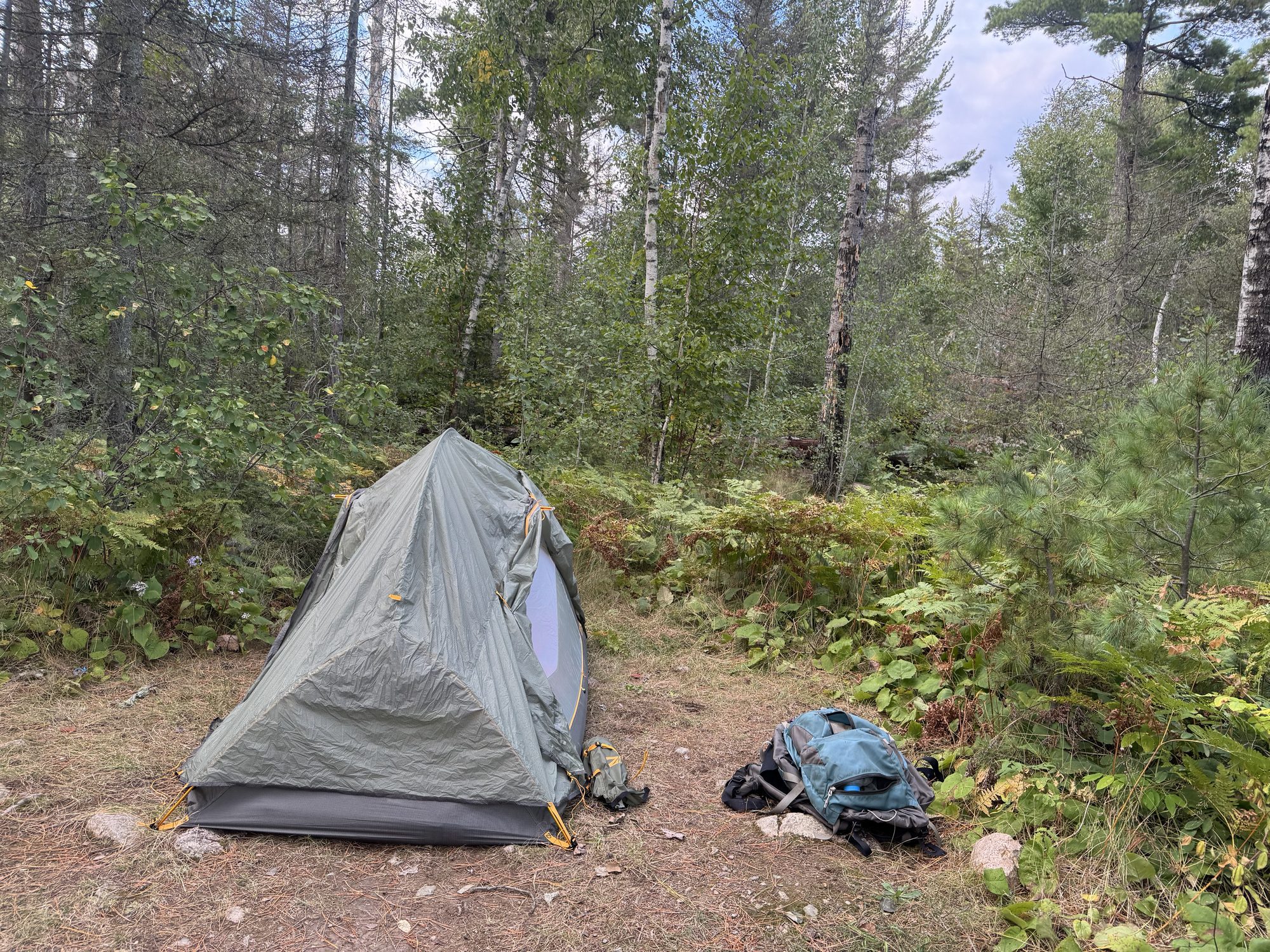
The tent from our first bikepacking trip came canoe camping, and it packed down super small.
Katadyn BeFree Water Filter
Our Katadyn BeFree was awesome. It made it super fast to filter water on the go, and we did not miss the pump filter we used to carry.
Ursack Bear Bag
We rented an Ursack for our food. The Boundary Waters has a food storage order in effect: food, garbage and anything scented has to be hung at least 12 feet off the ground and 6 feet out from the trunk, or stored in a certified bear-resistant container. Ask your outfitter what they recommend for your route.
A Kevlar Canoe
We rented a Kevlar Northstar Seliga. Rental Kevlar canoes weigh about 42 pounds, which makes a real difference on a 20-portage trip.
No Campfire
We skipped the campfires this year and did not miss them. There was no fire ban while we were out; we simply went without. Our camp meals were great without cooking over a fire, and it meant less gear.
Staying Home Next Year
The camping chair.
Brought From Home
- NEMO Dragonfly Bikepack tent
- Katadyn BeFree filter
- Stove and camp kitchen
- Hammocks
- Alpha’s leash, pad, fleece and life jacket
- One camp chair we did not need
For a complete checklist, Piragis keeps a thorough Boundary Waters packing list.
Leave No Trace in the Boundary Waters
More than anywhere else we travel, the Boundary Waters depends on everyone doing the small things right. Here is how the seven Leave No Trace principles looked on this trip.
- Plan ahead and prepare. We lay everything out and pack the night before, so nothing gets forgotten and nothing extra comes along.
- Travel and camp on durable surfaces. Camp only at designated sites and stay on the portage trails.
- Dispose of waste properly. Use the campsite latrine and pack out every bit of trash. Dog poop gets buried 200 feet from the water or goes in the latrine.
- Leave what you find. The next group should find the site the way you did, or better.
- Minimize campfire impacts. We skipped fires entirely. If you have one, it goes in the fire grate, and check for a ban first.
- Respect wildlife. Leash the dog and store your food properly.
- Be considerate of others. Sound carries a long way across a lake. Keep the dog quiet, and yourselves too.
The Boundary Waters Still Need Protecting
The Boundary Waters have been under threat from mining for many years, and this year was especially challenging. On April 16, the U.S. Senate voted 50 to 49 to overturn the 20-year mining ban that covered about 225,000 acres of the watershed that drains into the wilderness, and the measure was signed into law on April 27. That does not permit a mine by itself, because leases and permits still have to be granted, but it removed the strongest protection this place had. In September, Minnesota’s Department of Natural Resources canceled one of Twin Metals’ state mineral leases, so this is far from settled.
We talked about why places like this need defending with the Conservation Alliance on our podcast.
Protect
Save the Boundary Waters
The Campaign to Save the Boundary Waters is the best place to find out where things stand and what you can do about it.
What Trip Number Six Taught Us
I went in with one goal, a positive attitude, and it held: through a late-day campsite search, a portage we never found, and a headwind on the way out. Six trips in, the Boundary Waters keeps getting better, mostly because we keep getting better at being there.
This was an incredible three-night, four-day trip, and we cannot wait to come back.
Boundary Waters in September: FAQ
Is September a good time to visit the Boundary Waters?
It is our favorite. Right after Labor Day the mosquitoes and the crowds are gone, the water is still warm enough to swim, and the weather can be the best of the year. Plan for cold nights and shorter days.
How cold is the Boundary Waters in September?
On our trip in mid-September 2026, daytime highs were in the upper 60s and nights were in the low 40s, with one night around 38. Bring a sleeping bag rated well below the summer bag you might use in July. Ours were rated to 20 degrees.
Are there mosquitoes in the Boundary Waters in September?
Not in our experience. On our trips right after Labor Day, the mosquitoes have been gone. Black fly season is much earlier, from late May through June.
Do you need a permit for the Boundary Waters in September?
Yes. Overnight trips require a quota permit from May 1 through September 30, reserved in advance on Recreation.gov for a specific entry point and date. From October 1 through April 30, overnight visitors fill out a self-issued permit. Groups are limited to nine people and four watercraft.
Are dogs allowed in the Boundary Waters?
Yes. Dogs must be on a leash of six feet or less at campsites, portages, landings and on trails, and their waste has to be buried or carried at least 200 feet from water, campsites and portages, or put in a latrine. Keep barking to a minimum.
How do you store food in the Boundary Waters?
A Forest Service food storage order requires food, garbage and scented items to be hung at least 12 feet up and 6 feet out from the tree trunk, or kept in a certified bear-resistant container. We rented a bear-resistant sack from our outfitter.
Do you need to filter the water?
We filter everything. A fast squeeze-style filter like the Katadyn BeFree makes it easy to do on the go.
Where can you rent a canoe and gear in Ely?
We rent from Piragis Northwoods Company, on Central Avenue in Ely. They rent Kevlar canoes and individual pieces of gear, and they offer complete outfitting. You can also browse all Ely outfitters on TripOutside.
How long is a rod?
A rod is 16.5 feet, about the length of a canoe. Boundary Waters maps give portage lengths in rods, and 320 rods make a mile.
Plan Your Trip
Go After Labor Day
Pick an entry point, reserve a permit, and let a local outfitter fill the gaps in your gear closet. Start with the warm sleeping bag.
All Ely outfitters · Boundary Waters canoe trips · Boundary Waters for Beginners
More from the team: backpacking to Highland Mary Lakes, our first bikepacking trip, and three days by bike in Darjeeling.