

Updated 10.8.26
Swim with Whale Sharks in La Paz
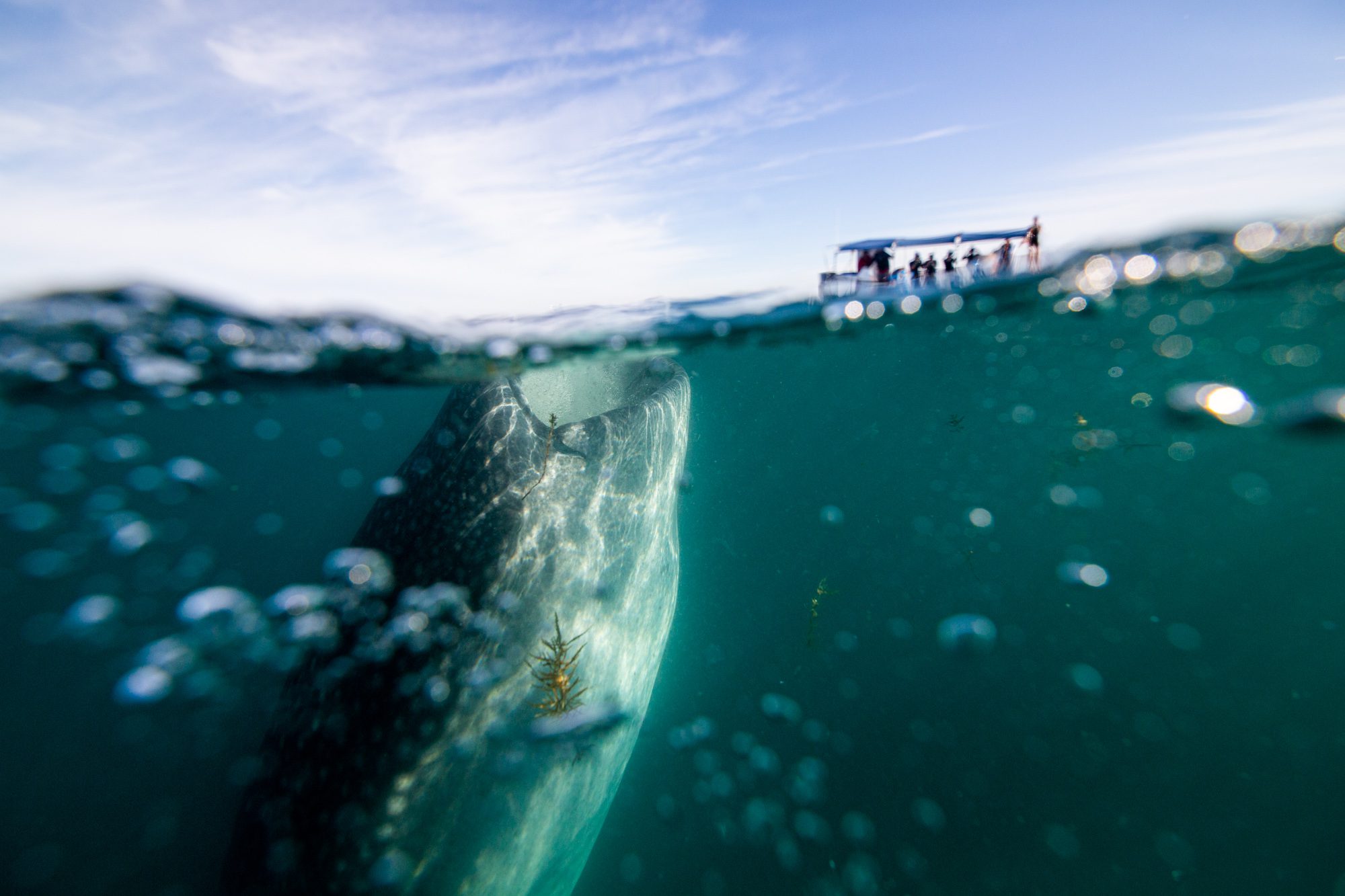
Swimming with whale sharks in La Paz is one of the most unforgettable wildlife experiences in Mexico. Baja’s location on the Sea of Cortez – nicknamed the “world’s aquarium” by explorer Jacques Cousteau – means it hosts an incredible variety of marine life. When we heard that whale sharks visit the waters of La Paz each winter and that there are opportunities to swim with them, we knew we had to learn more. We are typically cautious with wildlife tours, because sadly some of these experiences have a negative impact on wild animals. So we researched the rules and guidelines for whale shark tours and sought out recommendations for the guides who do the most to protect these majestic, gentle creatures.
La Paz Whale Shark Tour at a Glance
- Tour: Snorkeling with Whale Sharks in La Paz with MeXplore
- Season: November through April
- Length: About 3 hours, with about 2 hours on the water. Tours usually leave at 9am and 12pm, and mornings tend to be calmer.
- Price: MX$2,900 per person (a MX$1,500 deposit holds your spot)
- Group size: Up to 9 guests per boat, with a marine biologist guide
- Included: Snorkel gear, 3mm shorty wetsuit, photos and videos, drinks and light snacks, a conservation donation bracelet and the SEMARNAT permit
- Meeting point: Marina de La Paz
- Ages: All ages who can swim; minors must be with an adult
Protection of the La Paz Bay Refuge
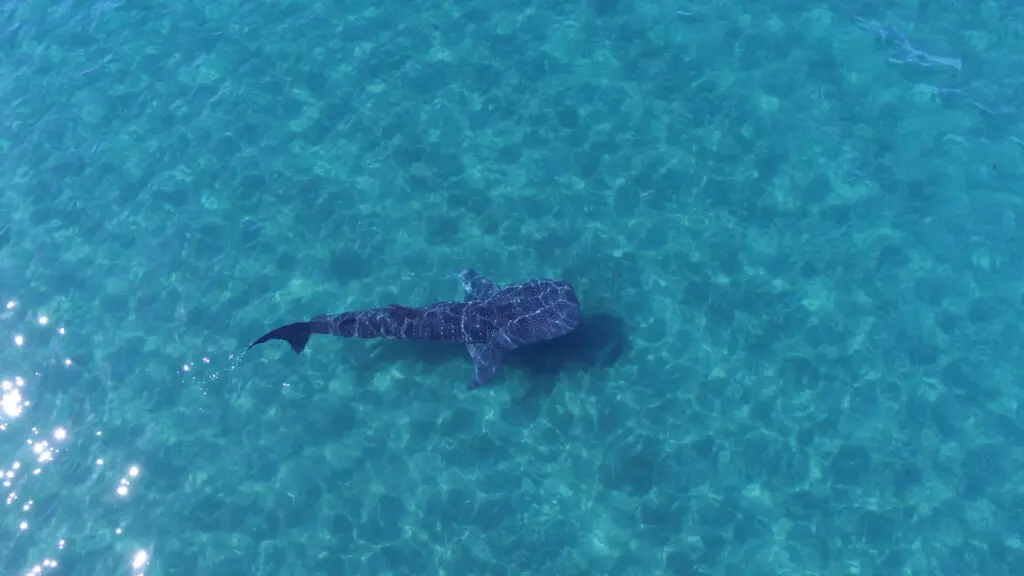
The whale sharks of La Paz have gained notoriety in recent years, not only because of how unique this species is, but also because this is one of the few spots in the world where the tour operators, the government and NGOs work together to ensure its protection. Whale Shark Mexico is a research project focused on conservation, education and sustainable management of the charismatic whale sharks. They are responsible for a continuous monitoring program on the distribution and abundance of the species in the Gulf of California. More than 10 years of whale shark monitoring was key to establishing La Paz Bay as a critical habitat of the species, which needed to be protected. Whale sharks have been coming to this bay for thousands of years, and this is one of the few places in the world where whale sharks can be found as both juveniles and adult pregnant females.
A collaboration was created in 2009 with the Mexican government to implement a Code of Conduct for whale shark tour operators. Whale Shark Mexico trains the staff of the whale shark tour companies on the Code of Conduct as well as sharing monitoring results and injuries observed on the whale sharks. In 2018, they expanded on the collaboration with the Mexican government by creating a protected refuge for the whale sharks in the La Paz bay. The La Paz bay is a critical habitat for the whale sharks as well as many other species in the area: Check out their video of the Refuge.
Minimizing Impact on the Whale Sharks
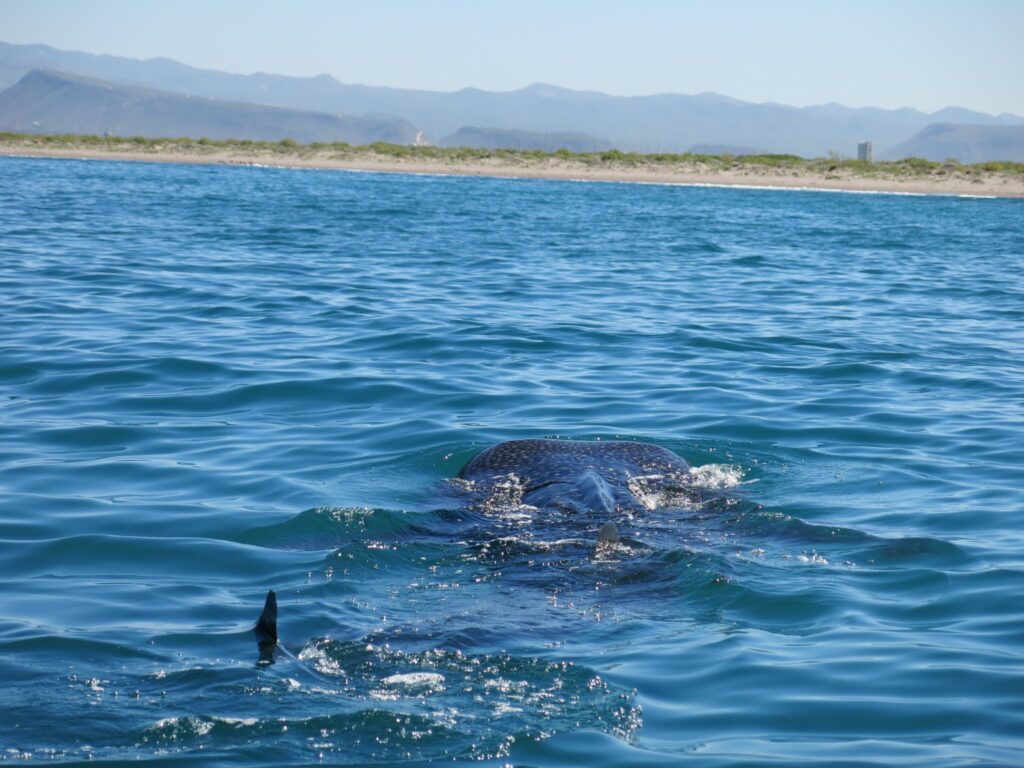
Whale sharks are endangered and their populations are decreasing throughout the world. Minimizing human impact on these gentle giants is critical, and we were thrilled to find out that La Paz Refuge has successfully managed to do this. They have even seen an increase in the whale sharks over recent years, unlike other areas of the world. A driving factor of their conservation success is that swimming with whale sharks in Mexico is a highly regulated activity to protect both the animals and the snorkelers. The rules for the whale shark tours are enforced by government observation towers in the bay. Because of these strict rules, Mexico is one of the best managed places in the world to swim with whale sharks. Some of these rules include:
- In order to start the season and allow the tour boats into the bay, there must be 6 or more whale sharks in the area.
- Only licensed companies are allowed to run whale shark tours in the bay, and there are a limited number of licenses distributed. Operators are authorized by Mexico’s environment ministry, Secretariat of Environment and Natural Resources (SEMARNAT).
- The number of boats allowed can never exceed the whale sharks, so if only 6 are observed then only 6 boats are allowed to enter the bay.
- Boats are capped at 14 in the whale shark area at any time, no matter how many whale sharks are in the bay. Time slots are assigned each morning to prevent overcrowding. The number of whale sharks varies from year to year, and dozens can be in the bay during peak season.
- Only one boat can interact with a whale shark at a time to avoid overcrowding and allow breaks from human presence.
- Each boat can only stay in the bay for 3 hours.
- Only 5 people are allowed in the water with a whale shark at a time, but most tour boats limit it to 3 people.
- Snorkeling only – freediving and scuba diving with the whale sharks are not allowed.
How to Swim With Whale Sharks in Mexico
We chose MeXplore as our tour guide for our adventure snorkeling with the whale sharks in La Paz. They came recommended by fellow travelers, and are known for their ethical practices and commitment to conservation. This family owned business runs small group tours, and we love that they have a marine biologist guide on each tour. Here are some of the reasons that MeXplore is one of the best guide companies in La Paz.
Marine Biologist Guides
Our guide Carla was a marine biology student with an infectious enthusiasm for the ocean and its inhabitants. With the aid of a cute stuffed whale shark, she carefully broke down the dos and don’ts of interacting with these gentle giants. Her briefing was not just informative but also set the tone for the respectful whale shark encounters that lay ahead.
Our Swim with the Whale Sharks
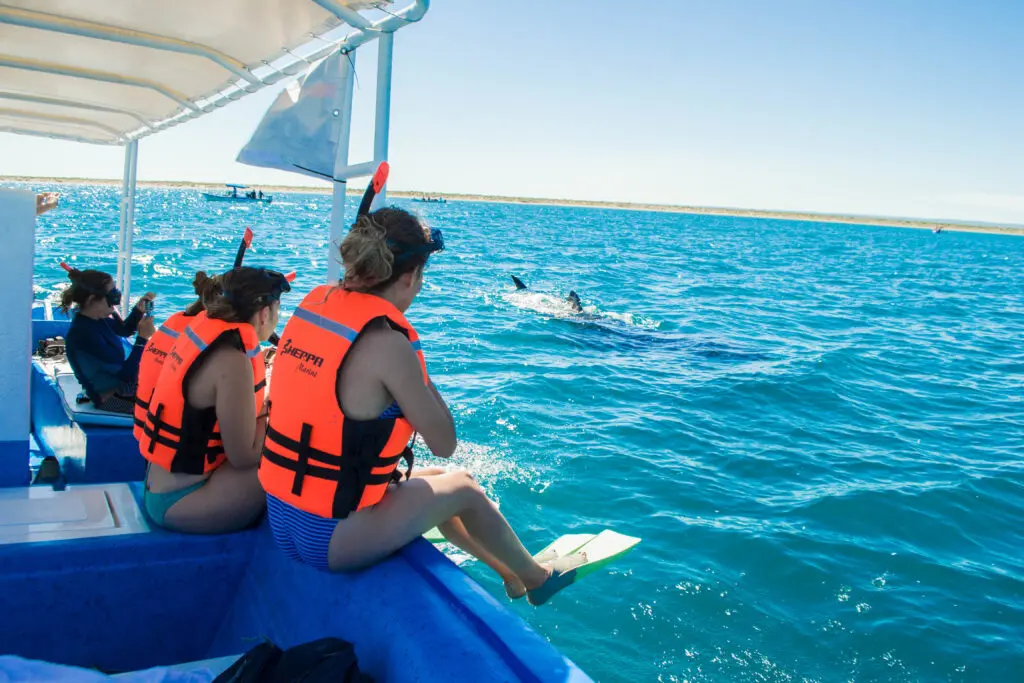
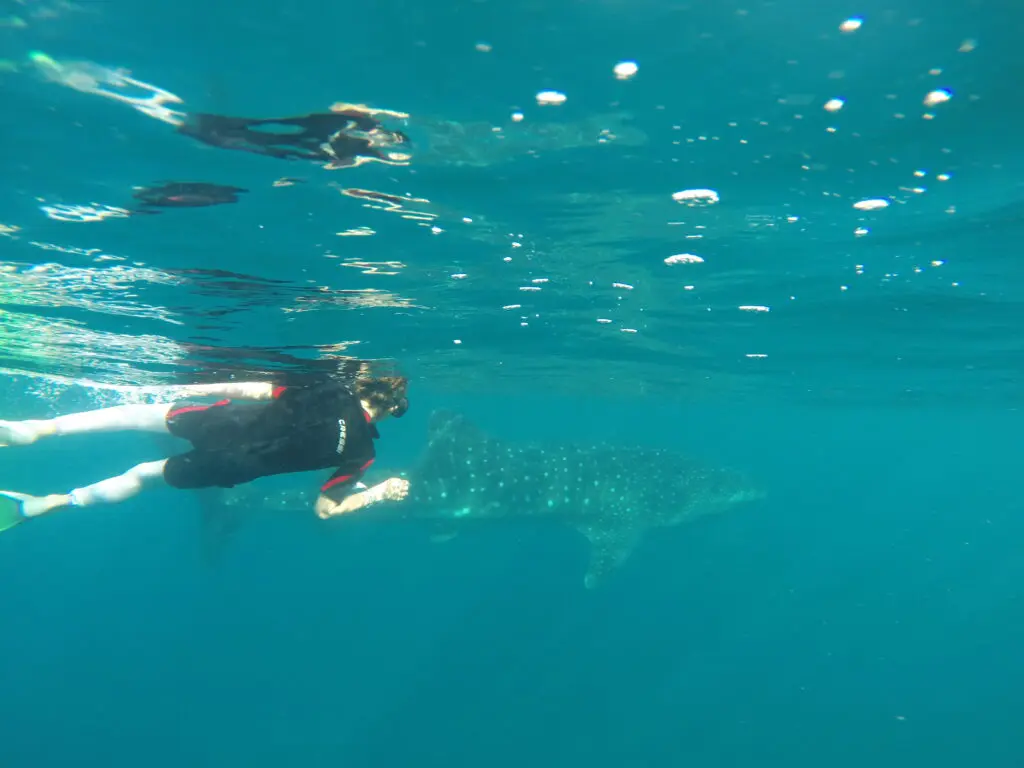
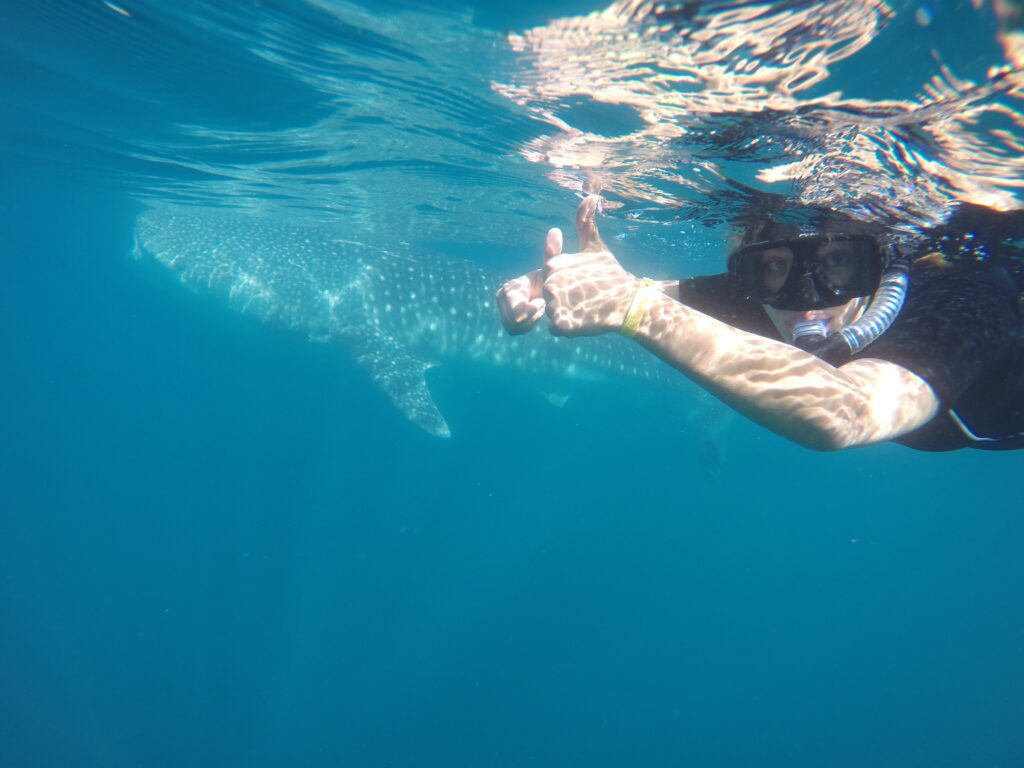
We motored around the bay for about 15 minutes before we spotted our first whale shark. We slowly made our way over, and once Carla gave the signal, we slipped into the water three at a time with her for our turn to swim with the shark. It didn’t seem bothered by us at all – it just kept on swimming.
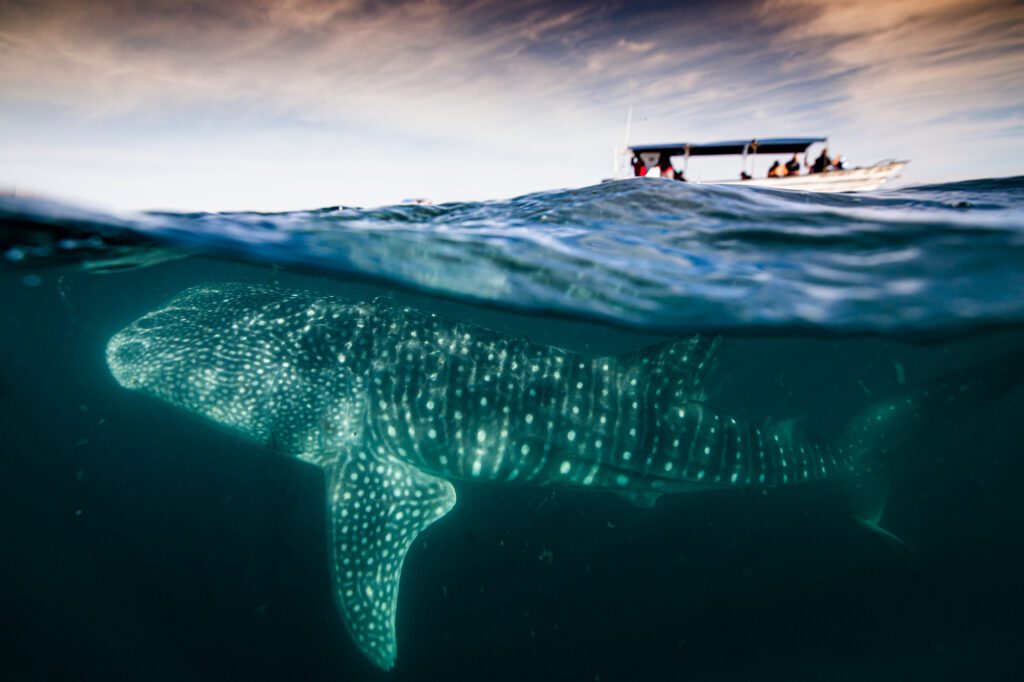
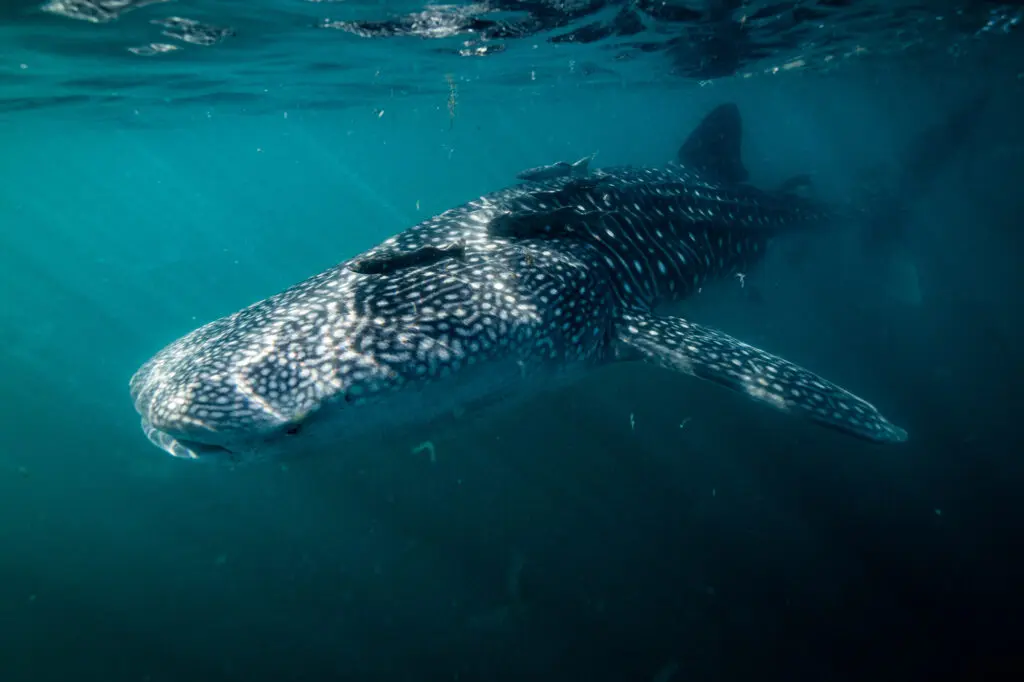
It was much bigger than I expected – at least 2 to 3 times my length! The water was murky, so when it came into view it was suddenly RIGHT THERE. I’ll admit I felt a little fear, even though I knew whale sharks are filter feeders that eat plankton, not people. After everyone had a chance to swim and snorkel alongside it, we moved on and soon found another one for a second round of swims. What an incredible experience.
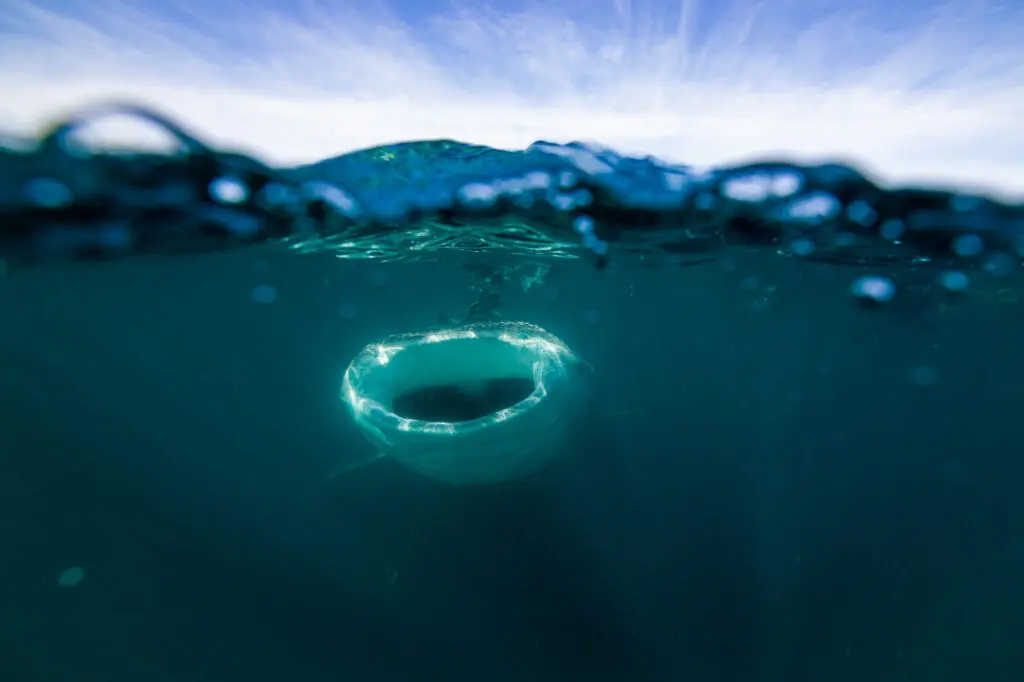
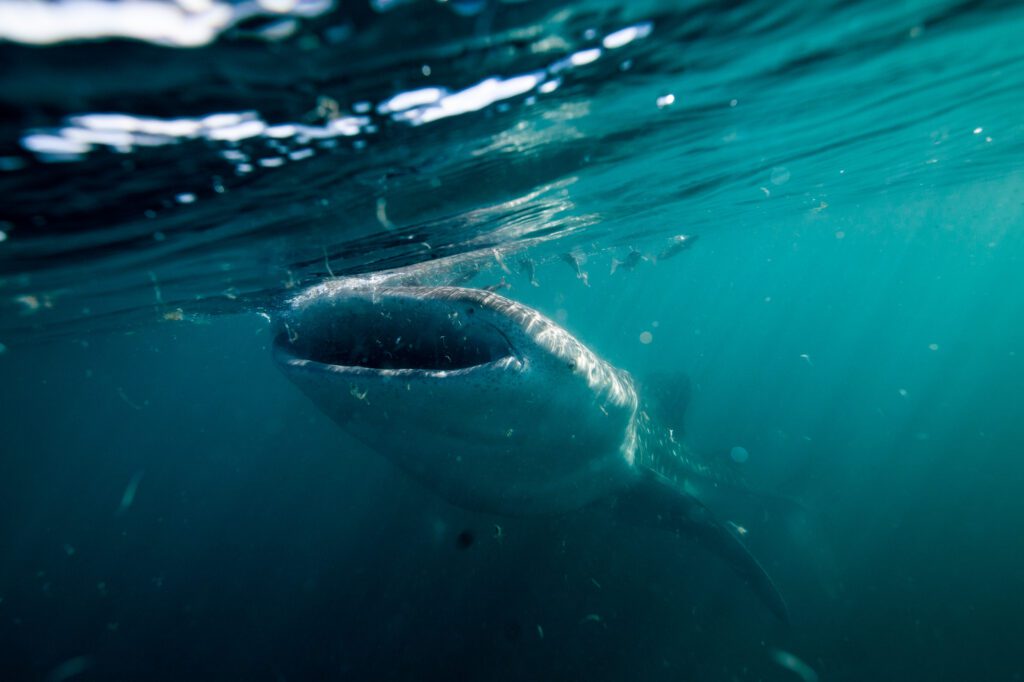
Once the nerves wore off, it was pure awe. Swimming next to the biggest fish in the ocean as it glided along, mouth open and filtering plankton, with its spotted skin just a few meters away, was one of the most incredible wildlife experiences I’ve ever had. It moved so slowly and calmly that it felt like we were just guests in its world for a few minutes. Climbing back into the boat, none of us could stop smiling. We felt so grateful to share the water with these gentle giants, and to see firsthand that when an encounter is done right, with strict rules and guides who care, it can be good for both the whale sharks and the people lucky enough to swim with them.
A Commitment to Conservation
One of the first things we noticed about MeXplore was their commitment to keeping the whale shark snorkeling La Paz experience personal and eco-conscious. In addition to going over all of the rules, conservation policies and etiquette with us, they were very respectful of the whale sharks and worked to minimize the impact on them. They allowed 3 of us at a time in the water with them, and when a whale shark swam off, they let it be and didn’t follow. The small number of people in the water at any given time made it a very personal and serene experience. It also underscored MeXplore’s dedication to the well-being of these animals and their natural habitat.
Eco-Conscious Exploring
The eco-conscious ethos of MeXplore was evident in every aspect of the tour, from the educational tidbits shared by Carla to the careful measures taken to minimize our impact on the marine environment. This thoughtful approach made our adventure feel even more special, knowing that we were experiencing nature without causing harm. Carla also had a Go Pro and was taking photos and videos of us in the water with the whale sharks, so we could just enjoy our experience swimming with the whale sharks without having to worry about taking pictures.
How to Choose a Whale Shark Tour
We highly recommend booking a whale shark tour with MeXplore. They are very focused on minimizing their impact on the whale sharks while teaching and having fun. Not every operator puts the same emphasis on education and conservation, so here’s what to look for:
- A licensed operator with SEMARNAT authorization
- Marine biologist guides who give a thorough briefing on the rules
- Small groups, so only a few people are in the water at a time
- Guides who let a whale shark swim off instead of chasing it
- Part of your fee going toward whale shark conservation
If you are interested in learning more about these gentle giants, you can volunteer with Whale Shark Mexico and participate in citizen science on a day tour or research program. While you snorkel and swim with the whale sharks, you may be helping with whale shark tagging/sampling, ecological surveys, conducting whale sharks behavioral monitoring, contributing to database management and data analysis, and so much more.
Swimming with the whale sharks was an incredible experience that’s hard to put into words. We are thankful to MeXplore, Whale Shark Mexico and the Mexican government for working tirelessly to protect these majestic beings and allowing us to share their world for a morning.
When and Where to See Whale Sharks in Mexico
The whale shark season in La Paz typically runs from November through April, with the most sharks often seen mid-season. Whale sharks can also be seen off the Yucatán Peninsula, with tours usually leaving from Isla Mujeres, Holbox or Cancún from about June through September, but the sharks there are farther offshore and the boat ride is much longer than in La Paz.
Getting to La Paz
La Paz has its own international airport (LAP), about 15–20 minutes from the marina where whale shark tours meet. You can also fly into San José del Cabo (SJD), about a 2.5–3 hour drive away. Strong winter winds occasionally close the harbor, so it’s smart to leave a backup day in your plans.
What to Bring
- Swimsuit
- Biodegradable, reef-safe sunscreen
- Towel and a change of clothes
- Camera (no flash)
- Hoodie or light jacket for the boat ride (December–March)
Other La Paz Outdoor Adventures
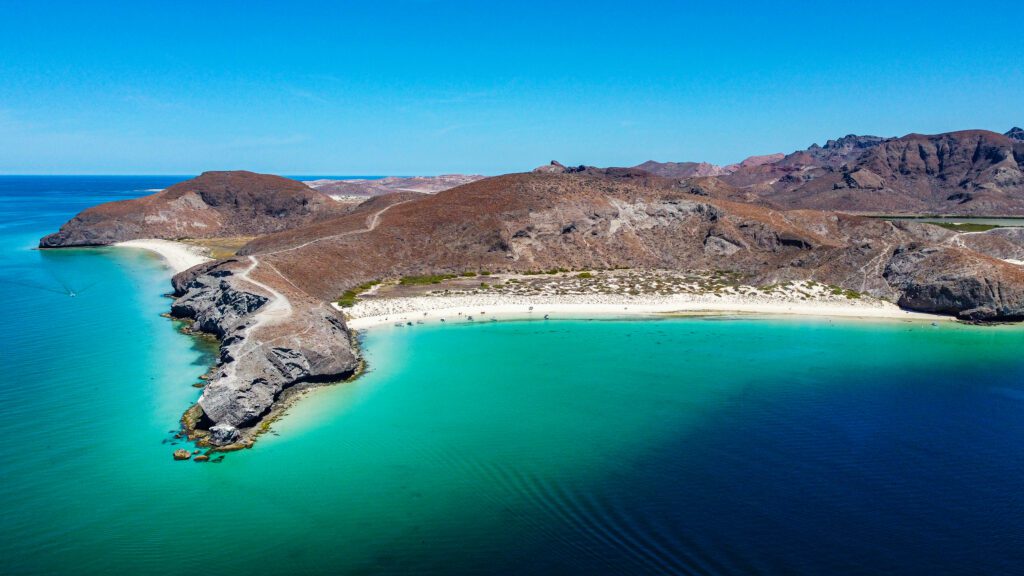
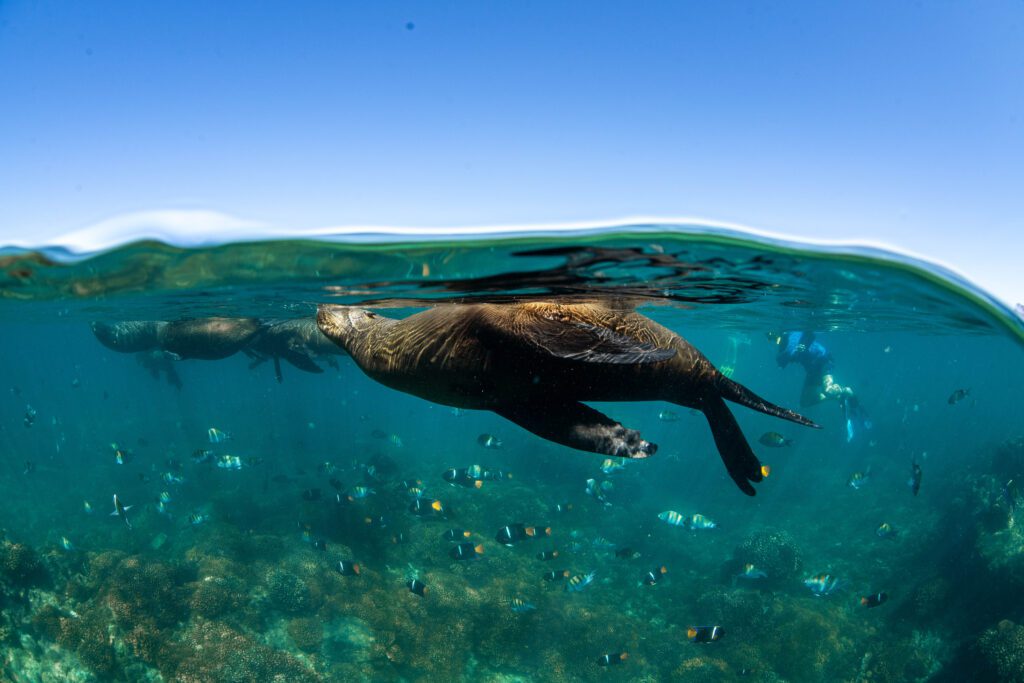
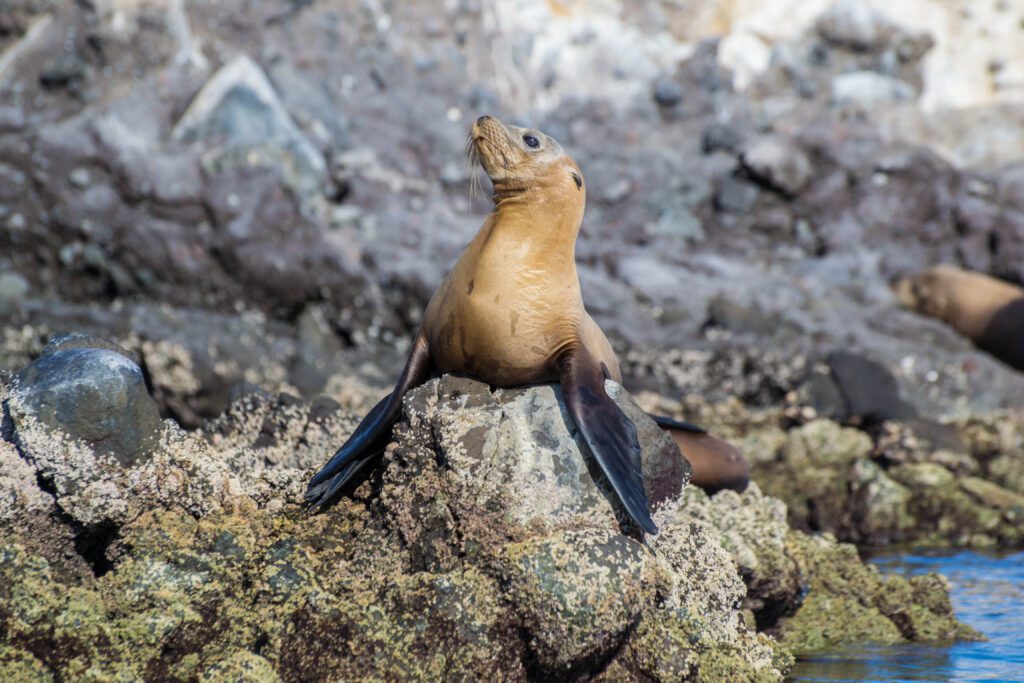
If you’re looking for more adventure in La Paz, MeXplore also runs trips that combine swimming with whale sharks with snorkeling with sea lions and a trip to the exquisite Playa Balandra. Or head out and explore Espiritu Santo Island, a UNESCO World Heritage site and the crown jewel of La Paz for snorkeling, beaches, and hiking trails.
Swimming with Whale Sharks in La Paz FAQ
Is it safe to swim with whale sharks?
Yes. Whale sharks are filter feeders that eat plankton and small fish, and they’re known for being gentle. Follow your guide, keep your distance and stay clear of the tail.
Can you touch a whale shark?
No. Touching is not allowed – it stresses the sharks and can harm them.
Can you scuba dive or freedive with whale sharks in La Paz?
No. Only surface snorkeling is allowed, to keep stress on the animals as low as possible.
How close can you get?
Guides keep you a few meters away, as set by the rules. The whale sharks sometimes swim closer on their own – just stay calm and give them room.
Do I need to be a strong swimmer?
You need to be able to swim and be comfortable jumping in and out of a boat several times. The wetsuit adds buoyancy, and if you’d rather watch, you can stay on the boat.
Can kids swim with whale sharks?
Yes, kids who are good swimmers can join, as long as they’re with an adult.
Are whale shark sightings guaranteed?
No – they’re wild animals. During the season your chances are very good, and tours only run when enough whale sharks are in the bay.
How much does it cost?
MeXplore’s tour is MX$2,900 per person and includes snorkel gear, a wetsuit, and photos and videos of your swim.
What else can I do near La Paz?
MeXplore runs combo trips with sea lion snorkeling and Playa Balandra, and Espíritu Santo Island is great for snorkeling, beaches and hiking. A couple of hours south, La Ventana is known for mobula rays, dolphins and the occasional orca.