
Updated October 2026
Snorkeling in La Ventana
La Ventana snorkeling is one of the best ways to see the Sea of Cortez up close. Baja’s East Cape is like nowhere else, and the marine life of the Gulf of California is a big reason why. Explorer Jacques Cousteau called it the “world’s aquarium” for its unique marine environment and astounding amount of sea life. On our recent Baja trip, I knew I wanted to experience this underwater world, and locals kept recommending the town of La Ventana. This coastal town has earned a reputation as one of the best places in the world for wind sports, and many visitors come to kiteboard, windsurf and wing, but snorkeling in La Ventana is equally enchanting. It’s about an hour from La Paz and just over 2 hours from the crowds of Cabo, and the reefs and open water here are teeming with life. Snorkeling and diving trips give you an up-close view of the intricate ecosystem beneath the surface.


La Ventana Snorkeling at a Glance
- Tour: Baja Wild Encounters Sea of Cortez Snorkeling Tour
- Length: About 6 hours, with several snorkeling stops
- Price: $160 per person (may fluctuate with the exchange rate)
- Included: Snorkel gear, catered lunch, shaded panga boat with dry storage
- Bring: Wetsuit (rent at Playa Central if needed), reef-safe sunscreen, reusable water bottle, towel and hat
- Meeting point: La Ventana boat ramp, early morning
- Nearest airports: La Paz (LAP), about 1 hour; San José del Cabo (SJD), just over 2 hours
Our La Ventana Snorkeling Tour
I chose the 5-star rated Baja Wild Encounters for my La Ventana snorkeling trip – a 6-hour tour aboard a new panga boat with several snorkeling stops, plus snorkeling gear and lunch, for $160 (may fluctuate with the exchange rate). It turned out to be a very wise choice.
Bright and early, I joined 6 other excited visitors at the La Ventana boat ramp and met our guide Jamie, a British expatriate who started Baja Wild Encounters. He employs local commercial fishermen for his trips across Baja, with the goal of helping them transition to tourism instead of overfishing and unsustainable shark fishing. Jamie talked about the benefits of tourism income for locals and the positive impact it has on reducing overfishing. He leads snorkeling tours, scuba diving trips, and whale-watching trips throughout Baja, mostly in La Ventana in the winter. His captain Lorenzo’s boat looked brand new and was the nicest one I saw that day – it had shade, dry compartments and plenty of room. Jamie provided snorkeling gear and a catered lunch, but we brought our own wetsuits (easy to rent from Playa Central right in La Ventana).
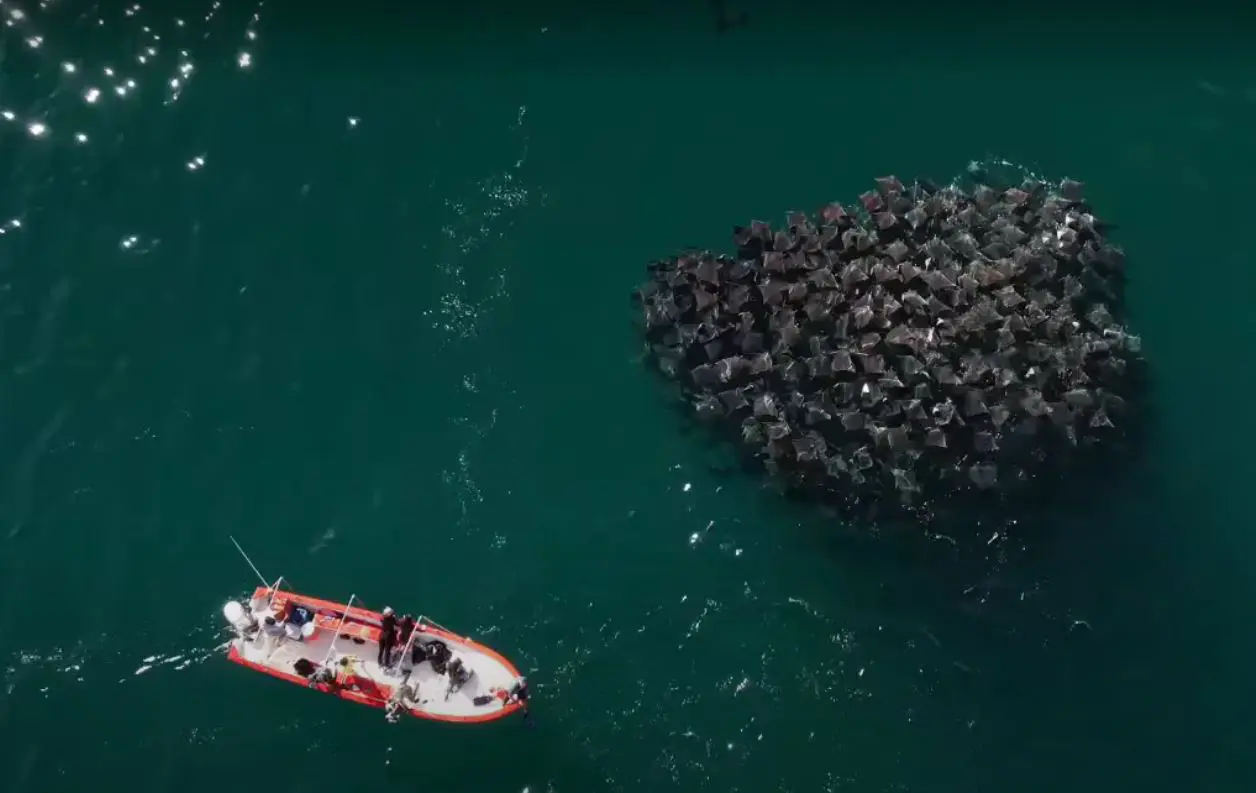
Jamie’s passion for wildlife and Baja is obvious. He’s a self-taught guide and a wealth of information, and he answered all of our questions about the flora and fauna of the Gulf of California. The group was hoping for whales, so we set off in search of sea life. We didn’t have to wait long – within minutes we were surrounded by huge schools of mobula rays (sometimes called “flying rays”) jumping many feet out of the water and belly flopping back down. Researchers still aren’t sure why they do this, but one common theory is that it helps shake off parasites. We slowly lowered ourselves into the water, but the mobulas took note and swam away.
As we headed out to explore other areas, Lorenzo got a call from some fishermen who had spotted orcas in the bay – a rare treat in this area. Orcas live in the Sea of Cortez year-round but aren’t seen often. Mexico has strict rules for watching whales, so we followed Jamie’s lead on when it was okay to quietly slip into the water and when to stay on the boat.
Seeing the pod of orcas crest the surface of the water was truly incredible – there were 8 or 9 females and even a baby orca with the pod. Once Jamie told us that wild orcas have almost never harmed humans, my anxiety eased a bit. I gently lowered myself into the water, put on my mask and snorkel, and took in this once-in-a-lifetime experience. We soon realized they were feeding on the huge schools of mobulas and could not care less about us. I could hear their excited sounds as they hunted, and watched the group circle the mobulas and dive into the center to pluck one away, swimming off with a mobula in mouth. After a few minutes of our real-life National Geographic moment, we climbed back on the boat to let them eat in peace.
As we made our way back to shore, we marveled at an impressive pod of hundreds of common dolphins perfectly synchronized as they leapt across the waves.
The 6-hour adventure included enough experiences for 6 years – definitely a 5-star adventure.
Best Time to Snorkel in La Ventana
La Ventana has two very different seasons. From roughly November through March, strong north winds blow most afternoons – great for kiting, but they can make the water choppy. Mornings are usually calmer, which is why snorkel tours head out early. The water is cooler in winter, around the high 60s to low 70s °F, so plan on a wetsuit.
Mobula rays can be seen much of the year (we saw them in winter), but the biggest gatherings usually happen in late spring and early summer, when the water warms up and the wind dies down. Summer and early fall bring the warmest water, often in the 80s °F, along with serious heat and the chance of tropical storms. Whale and orca sightings are never guaranteed – they’re a bonus whenever they happen.
Getting to La Ventana
The closest airport is La Paz (LAP), about an hour’s drive from La Ventana. You can also fly into San José del Cabo (SJD), which is a little over 2 hours’ drive (146 km) on a good, paved road. Renting a car at either airport is the best option, though shuttles are also available. La Ventana is larger than Cabo Pulmo (which has equally amazing snorkeling adventures) and has a good selection of places to stay, from bungalows to hotels, plus restaurants, bars, shops and outdoor adventure providers. It offers a wide variety of outdoor activities – from wind sports to mountain biking to snorkeling and scuba diving. It’s a delightful destination for anyone looking for adventure away from the crowds in Baja.
Snorkeling Safety
We’ve rounded up some top safety tips for new snorkelers from ocean safety experts and tour guides to help you stay safe while you explore underwater:
- Take it slow and steady. Keep your heart rate down, breathe slowly, and don’t push too hard. Snorkeling isn’t a race – it’s about cruising and soaking in the sea life.
- Check conditions and go with a guide. Always check the wind and ocean forecast before heading out. La Ventana’s beaches don’t have lifeguards, so go with a guided tour or let someone onshore know your plans. If something goes sideways, your chances of getting help are way higher.
- Never snorkel solo. Always go with a buddy. If you’re new to snorkeling, booking a guided tour is a smart move – they’ll show you the ropes and keep an eye out.
- Hydrate and protect your skin. Travel and the Baja sun can leave you dehydrated, so drink plenty of water before and after you get in. Use reef-safe sunscreen or wear a rash guard – regular sunscreen can harm coral and marine life.
- Test your gear before hitting the ocean. Try it on land or in a pool to make sure everything fits and works. Practice breathing through your snorkel, clearing it, and dealing with a foggy or leaky mask. Your fins should feel comfy and let you scissor kick smoothly – frog kicks and dog paddling won’t get you far.
- Don’t walk around in your fins. Wait until you’re in the water past the shore break to put them on. Same goes for getting out – take them off before walking back to shore or climbing onto a boat.
Snorkeling Dos and Don’ts
- Do observe marine life from a distance, without getting too close
- Do bring a reusable water bottle – there’s too much plastic in our oceans already!
- Do follow Leave No Trace principles
- Do look for tour operators that promote Leave No Trace by not providing plastic water bottles, respecting wildlife, and not allowing participants to touch, feed or chase
- Do check out our Snorkeling for Beginners article to learn more!
- Don’t ever feed any wildlife or marine life – human food is not good for them, plus they may become dependent on humans and not find food themselves
- Don’t ever touch any wildlife or marine life – they are very sensitive and a human touch is not only terrifying but could make them sick or even kill them
- Don’t touch coral – it’s very sensitive and it can cause irreparable harm
- Don’t ever chase a wild animal or sea life, if they swim away please let them be
La Ventana Snorkeling FAQ
Is La Ventana snorkeling good for beginners?
Yes, especially with a guided tour. Guides pick spots based on the day’s conditions and keep an eye on everyone in the water. If you’re new, practice with your gear in a pool first and check out our Snorkeling for Beginners article.
Do I need a wetsuit?
For some of the year, yes. The water is cool in winter, so a 3–5 mm wetsuit will keep you comfortable on a long day of snorkeling. You can rent one from Playa Central right in La Ventana. The water starts getting warm in late spring/summer, so check with your guide on whether it’s recommended in the month you are going.
When can you see mobula rays in La Ventana?
Mobula rays can show up much of the year – I saw huge schools in winter – but the biggest gatherings usually happen in late spring and early summer.
Can I see whale sharks near La Ventana?
Whale sharks gather in the Bay of La Paz, about an hour away, roughly from late fall through spring. Choose from one of our vetted La Paz snorkeling tours, led by expert local guides who strictly follow the rules for keeping distance and limiting time in the water.
How far is La Ventana from Cabo and La Paz?
About an hour from La Paz airport (LAP) and a little over 2 hours from San José del Cabo airport (SJD).
Is it safe to snorkel with orcas?
Wild orcas have almost never harmed humans, but they’re powerful wild animals. Only get in the water when your guide says it’s okay, stay calm, keep your distance and never chase them.
How much does a La Ventana snorkeling tour cost?
Full-day guided tours run about $160 per person, usually with snorkel gear and lunch included. Wetsuit rentals are extra.
Can you snorkel from shore in La Ventana?
There are a few rocky spots along the coast, but the best marine life is offshore, so a boat tour is the way to go.
Where do La Ventana snorkel tours go?
Tours explore the coastline south of La Ventana near the lighthouse, head out into the open Sea of Cortez, and often visit Isla Cerralvo (also called Isla Jacques Cousteau), across the channel from town. The exact route depends on the day’s conditions and where the wildlife is.
La Ventana or Cabo Pulmo: which is better for snorkeling?
Cabo Pulmo is a protected marine park with a famous coral reef. La Ventana is better for open-water encounters with mobula rays, dolphins and the occasional orca. If you can, do both – here’s our Cabo Pulmo snorkeling guide.
Do I need to be a strong swimmer?
You should be comfortable in open water. Guides provide gear and a wetsuit adds buoyancy, but there’s no shallow beach to stand up in.
Can kids go on snorkel tours?
Many operators welcome kids who are comfortable swimming. Check age limits when you book.
Should I tip my guide?
Tipping 10–20% is common in Mexico for good guides and boat captains.