
Written collectively by the TripOutside team. We’ve snowshoed and skied in most of these U.S. national parks in winter, and our team includes a Leave No Trace instructor. For parks we haven’t visited in winter, we talked directly with our local guide and outfitter partners about routes, permits, and conditions.
The best national parks to visit in winter offer something summer can’t: quiet trails, wildlife that’s easier to spot against the snow, and steam rising from rivers and geyser basins. Trails that are packed in July can feel empty in January, especially on weekdays.
After snowshoeing beneath the Tetons and exploring Rocky Mountain National Park in winter, we think the off-season is one of the most rewarding times to visit. This guide covers six national parks in winter with good options for snowshoeing, cross-country skiing, and winter hiking, along with when to go, where to start, and what to plan for. If you’re looking for snowy national parks rather than a warm-weather escape, start here.
Winter Travel Note: Winter conditions change quickly in national parks. Road closures, avalanche risk, and weather can all affect access, so check current park updates and the local avalanche forecast before you go, and consider a guided tour if you’re new to winter travel.
The Best National Parks to Visit in Winter at a Glance
Here’s how these national parks to visit in winter compare. Snow and road access change from year to year, so treat the dates as a guide.
| Park | Best for | When to go | Gateway | Easy first outing |
|---|---|---|---|---|
| Grand Teton | Wildlife, snowshoeing, groomed Nordic skiing | Mid-December to March | Jackson, WY | Half-day guided snowshoe tour |
| Yellowstone | Wildlife, hot springs, guided winter tours | Mid-December to mid-March | Gardiner and Big Sky, MT | Guided snowshoe tour from Gardiner |
| Glacier | Quiet forests, lake views, longer ski days | December to March | West Glacier, Whitefish, Kalispell, MT | Lower McDonald Creek |
| Rocky Mountain | Alpine lakes, beginner-friendly snowshoeing | January to March | Estes Park, CO | Sprague Lake or Bear Lake |
| Crater Lake | Deep snow, caldera views | Late November to April | Medford and Klamath Falls, OR | Ranger-led snowshoe walk |
| Yosemite | Granite cliffs, waterfalls, giant sequoias | Mid-December to March | Mariposa and Oakhurst, CA | Marked routes at Badger Pass |
Grand Teton in Winter: Snowshoeing and Cross-Country Skiing
- Best for: Wildlife viewing, snowshoeing, and groomed cross-country skiing
- When to go: Mid-December to March. January to March usually brings the most reliable snow.
- Gateway: Jackson, WY
- Keep in mind: Wildlife closures run Dec. 15 to April 1 in some areas, including the Snake River floodplain, so check the park map before heading out on your own.
Snowshoeing tours in Grand Teton National Park are one of the easiest ways to experience Grand Teton in winter. If you’ve seen the Tetons in summer, you know the view. With the peaks and meadows covered in snow, it feels like a different place.
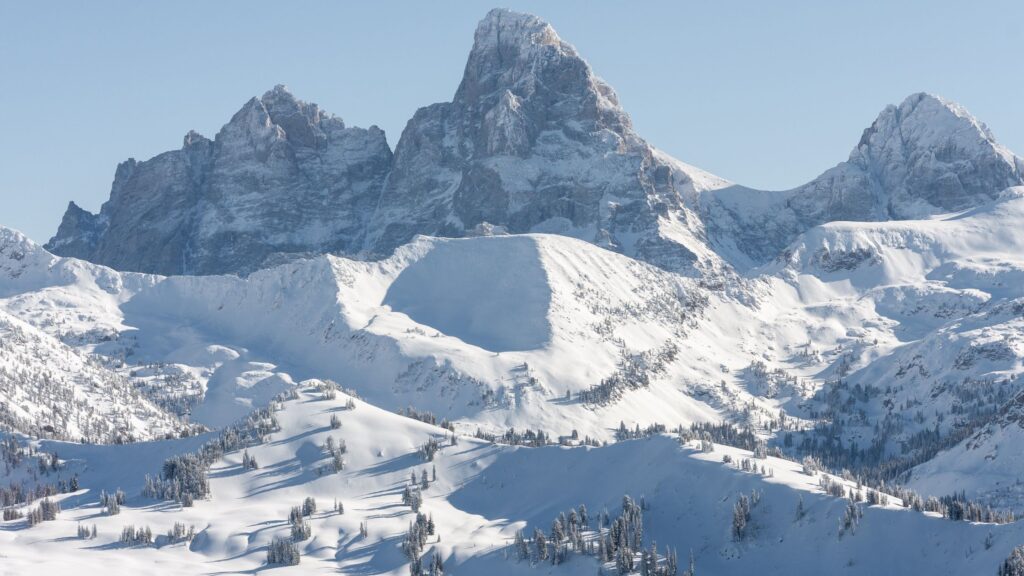
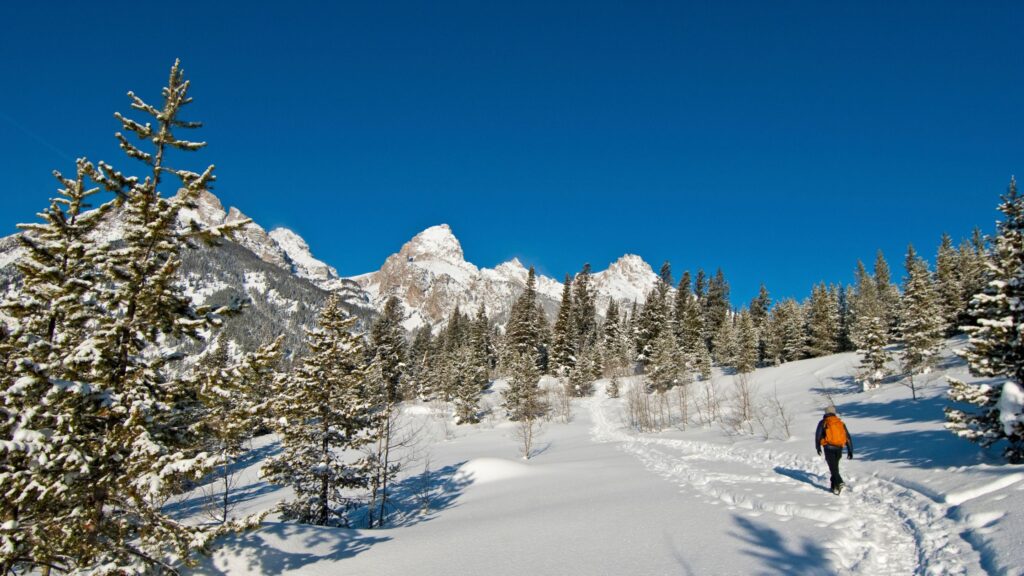
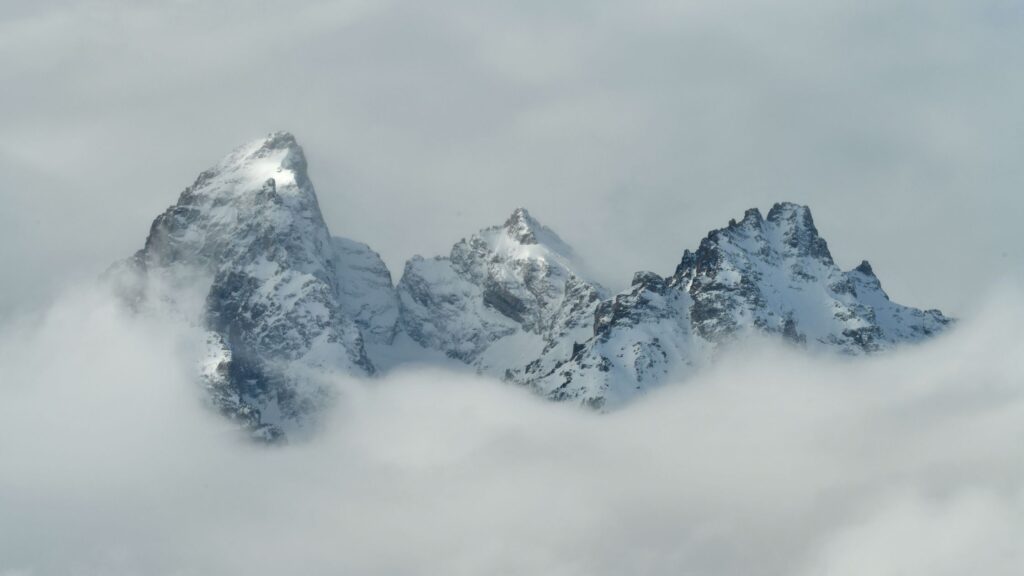
Forested trails wind through cottonwoods and open into meadows, and you may spot moose, fox, elk, or trumpeter swans along the way. Guided half day and full day snowshoe trips led by local naturalists work for families, beginners, and experienced snowshoers, and your guide can share what they know about winter ecology, geology, and animal tracking. For a faster pace, these customized private snowshoe tours add more of a workout.
For something different, we recommend a Wildlife Safari and Snowshoe Tour with Igloo Lunch or Dinner. The day combines a snowshoe in Grand Teton National Park, a search for elk, moose, and raptors in the valley, and a fireside meal in an igloo shelter at a private winter camp on a local ranch. It’s a private outing that works well for families and couples.
If you’d rather ski, the park grooms a 14-mile section of the Teton Park Road between the Taggart Lake Trailhead and Signal Mountain Lodge, usually starting in mid-December. Grand Teton National Park cross-country ski tours are available for different groups and ability levels. A half-day tour suits first-time visitors, while a private full-day tour lets you set the pace, mileage, and destinations.
Pro Tip: Many winter snowshoe tours here are led by local naturalists with years of experience tracking wildlife in deep snow. They know where moose tend to bed down, where elk move through, and how the wind shapes the valleys.

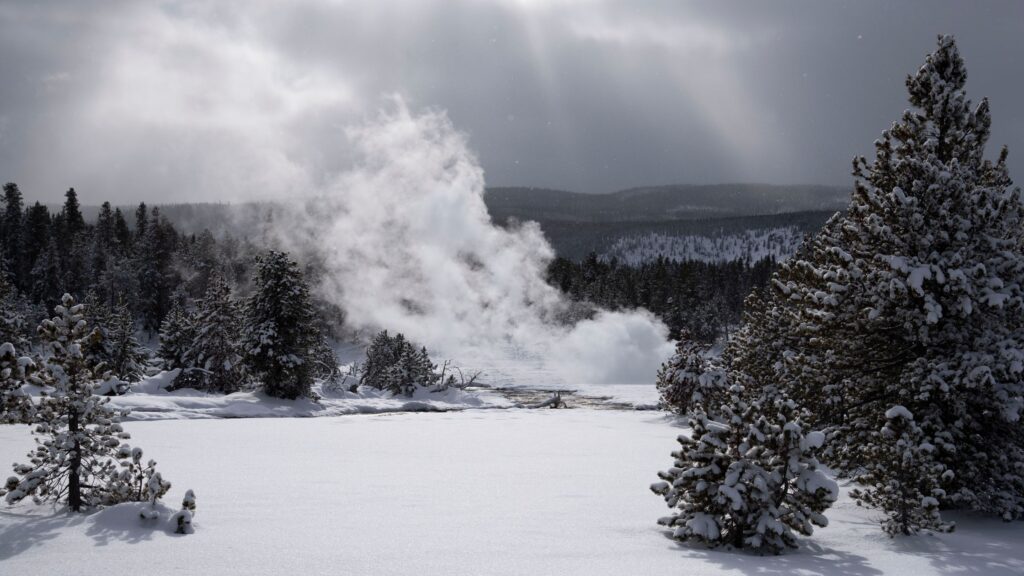
Yellowstone in Winter: Guided Snowshoe Tours and Wildlife
- Best for: Wildlife, steam and hot springs, and guided winter tours
- When to go: Mid-December to mid-March for oversnow travel. The road from Gardiner to Cooke City stays open year-round, weather permitting.
- Gateway: Gardiner and Big Sky, MT
- Keep in mind: Old Faithful and the Grand Canyon of the Yellowstone require a snowcoach or snowmobile in winter. Snowshoe tours from Gardiner focus on the park’s northern side.
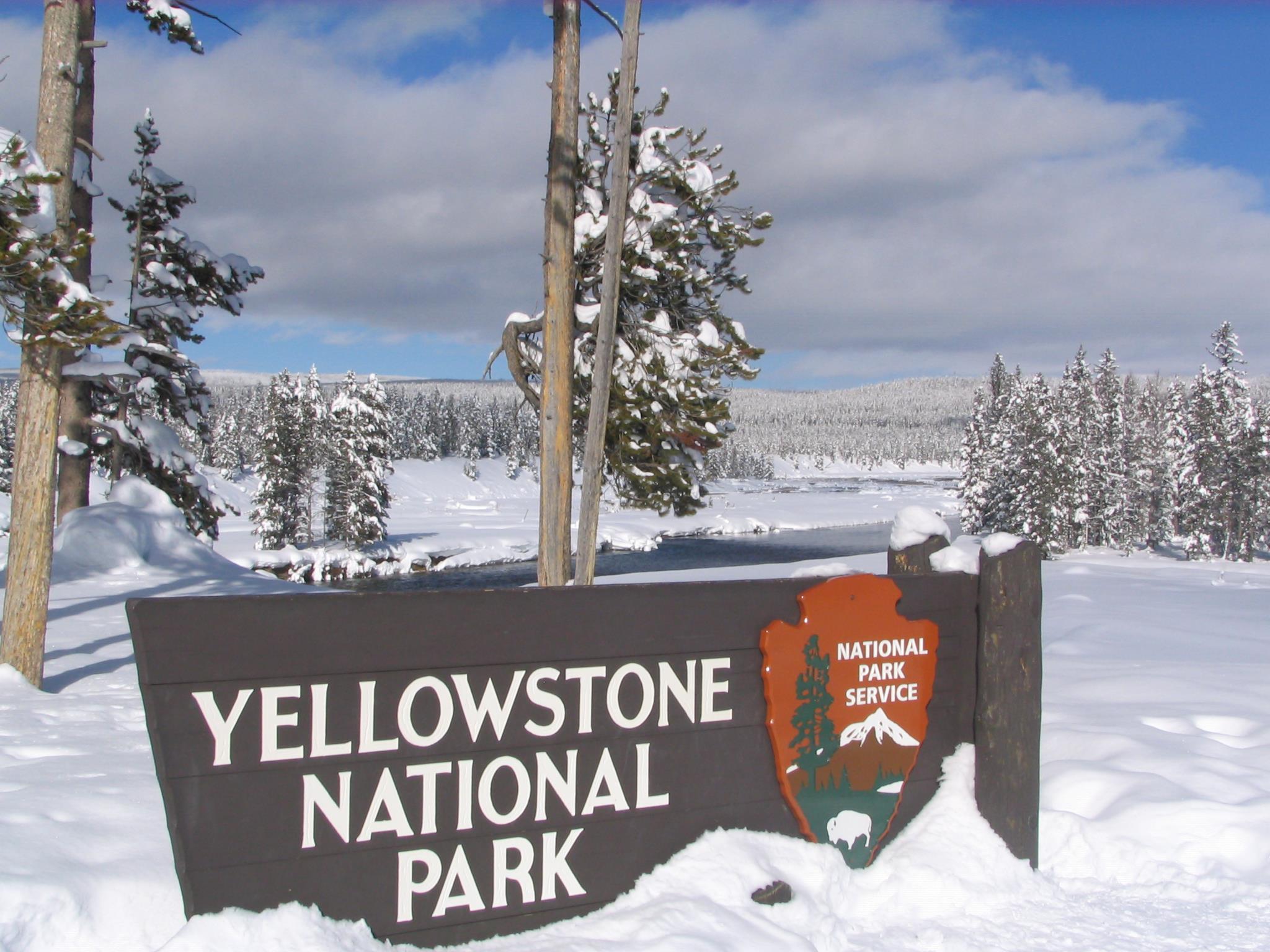
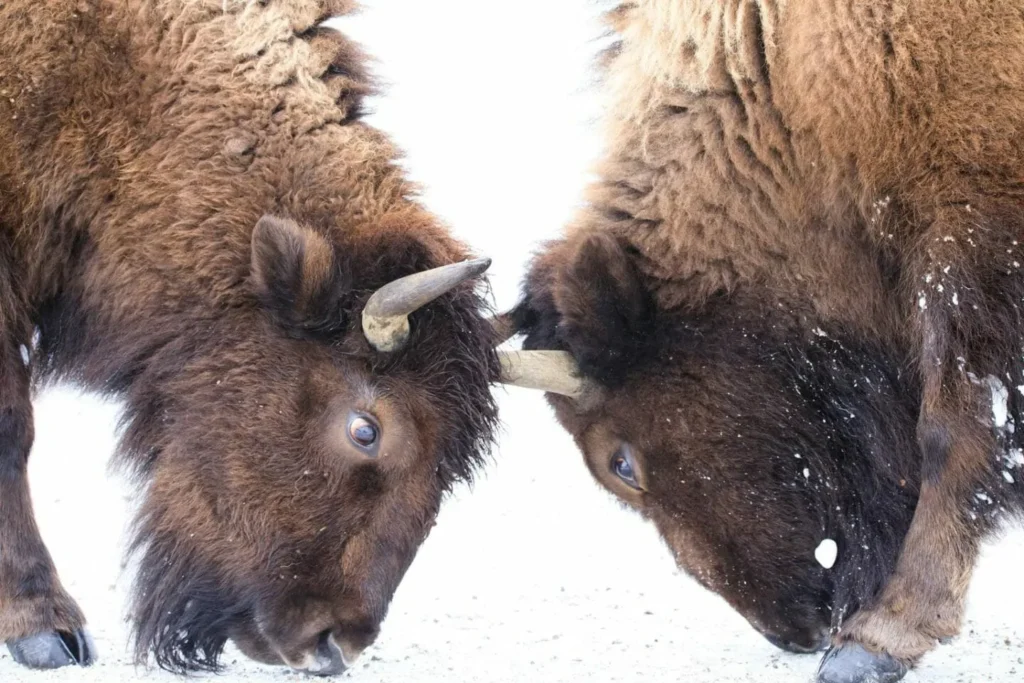
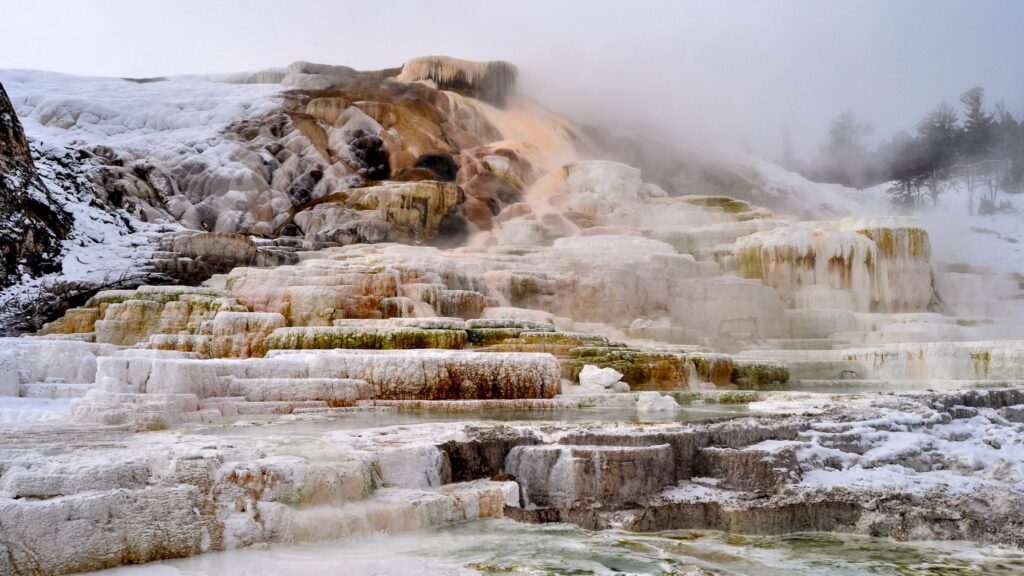
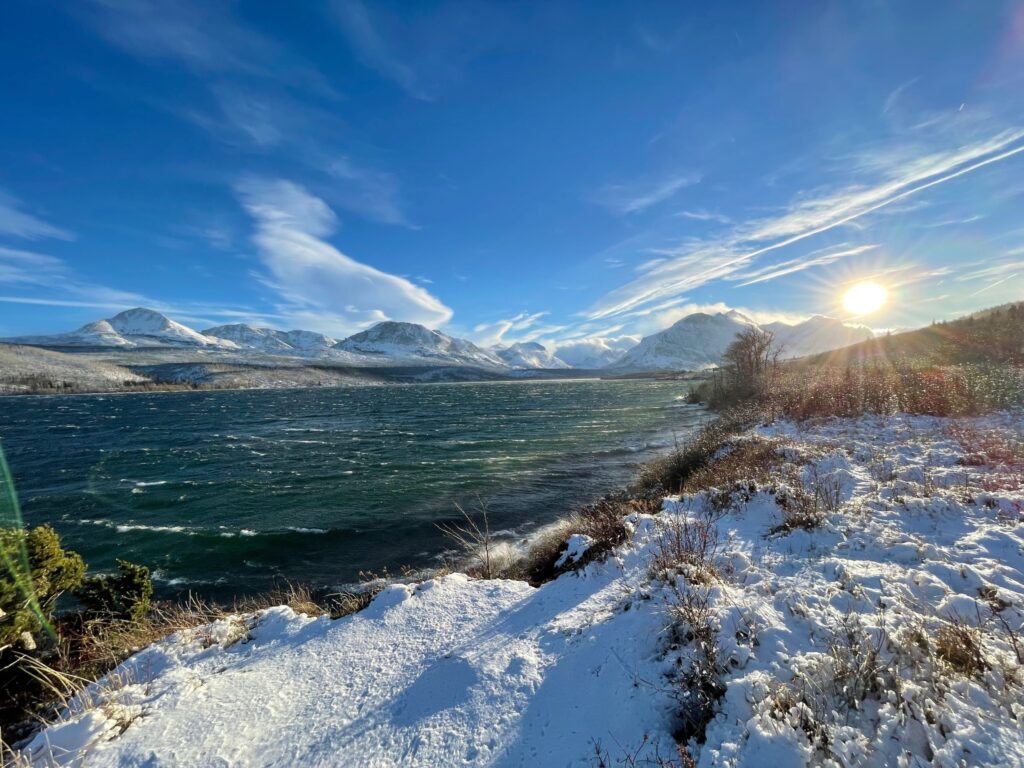
Yellowstone in winter is quiet and wild. Bison stand frosted in hoarfrost, rivers cut warm channels through the snow, and thermal areas send steam into the cold air. Winter access is limited: the road from Gardiner, Montana, through Mammoth Hot Springs and Lamar Valley to Cooke City is the only route open to regular cars. That makes Gardiner a practical base for snowshoeing without booking an oversnow vehicle.
Yellowstone winter tours guided by local experts let you look for wildlife, learn about winter ecology, and track animals through fresh snow on quiet trails. If you’re looking for Yellowstone winter tours that don’t involve a snowmobile, guided snowshoe tours from Gardiner are a good place to start.
Pro Tip: Consider one of our privately guided tours. Hotel pickup and drop-off, an itinerary built around your group, and options for all ages make for an easy day. A smaller group may also improve your chances of spotting wildlife.
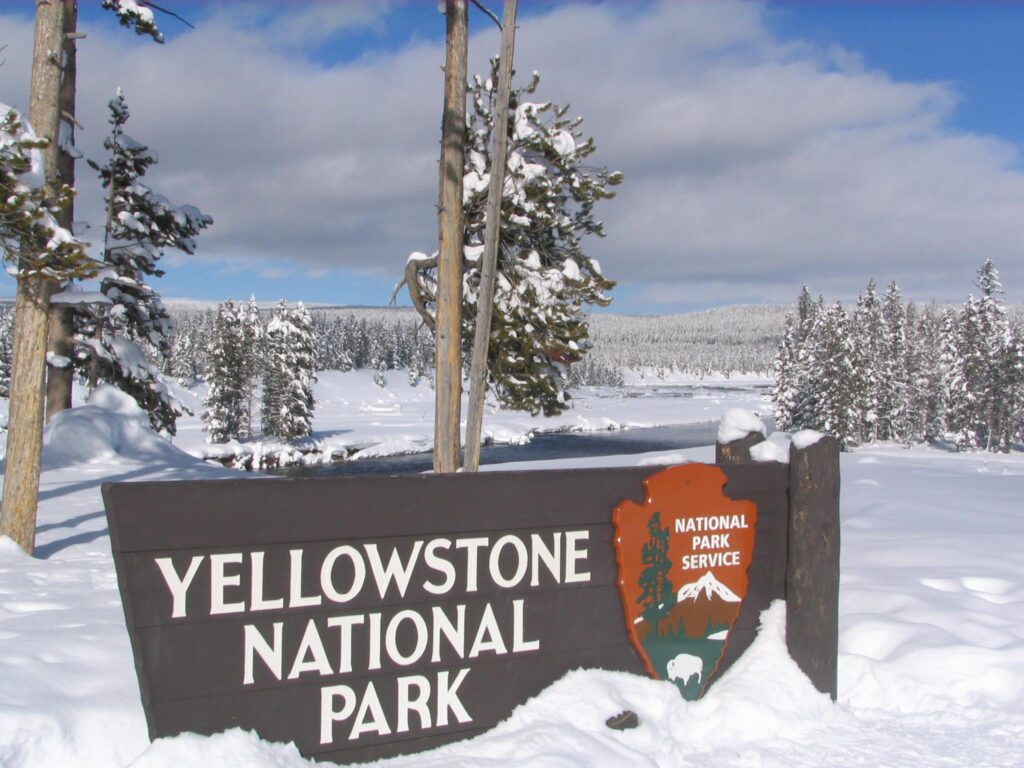
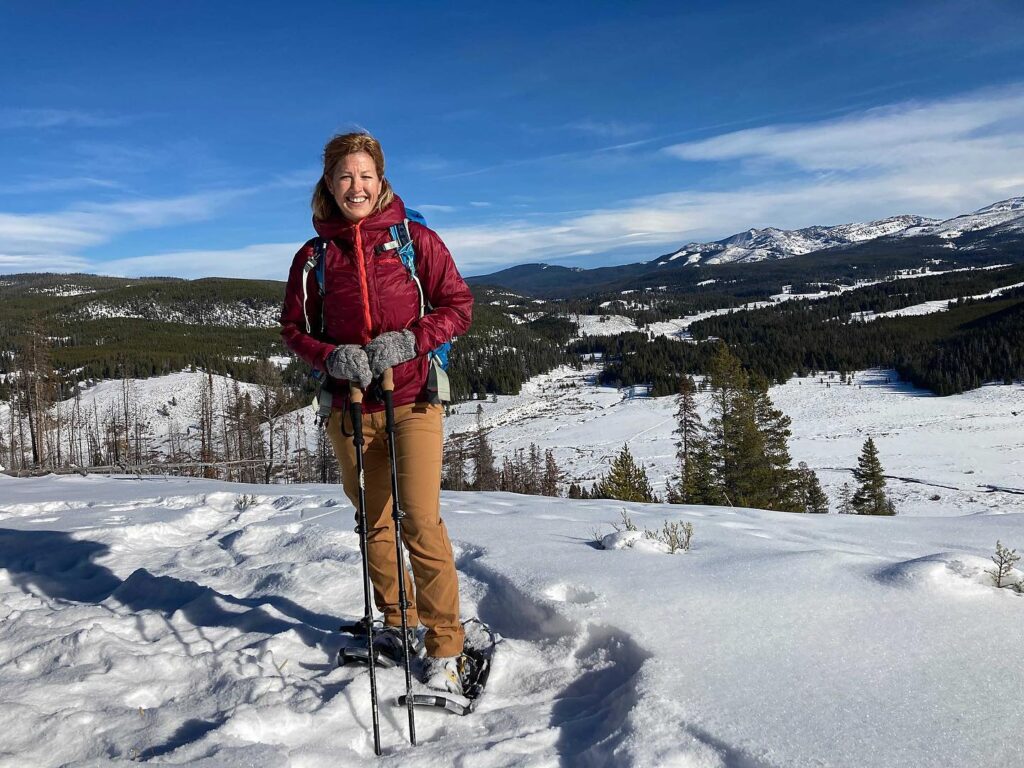
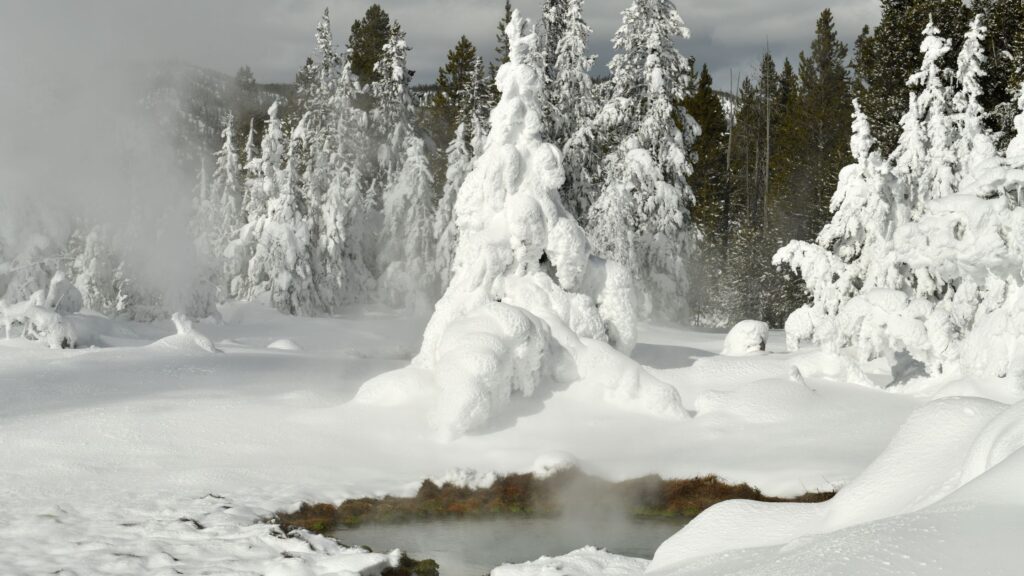
Big Sky Snowshoeing Tours Near Yellowstone
If you’re staying in Big Sky, you don’t have to make the long drive to Gardiner. This private Big Sky snowshoeing tour explores the quieter northwest corner of Yellowstone, including forested drainages, meadows, and the Gallatin River Canyon. With a private guide, the pace is up to you, which makes it a good fit for families and beginners. Tours follow National Park Service winter-use rules, so your guide takes care of access.
Glacier National Park in Winter: Snowshoeing and Cross-Country Skiing
- Best for: Quiet forests, lake views, and longer ski or snowshoe days
- When to go: December to March. Snow is usually deepest by March.
- Gateway: West Glacier, Whitefish, Columbia Falls, and Kalispell, MT
- Keep in mind: Most winter routes aren’t marked and services are limited. Check the Flathead Avalanche Center forecast before you go.
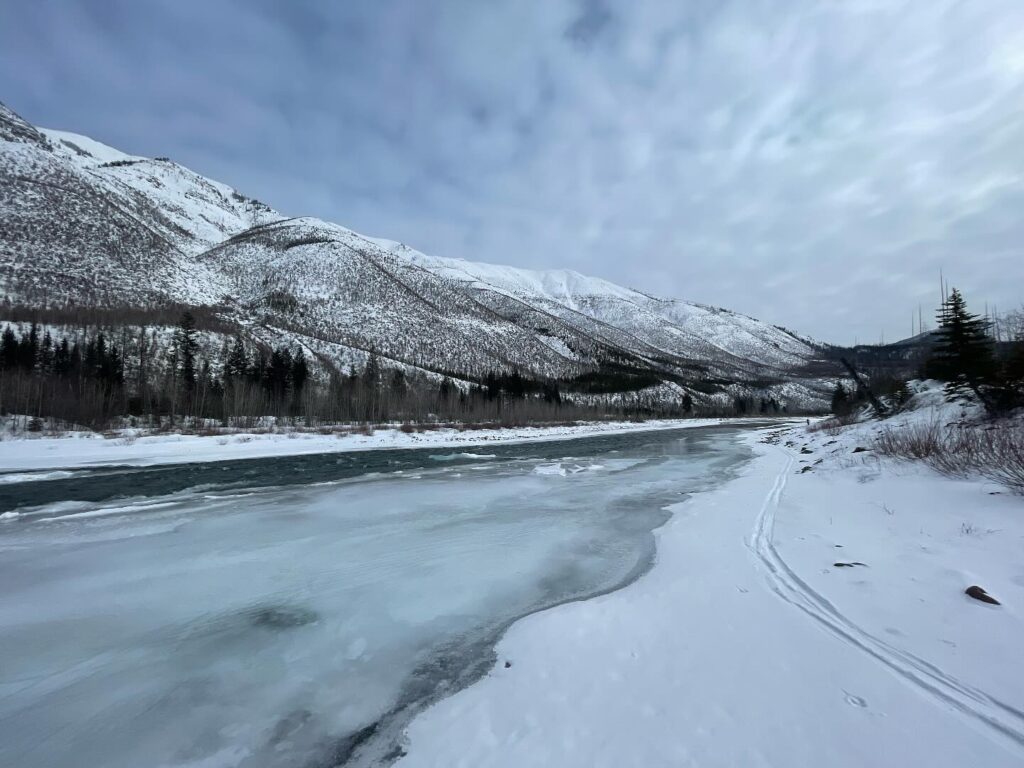
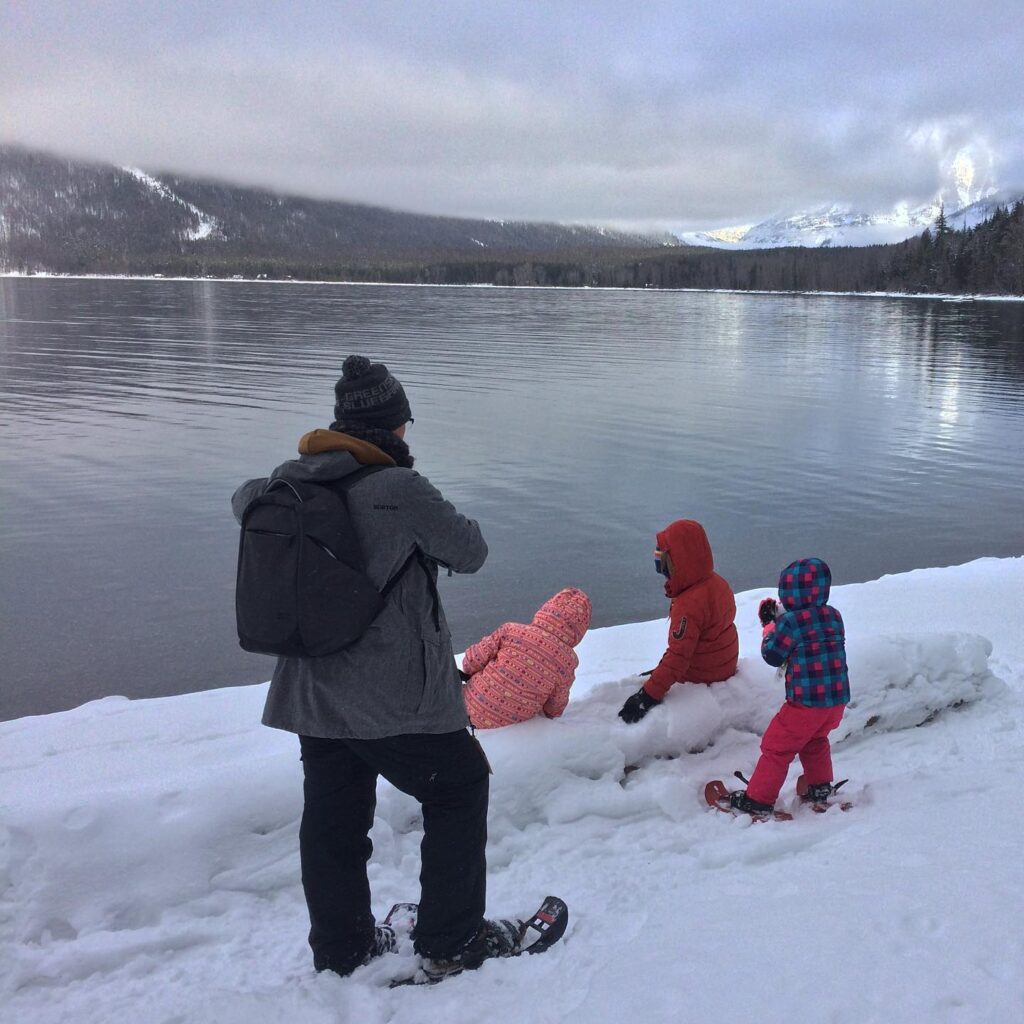
Glacier National Park in winter offers big mountain scenery with far fewer people. Much of the park is closed to cars, but we’ve found that the quieter months change how it feels. Lake McDonald, usually busy with cars and people in summer, can feel like your own, and the cedar forests hold deep snow and long stretches of quiet. Reaching places like Avalanche Creek takes more effort: the road closes to cars at Lake McDonald Lodge, and the Avalanche Picnic Area is an 11.6-mile round trip from there.
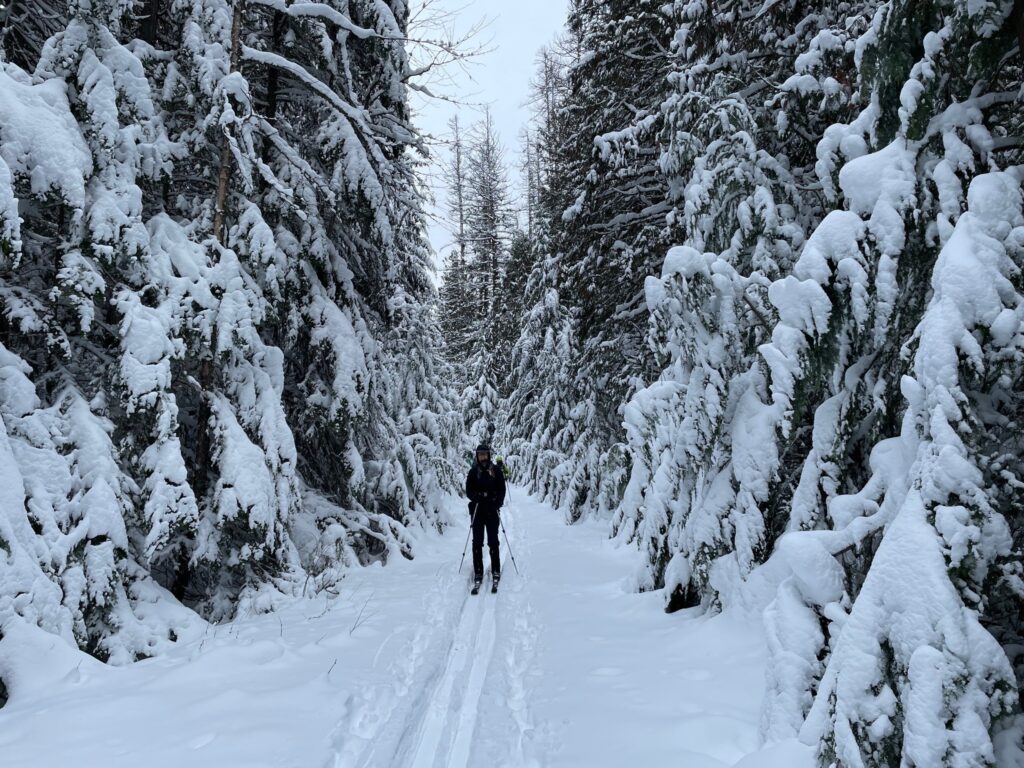
Snowshoeing in Glacier National Park suits travelers who want space and a slower pace. Your guide can adjust the route based on snowpack, recent avalanche activity, and the weather, which is a big part of why guided trips are useful in Glacier’s deep-snow winters.
Where to Snowshoe and Ski in Glacier
Whether you choose a private snowshoeing tour or a guided cross-country ski tour in Glacier National Park, your guide can tailor the outing to your preferred scenery and level of adventure. These 3.5- to 5-hour trips are beginner-friendly and include gear, hot drinks, lunch, and park entry. Hotel pickup is available from Whitefish, Kalispell, and Columbia Falls, and groups are small.
Here are some of the areas you may visit on a guided tour. Guides choose routes based on current conditions and aim to avoid avalanche paths and steep start zones. Difficulty changes with the snow, so ask your guide what to expect.
- Autumn Creek (Marias Pass): On Glacier’s southern border, this route starts on a gentle grade with views toward the Continental Divide. Beginners may want to stick to the first section near Three Bears Lake, because several avalanche paths cross the open area below Elk Mountain. The trail also crosses a railroad line at the start.
- Fish Creek and Rocky Point: On the west side near Fish Creek Campground, this mostly level forest route leads to Rocky Point, with views up and down Lake McDonald. It’s about 6 miles round trip from the winter road closure.
- Lower McDonald Creek: This 2- to 3-mile outing near the McDonald Creek Bridge follows gentle terrain through the forest along the creek. It’s one of the easier winter outings in the park.
- McDonald Falls: From the road closure at Lake McDonald Lodge, follow the unplowed Going-to-the-Sun Road to a view of the falls, about 4 miles round trip.
- Snyder Basin: Starting near Lake McDonald Lodge, this route climbs steadily through old-growth forest toward views of the McDonald Valley. It’s a more challenging outing, so ask your guide about current avalanche conditions.
- Mount Brown Lookout: Also starting near Lake McDonald Lodge, this is one of Glacier’s hardest winter climbs, with steep switchbacks to a historic fire lookout. It’s best for strong, experienced snowshoers.
- Walton / Ole Creek: Near the Walton Ranger Station on Glacier’s quieter southern edge, this route follows Ole Creek through lodgepole forest, with a good chance of seeing wildlife tracks.
Rocky Mountain National Park in Winter: Snowshoeing Near Estes Park
- Best for: Alpine lake scenery, beginner-friendly snowshoeing, and winter wildlife
- When to go: January to March. Weekdays are usually quieter, and March and April are often among the snowiest months.
- Gateway: Estes Park, CO
- Keep in mind: Weekends can be busy, and parking along the Bear Lake corridor can fill by mid-morning. Avalanches can happen almost anywhere in this area, so check the Colorado Avalanche Information Center forecast.
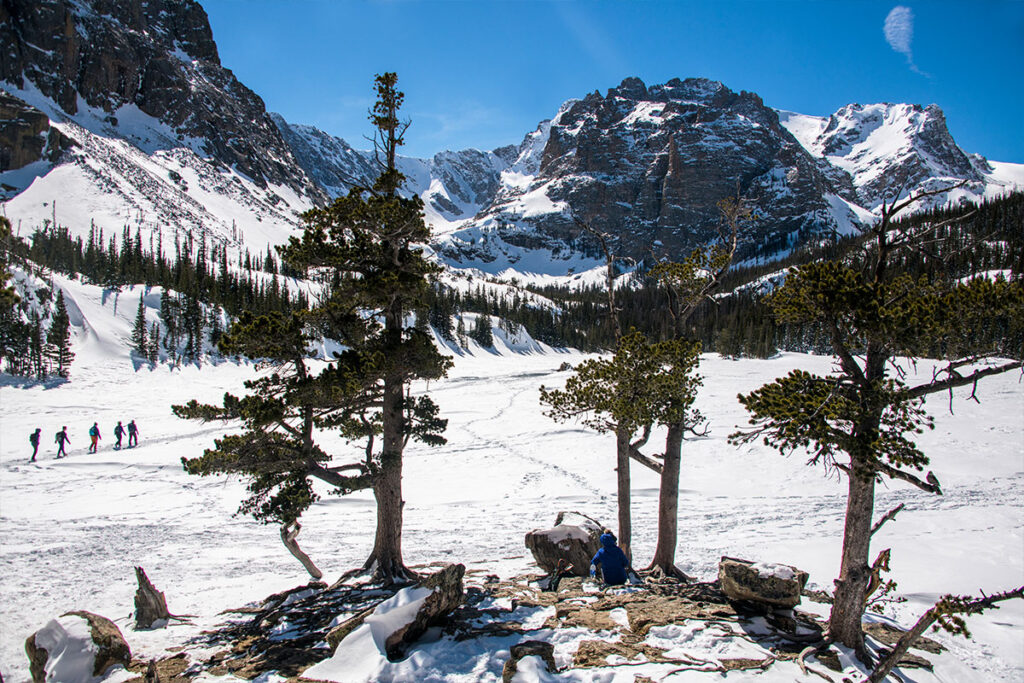
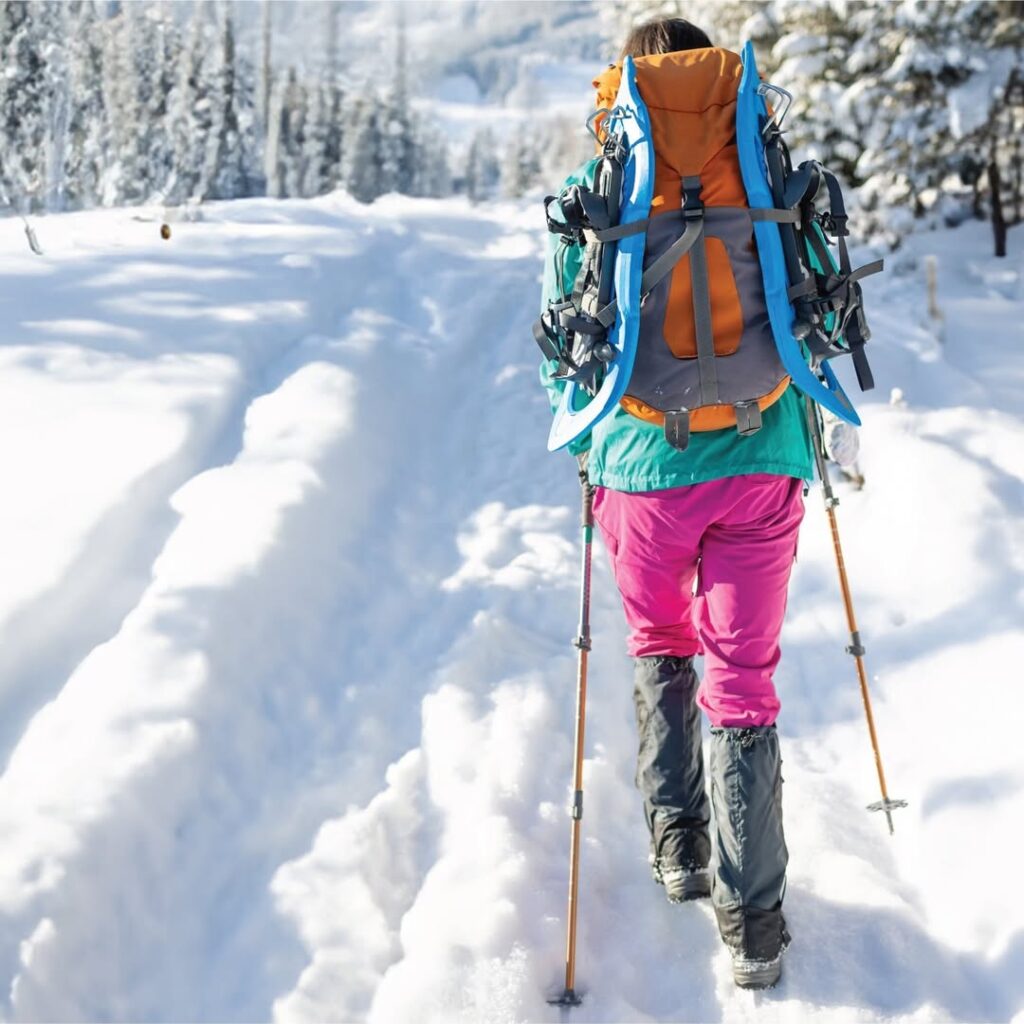
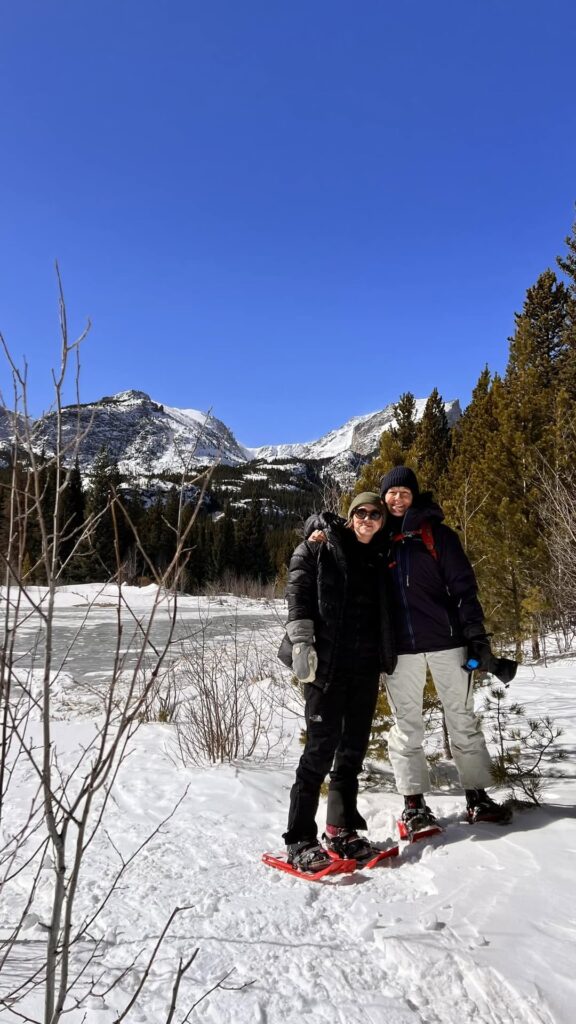
Rocky Mountain National Park in winter is far quieter than in summer, especially midweek. Some of our favorite areas are Bear Lake and Dream Lake. These trails can be congested in summer, but having visited in the off-season, we recommend them in winter. Whether you’re a first-timer or an experienced snowshoer, guided snowshoe tours in Rocky Mountain National Park can match the outing to your pace and interests.
Popular Snowshoe Trails in Rocky Mountain National Park
- Sprague Lake Loop: An easy ~0.8-mile loop with big mountain views, good for beginners and families.
- Bear Lake Loop: An accessible ~0.6-mile loop around Bear Lake with views of Hallett Peak and the Continental Divide.
- Nymph Lake: An easy to moderate ~1-mile round trip with a gentle climb from Bear Lake to a small lake surrounded by trees.
- Dream Lake: A moderate ~2-mile round trip past Nymph Lake to Dream Lake, beneath Hallett Peak and Flattop Mountain.
- Emerald Lake: A moderate ~3.2-mile round trip beyond Dream Lake into an alpine cirque. Steep slopes rise above this route, so check the avalanche forecast first.
- Lake Haiyaha: A quieter, moderate ~4-mile round trip branching off near Dream Lake, with a more rugged feel.
- Hidden Valley: An easy, flexible ~1- to 3-mile round trip across a former ski area. The open terrain works well for first-timers who stay off the steeper slopes.
- Glacier Gorge (Mills Lake and The Loch): Longer, moderate to strenuous ~5- to 6.2-mile round trips with steady elevation gain. These are better suited to experienced snowshoers or a guided trip.
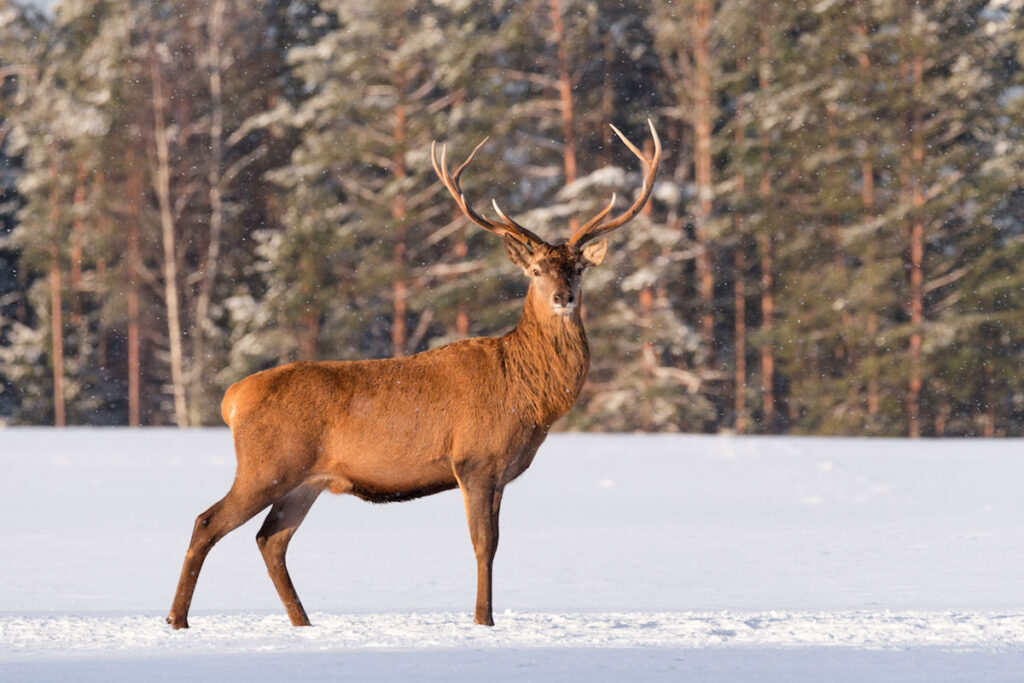
Along the way, you may see elk herds at lower elevations, coyotes crossing meadows, or bighorn sheep on wind-scoured ridges. Guides choose routes based on conditions and seasonal wildlife movement, and tours are private or small-group, which suits families, friends, and solo travelers.
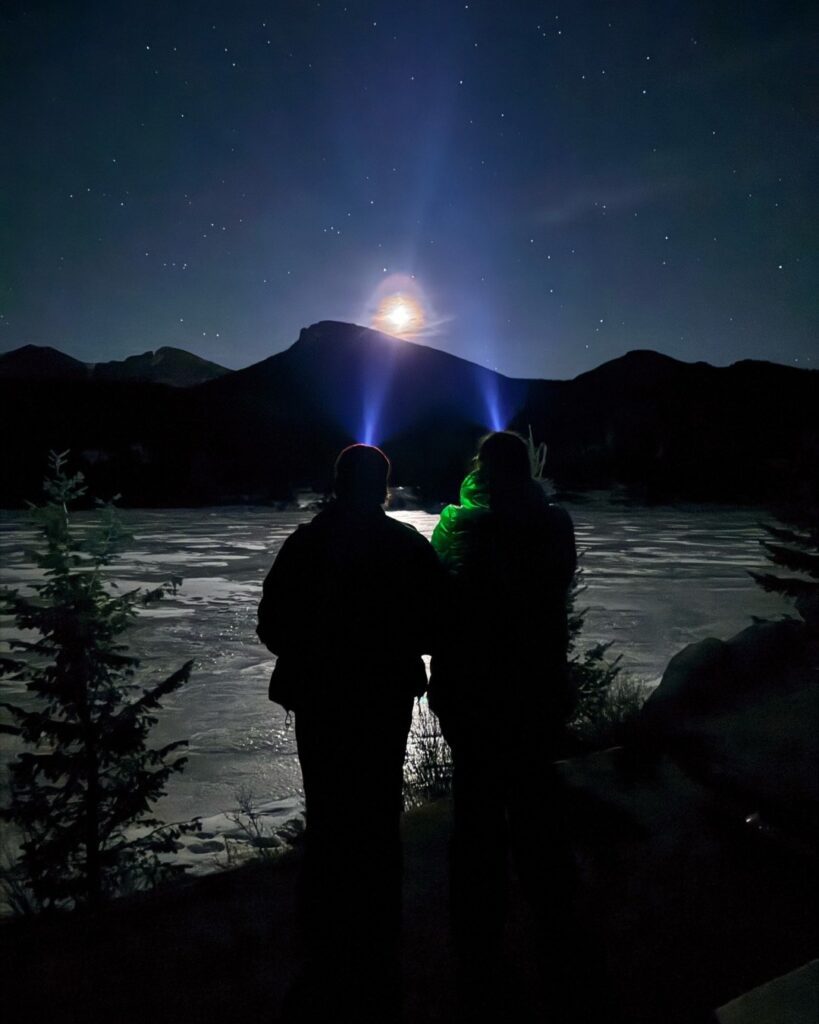
Pro Tip: Plan a private snowshoe tour during a full moon for a quieter moonlit outing.
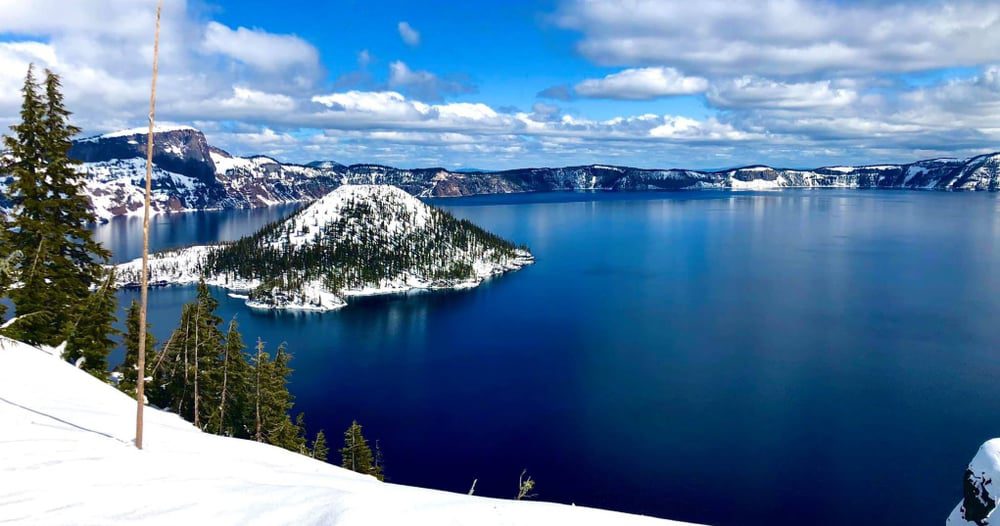
Crater Lake in Winter: Snowshoeing the Rim
- Best for: Deep snow, caldera views, and quiet forest
- When to go: Late November through April. The park averages more than 40 feet of snow a year.
- Gateway: Medford and Klamath Falls, OR
- Keep in mind: Clouds hide the lake about half the time in winter and early spring, so check the park webcam and forecast. There is no winter lodging in the park, and Rim Drive is closed to cars.
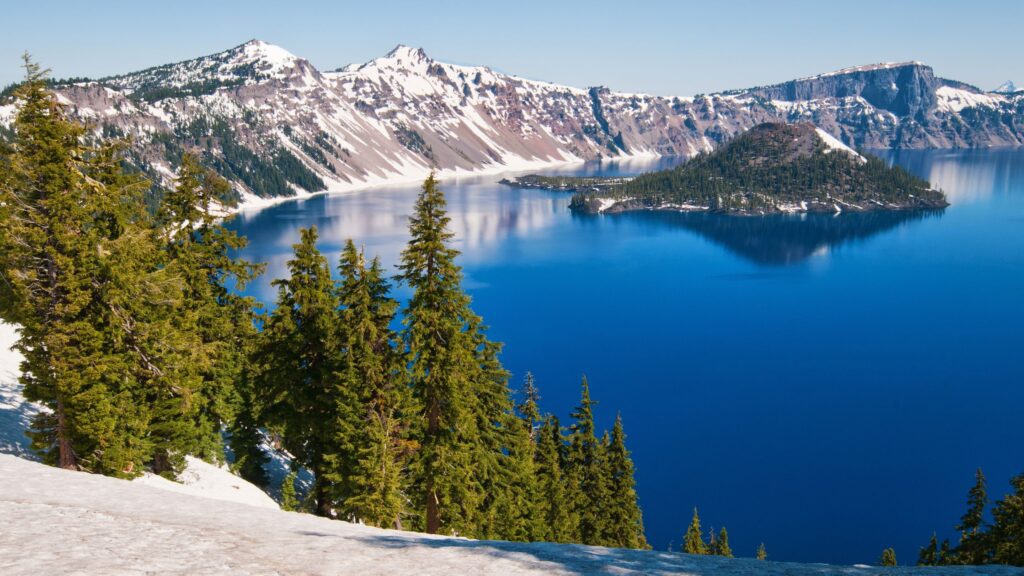
Crater Lake in winter is worth the extra planning. On a clear day, the deep blue water against the snow-covered caldera walls is unlike anywhere else in the country. Snowshoeing is a good way to explore the rim, with quiet forests and views beyond the usual summer overlooks.
Guided Crater Lake snowshoeing tours typically follow quiet routes along the rim, with views of Wizard Island and the lake’s volcanic basin when the weather clears. Local guides share geology and winter ecology and handle route-finding and navigation. Deep snow can make independent travel challenging, so a guided outing is a practical choice if you’re new to snow travel. The park also offers free ranger-led snowshoe walks on weekends and holidays, with snowshoes provided.
Pro Tip: After your snowshoe, stop for a hot chocolate at the Rim Village Cafe, next to Crater Lake Lodge. The lodge is closed in winter, but the cafe usually stays open with reduced hours.
Yosemite in Winter: Snowshoeing, Skiing, and Winter Hiking
- Best for: Granite cliffs, waterfalls, giant sequoias, and marked snowshoe routes
- When to go: Mid-December through March for snow at Badger Pass. Yosemite Valley is open year-round but may have little snow.
- Gateway: Mariposa and Oakhurst, CA
- Keep in mind: Tire chains are often required on park roads, and Mariposa Grove Road is closed to cars in winter.
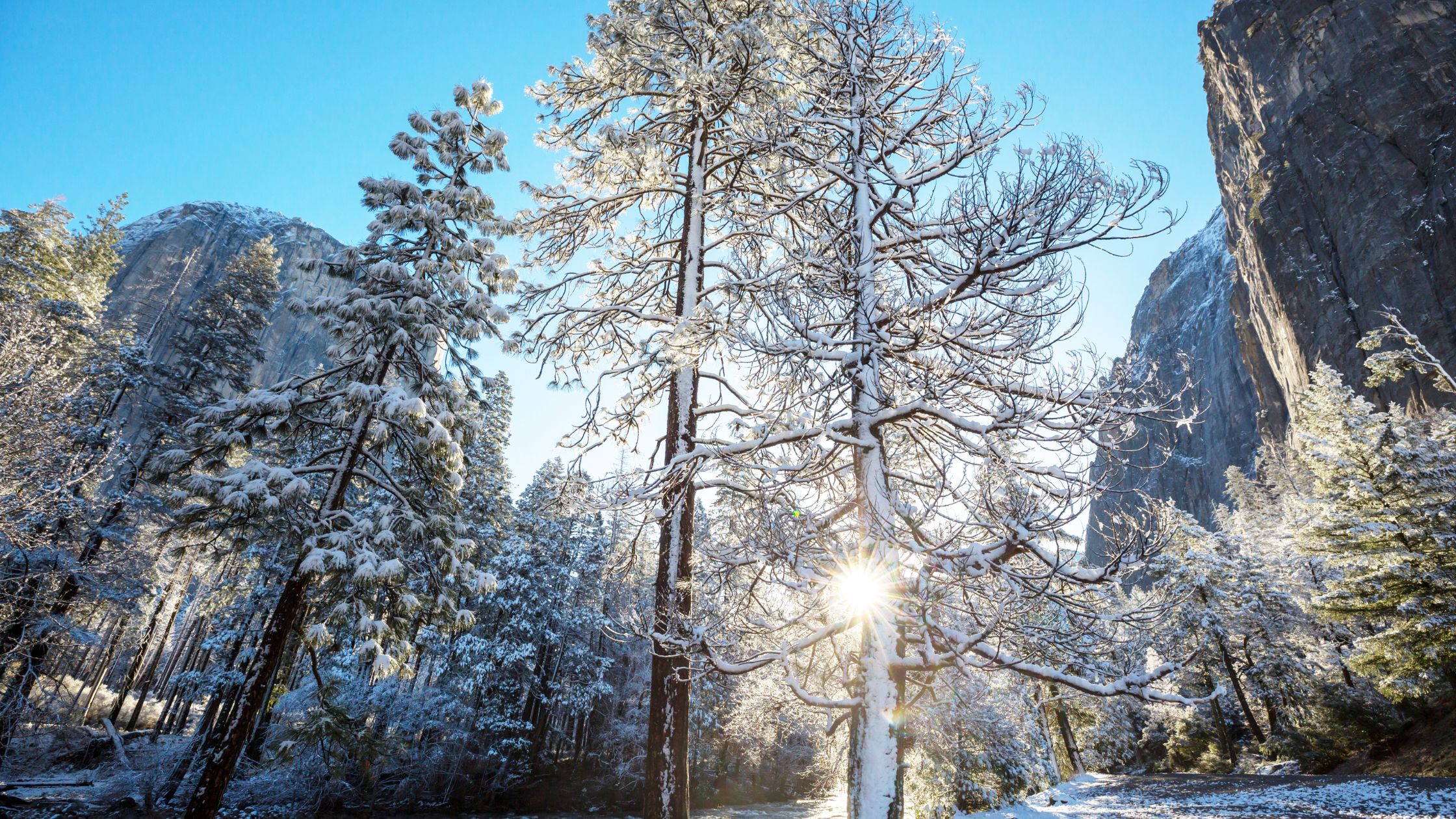
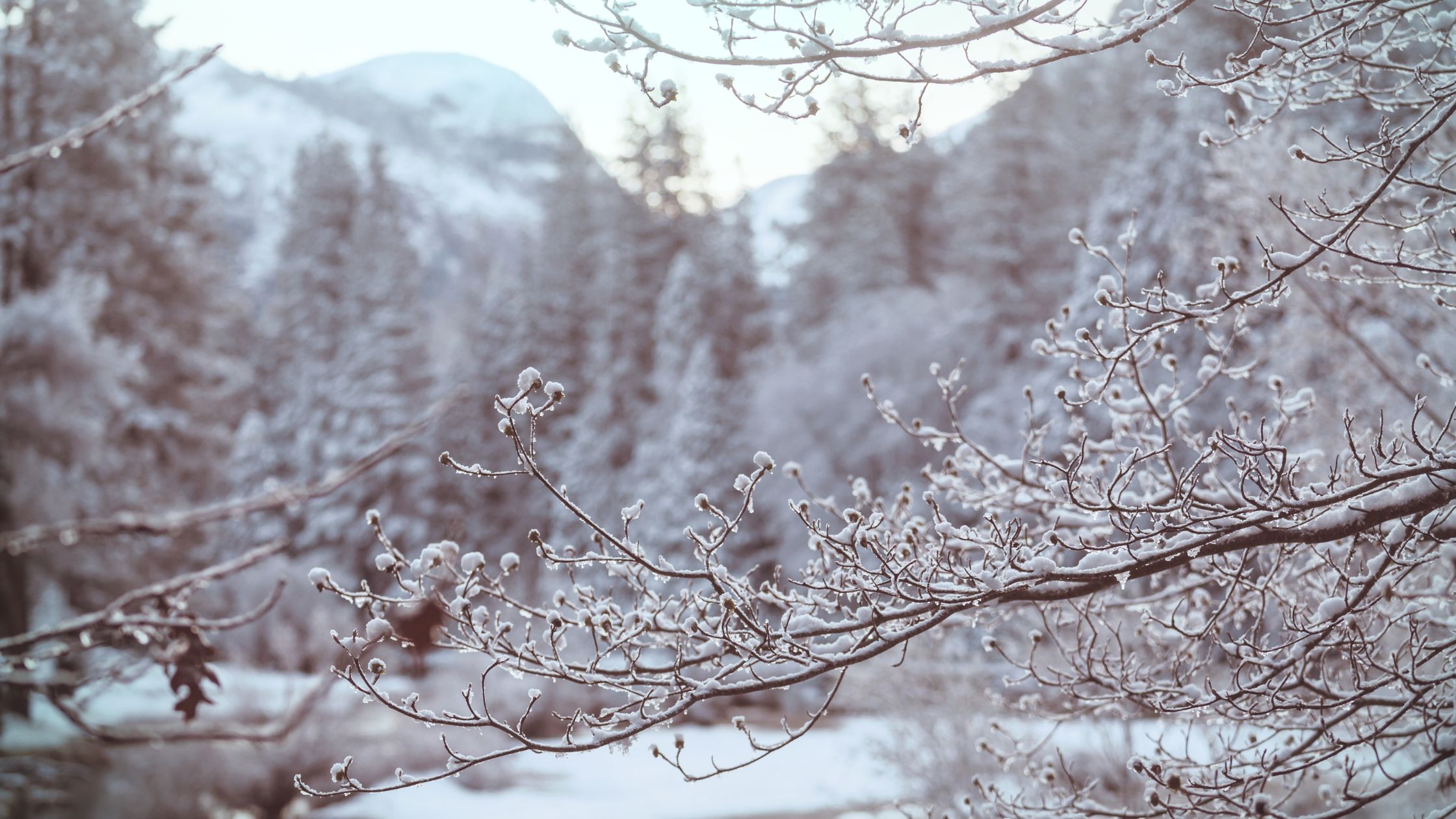
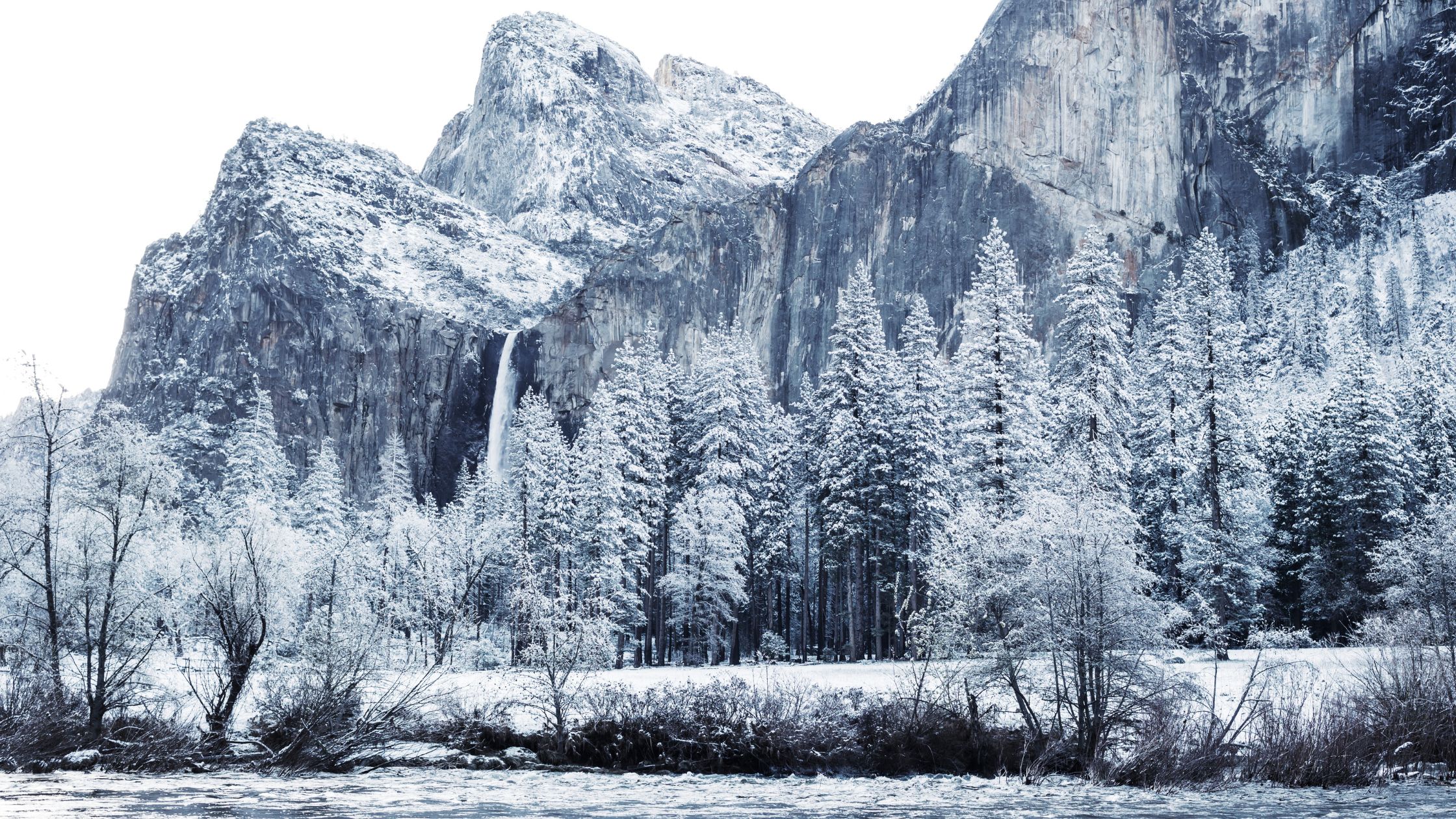
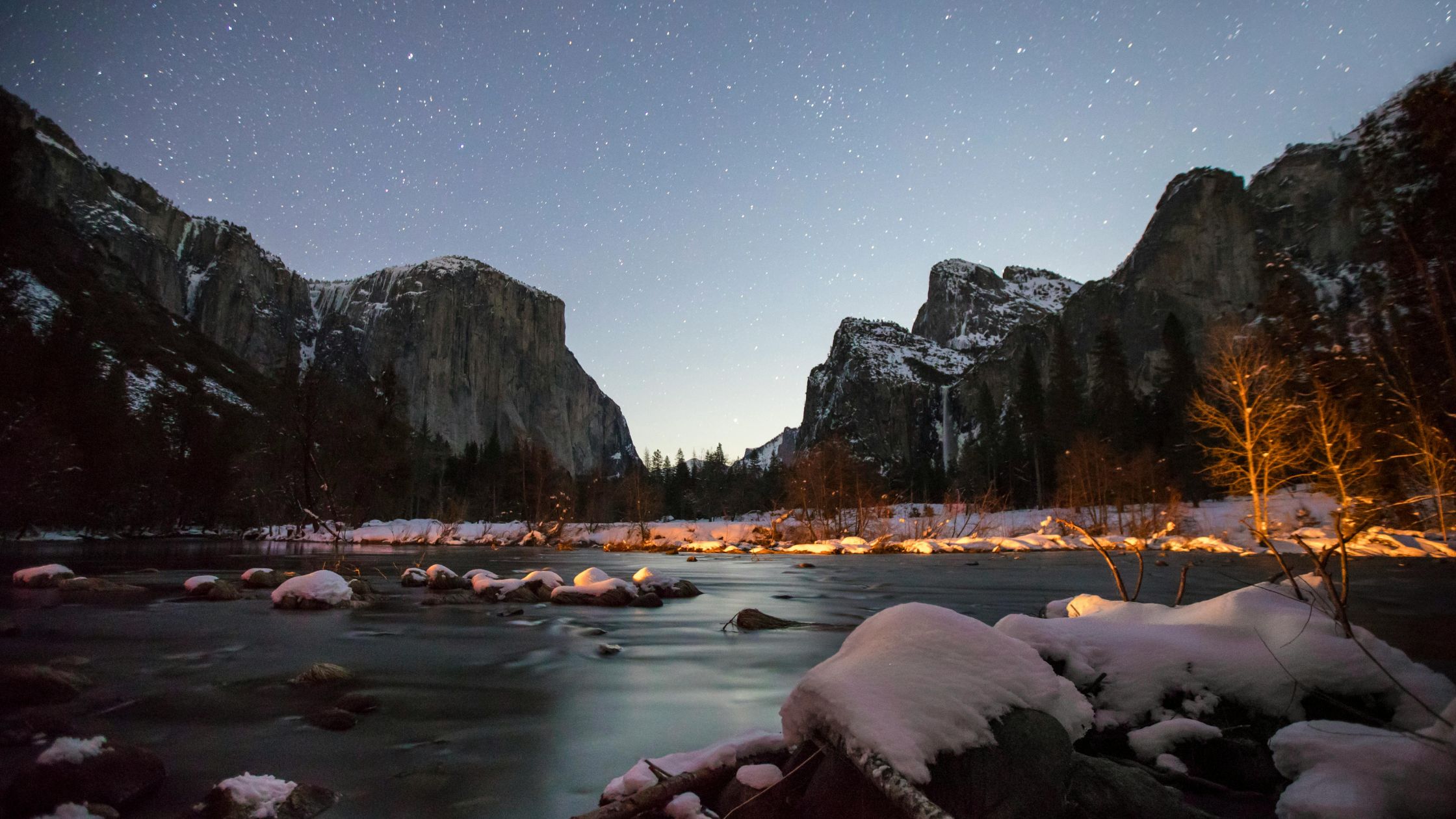
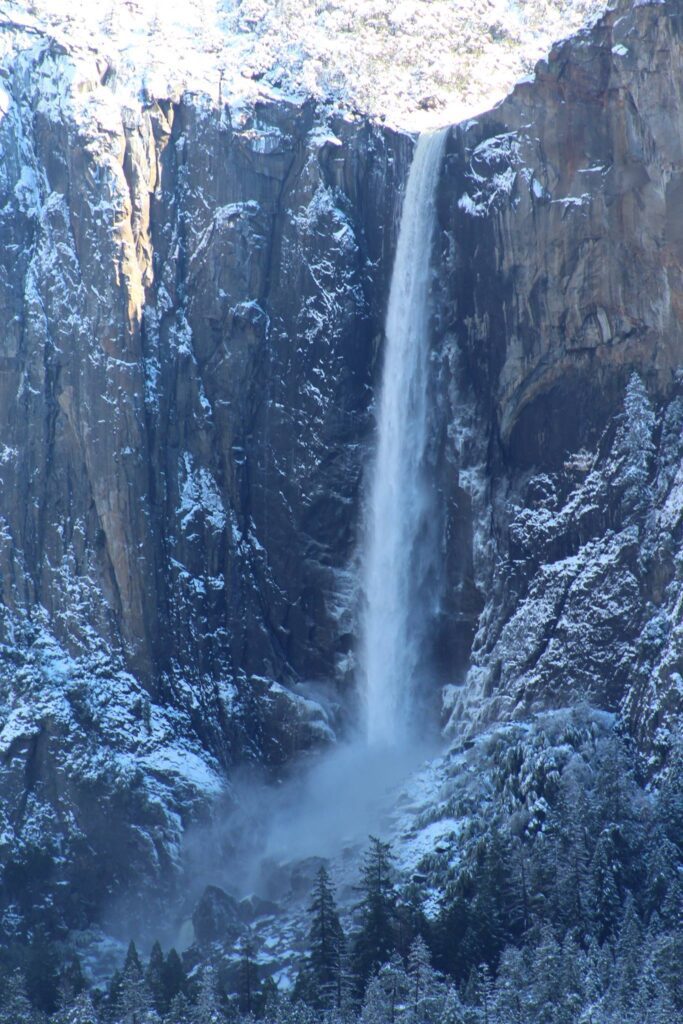
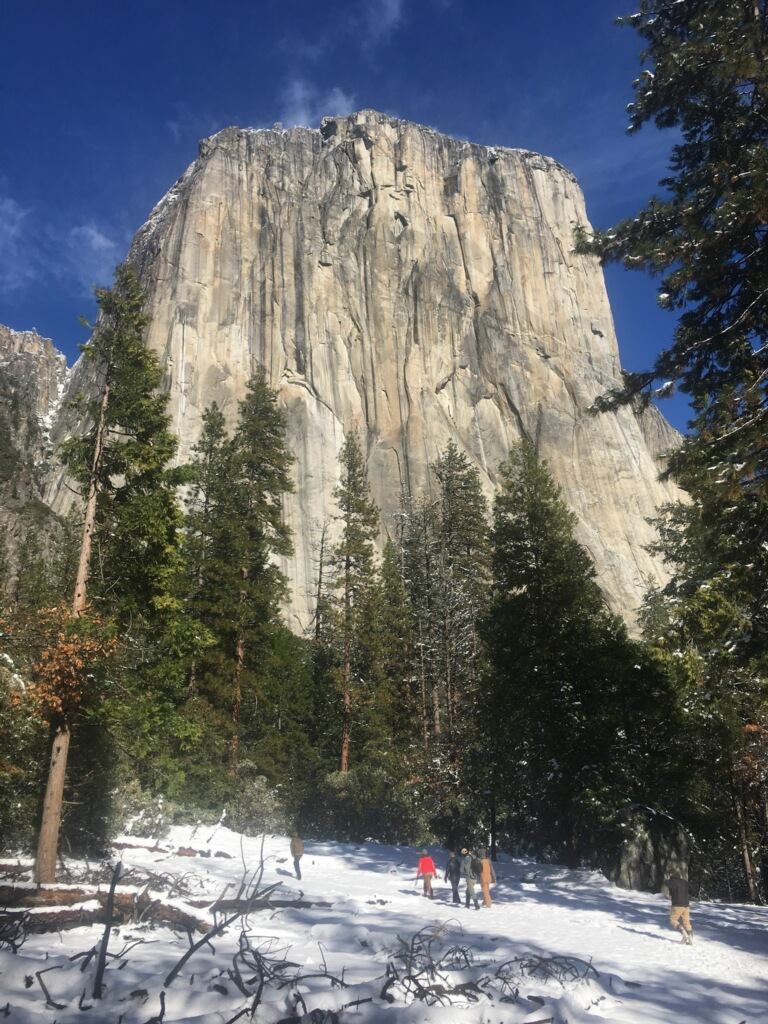
Yosemite in winter offers snow-dusted granite walls, a quiet Merced River, and far fewer people than summer. Guided snowshoeing tours in Yosemite National Park let you slow down and take in the scale of the landscape. For snowshoeing in Yosemite, most routes are up high around Badger Pass, Crane Flat, and the giant sequoia groves rather than on the Valley floor.
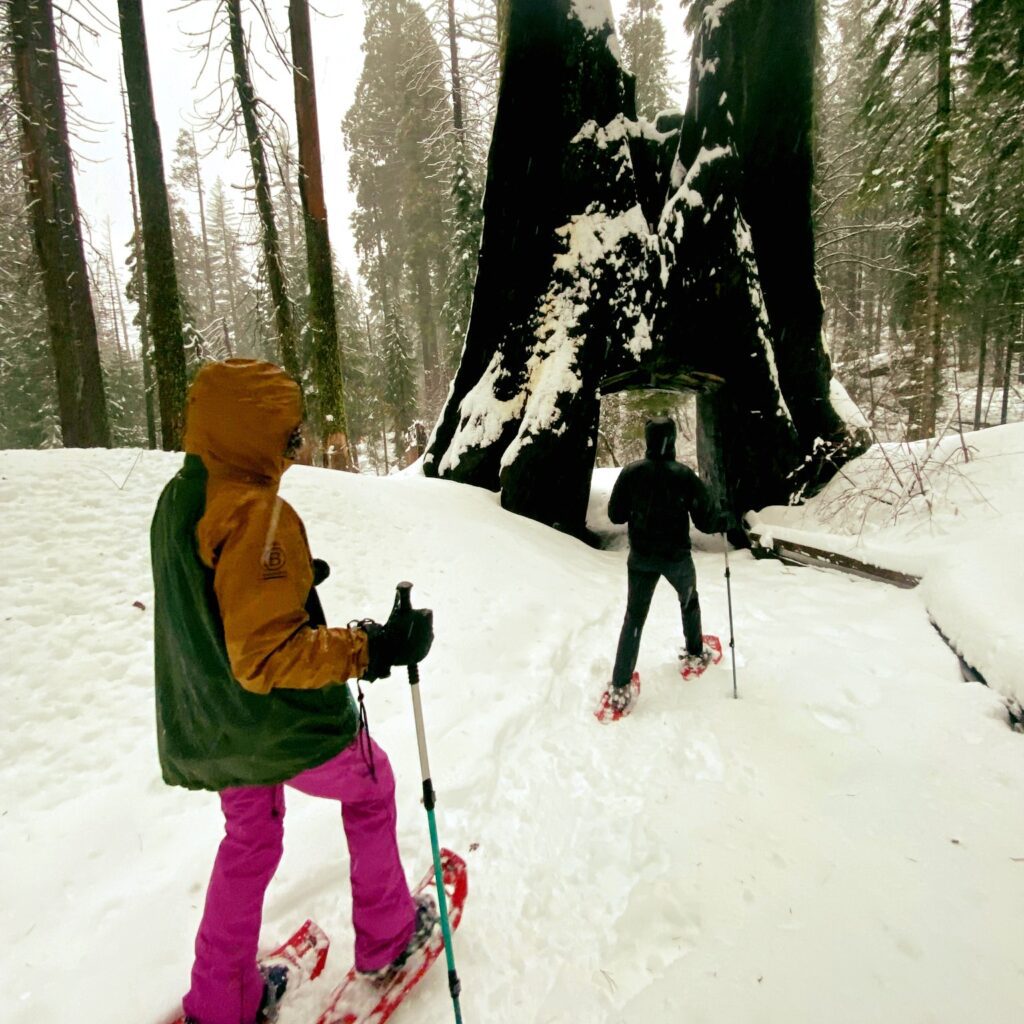
Snow varies from year to year. In low-snow winters, guides often switch to winter hiking routes, where the cold air and foggy forest have their own appeal. You might even walk through a tree tunnel.
Where to Snowshoe, Ski, and Hike in Yosemite
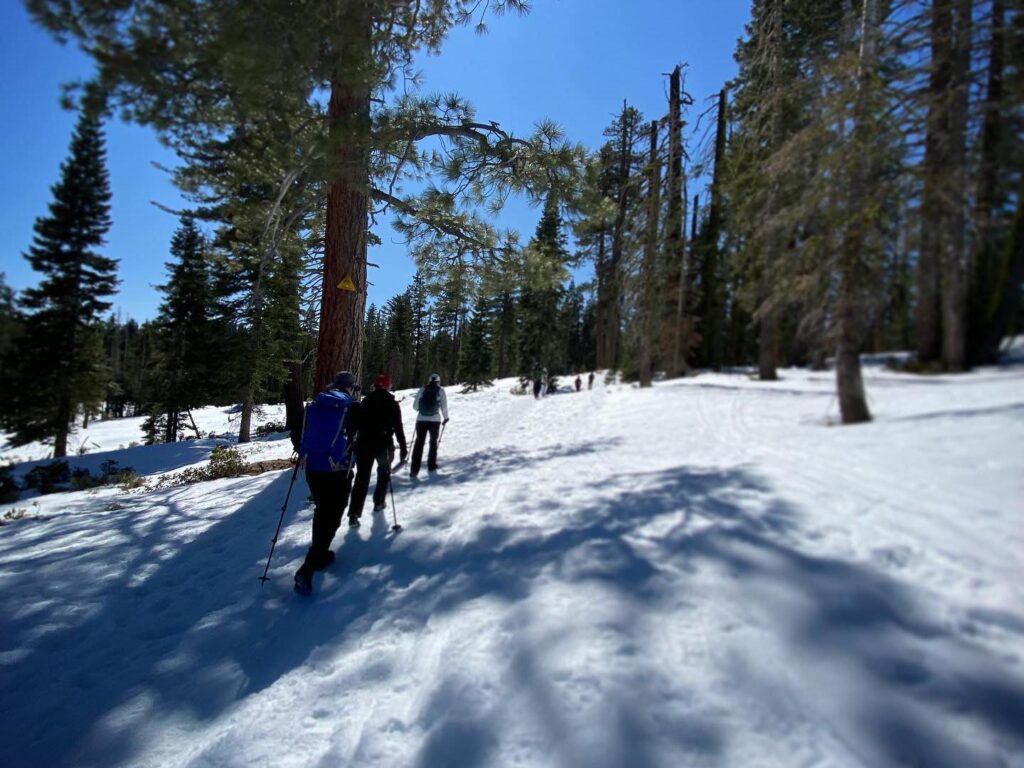
- Badger Pass: The center of Yosemite’s largest network of marked winter routes, at about 7,200 feet. Rangers may lead free snowshoe walks here from mid-December through March, depending on conditions and staffing.
- Mariposa Grove: In good snow years, you can ski or snowshoe the roughly 2-mile Washburn Trail from the Welcome Plaza up to the grove.
- Tuolumne and Merced Groves: Off the Big Oak Flat Road near Crane Flat, wide trails lead about a mile down to the giant sequoias. Check chain requirements before you go.
- Yosemite Falls: A popular winter route with snowy views of the falls, often framed by ice and mist.
- Bridalveil Fall: A short, accessible walk near the Valley entrance.
- Merced River: Flat riverside trails through Yosemite Valley make for relaxed winter hiking.
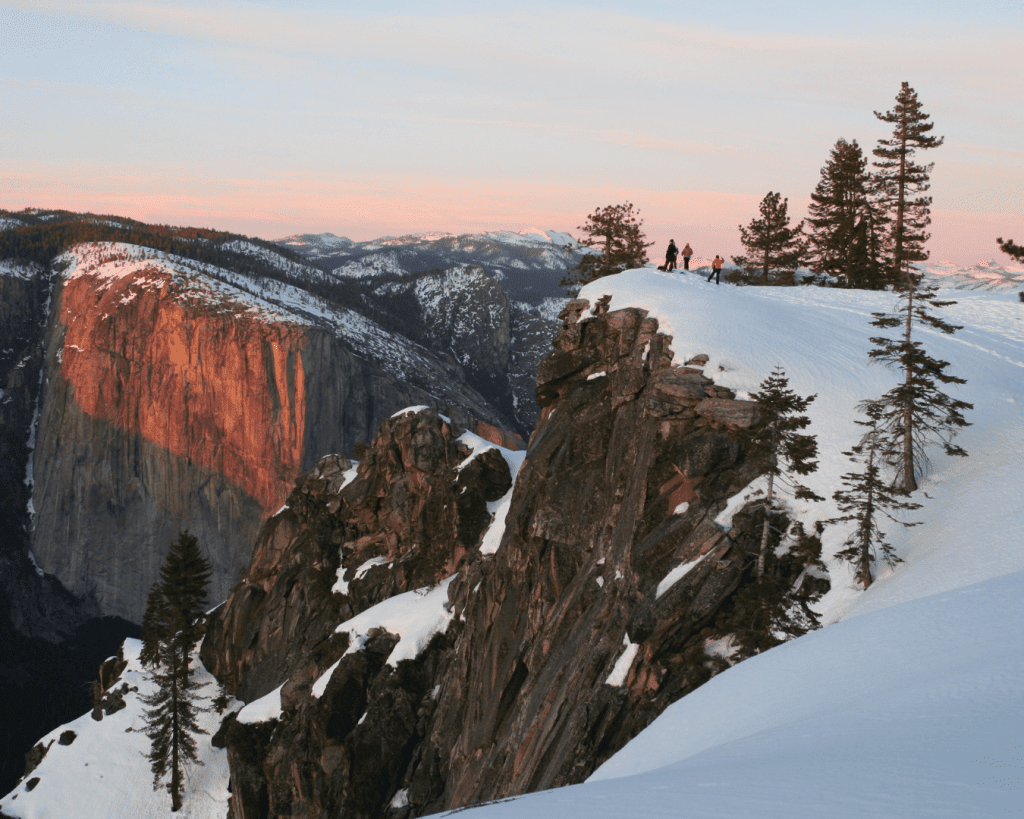
- Valley Viewpoints: El Capitan, Half Dome, and Royal Arches are all visible from the Valley floor, with snowy meadows in the foreground after a storm.
- The Cascades: A roadside waterfall along Big Oak Flat Road and an easy stop after snowfall.
- Tunnel View: Frequently accessible in winter, with views of El Capitan, Bridalveil Fall, and Half Dome.
Pro Tip: Opt for a privately-guided snowshoe tour or winter hike. From adaptive tours to longer, aerobic outings, your guide can match the pace and destinations to your group.
Leave No Trace in the National Parks in Winter
TripOutside is a member of Leave No Trace and The Conservation Alliance, and winter is a time when small choices matter. Animals are short on energy and tracks are easy to follow, so these habits go a long way. For more detail, see Leave No Trace’s backcountry snow sports guidance.
- Plan ahead: Check park alerts, the weather, and the avalanche forecast, and tell someone your route and return time.
- Stick to durable surfaces: Travel on established tracks or deep snow, and stay off plants as the snow melts.
- Give wildlife space: Stay at least 25 yards from most wildlife and 100 yards from bears and wolves. If an animal reacts to you, you’re too close.
- Respect closures: Winter wildlife closures protect animals during the hardest part of the year, even when an area looks open.
- Share the trail: Snowshoers and hikers should stay out of ski tracks, and everyone should yield to faster traffic with care.
- Pack it out: Carry out all trash and food scraps. Snow hides litter until it melts.
Frequently Asked Questions About National Parks in Winter
What are the best national parks to visit in winter?
For snowshoeing and skiing, some of the best national parks to visit in winter are Grand Teton, Yellowstone, Glacier, Rocky Mountain, Crater Lake, and Yosemite. The right choice depends on whether you want wildlife, groomed skiing, or an easy first snowshoe.
What are the best national parks to visit in December?
Crater Lake often has snow by December, and winter access in Yellowstone and Grand Teton typically begins in mid-December. Early-season snow can be thin, so check conditions before you book.
What are the best national parks to visit in February?
February is usually a good month for snow in Rocky Mountain, Glacier, Grand Teton, and Yellowstone. Weekends can be busier in Rocky Mountain National Park, so aim for a weekday if you can.
When does snow usually start in Grand Teton and Glacier?
Snow often reaches the high country by November. Grand Teton’s road grooming typically begins in mid-December, and Glacier is usually well covered by January, though this varies from year to year.
Can you visit Yellowstone in winter?
Yes. You can drive the road from Gardiner to Cooke City year-round, weather permitting, which includes Mammoth Hot Springs and Lamar Valley. Old Faithful and other interior areas require a snowcoach or snowmobile during the oversnow season.
Why visit a national park in winter instead of summer?
You’ll usually find fewer people, quieter trails, and a very different landscape. The tradeoff is fewer open roads and services, so winter trips take more planning.
Do I need a guide to visit national parks in winter?
Not always. Many parks have easy routes and ranger-led walks. A guide is a good idea if you’re new to snow travel, want gear included, or plan to go somewhere that requires route-finding or avalanche awareness.
Ready to Plan Your Winter National Park Trip?
From snowshoeing beneath the Tetons and looking for wildlife in Yellowstone to skiing in Glacier and walking among Yosemite’s giant sequoias, the best national parks in winter show a different side of these places. Guided winter trips are a good fit if you:
- Want quieter trails
- Prefer guided support for snow travel
- Are new to snowshoeing or winter navigation
- Love photography, wildlife tracking, or slow travel
New to snowshoeing or wondering what to pack? Explore our guides below.
For winter travel tips and road closures, check each park’s official winter guide:
- Grand Teton National Park Winter Resources
- Yellowstone National Park Winter Resources
- Glacier National Park Winter Resources
- Rocky Mountain National Park Winter Resources
- Crater Lake National Park Winter Resources
- Yosemite National Park Winter Resources
On TripOutside, you can find guided tours and expert-led adventures in these parks with vetted local outfitters who are permitted, insured, and experienced in winter guiding. They handle the logistics so you can enjoy the day.