
We spent 2 months exploring the Baja Peninsula in our RV recently, and once we heard about the phenomenal marine life and remarkable conservation stories of the Gulf of California, snorkeling jumped to the top of our adventure list. The Gulf of California was nicknamed the “world’s aquarium” by explorer Jacques Cousteau for its unique marine environment and astounding amount of marine life. We asked around for the best spots to snorkel – we love getting the local perspective. Cabo Pulmo was mentioned again and again as one of the best places for snorkeling. We knew we had to check it out.
Cabo Pulmo is a tiny town just 60 miles north of Los Cabos and is known for the best snorkeling on the Baja Peninsula. This jewel of Baja has one of just three coral reefs in North America, and the reef is 5,000 years old. It is believed to be the only living coral reef in the Gulf of California. Divers from around the world visit Cabo Pulmo to see its extraordinary marine life – from whale sharks and humpbacks to manta rays and sea turtles. The town and its local population is committed to the conservation of the reef, making it an excellent choice for eco-conscious travelers seeking outdoor adventures that are eco-friendly.


Cabo Pulmo Snorkeling at a Glance
- Where: Cabo Pulmo National Marine Park on Baja’s East Cape, about 1.5 hours from the San José del Cabo airport
- Why go: the only living coral reef in the Gulf of California, sea turtles, sea lions, huge schools of fish, and whales in winter
- Guided tours: Cabo Pulmo Watersports and Cabo Pulmo Travel – gear and guide included
- Staying in Cabo with no car? Book a snorkeling tour with round-trip transport from Los Cabos
- Snorkel from shore (unguided): Playa Los Arbolitos and Playa Los Frailes
A Conservation Success Story
Cabo Pulmo has one of the world’s best conservation success stories. In the early 1990s, it was a fishing village, and advances in fishing technology were emptying the formerly rich reef of all of its fish. It was at this point that local fishermen made the decision to stop fishing, protect the reef, and make the switch from a commercial fishing economy to a tourism-based economy. They requested the Mexican government to designate the area a National Marine Park, which was completed in 1995. This was an extremely difficult and complex process, as Cabo Pulmo is located in a tiny desert enclave without major resources, little water and isolated from the rest of the state, and fishing was the village’s only important source of economic production. After making the commitment to protect the reef, all bets were on tourism, a fairly unknown activity for the East Cape area at the time.
This important designation protected the area from human exploitation and the coral reef transformed into a biodiversity hotspot. Fish biomass on the reef increased by more than 460% in about ten years, bringing the reef to a level similar to that of pristine reefs that have never been fished. Cabo Pulmo is now a marine reserve model for the rest of the world. The variety of sea life you can encounter snorkeling in the Gulf of California is unmatched across Mexico. Ten years after its designation, Cabo Pulmo was recognized as a World Heritage Site by UNESCO.
When you take a snorkeling tour or scuba diving trip in Cabo Pulmo you are participating in a regenerative adventure that helps conserve this stunning marine ecosystem and support the local community. The bravery and foresight of the locals in creating this marine reserve, plus the unbelievable sea life that resulted from it is what has put Cabo Pulmo on the map for snorkeling. We were stoked to check this place out!
Our Cabo Pulmo Snorkeling Tours
Reef Fish, Whales and Sea Turtles with Cabo Pulmo Watersports
We booked our first snorkeling tour with Cabo Pulmo Watersports, who came highly recommended. They provided wetsuits, snorkel gear, and our knowledgeable guide Andy and captain Pika – all included in the 1500 MXN (about $75 per person price at the time of writing, may fluctuate with the exchange rate). The 2.5-hour trip included 3-4 different stops inside the National Marine Park. It’s a great tour that can be tailored easily for beginner snorkeling or more experienced snorkelers.
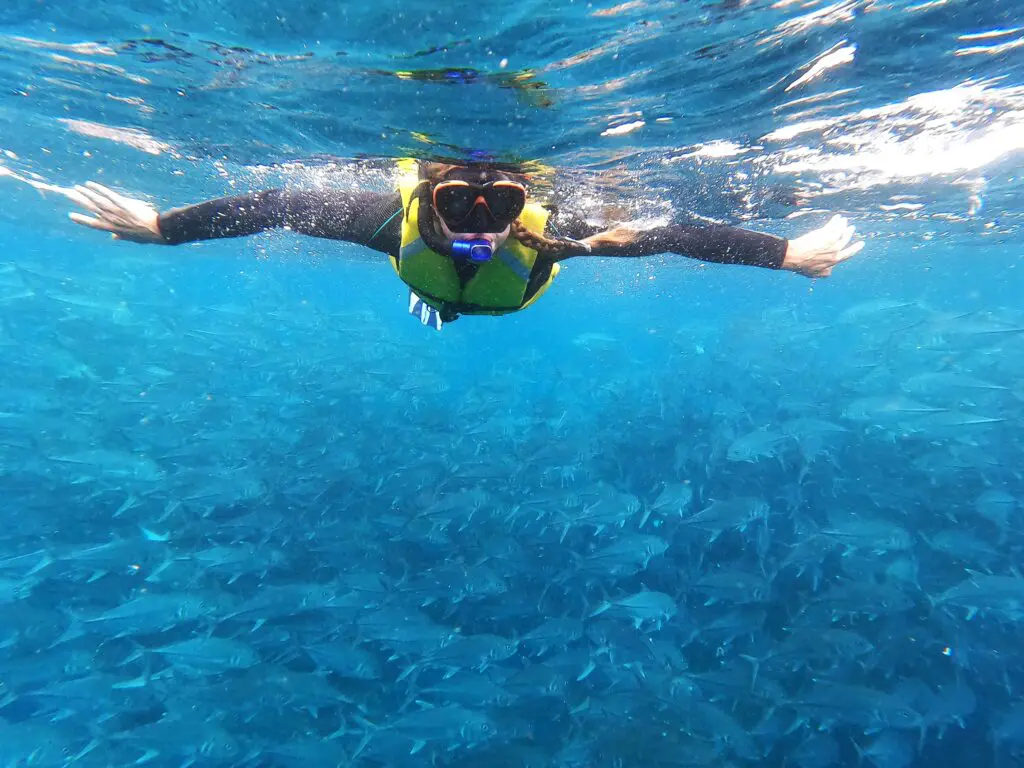
Andy started the day by asking our small group (just 3 of us!) what kind of marine life we wanted to see to determine what spots to visit. We all agreed on sea turtles, sea lions, and reef life. Our first stop was an offshore reef where we saw an unbelievable number of different types of fish – so many that I lost count as Andy pointed to them and named them off. There were parrotfish, pufferfish, surgeonfish, angelfish, Moorish idol, convict surgeonfish, yellowtail surgeonfish, trumpet fish and so many more. They lit up the ocean as they swam by in flashes of yellow, turquoise, bright blue, and iridescent.
We cut the engine mid-bay when we spotted a mom and baby humpback whale breaching and showing off with tail flaps and waterspouts. For 20 minutes we watched from the boat as she taught her baby her astonishing skills. Whales make a round trip of up to 12,000 miles between their summer feeding grounds in Alaska and the warm waters of Baja, where they spend the winter mating and raising calves. The babies learn to swim in the buoyant saltwater lagoons of the Baja Peninsula.


Near Playa Los Frailes, a grey whale surfaced in the distance and spouted. We were delighted when it swam alongside us and dove underneath the boat. After our whale encounters, we headed to a pile of rocks that hosted a sea lion colony. We got lucky when a curious sea lion circled us gracefully as we snorkeled along the rocks.
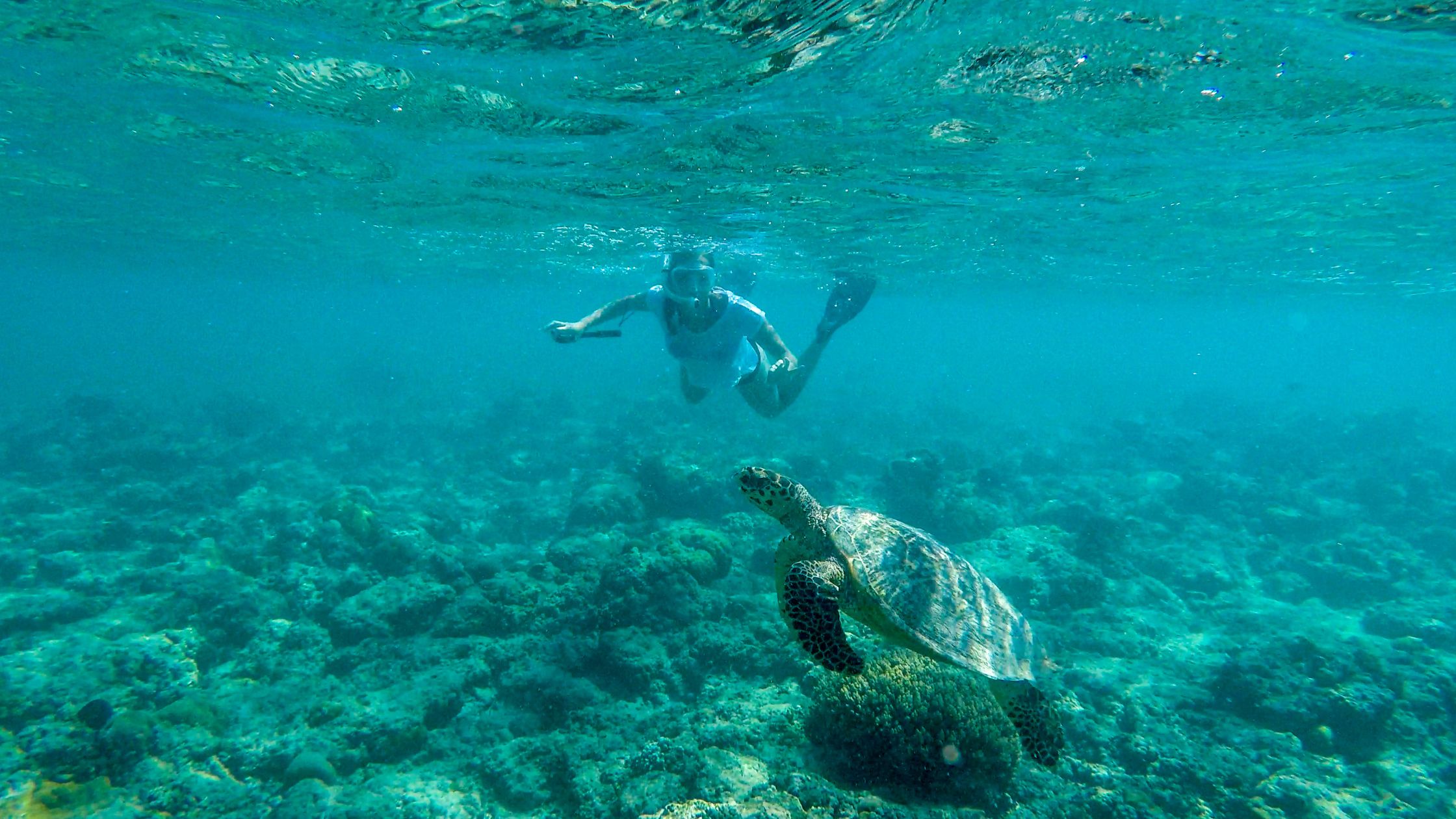
Our final snorkeling stop was another colorful reef where we spotted a sea turtle nibbling leisurely on the bright coral. The reef was alive with fish – bright yellow, blue and orange, iridescent, turquoise, and even a rock fish that blended into the rock so well that we would never have noticed it if Andy hadn’t pointed it out to us. She casually mentioned that it’s very poisonous if you touch it (noted!). As we swam back to the boat, we stopped to admire two more sea turtles gliding along the reef.
Snorkeling in Cabo Pulmo was truly an unforgettable marine adventure. Cabo Pulmo Watersports also offers scuba diving trips and certifications. It whet our appetite — a scuba certification is now firmly on the list for next time. You can’t beat learning to dive in the Aquarium of the World!


Sea Lions and Sea Turtles with Cabo Pulmo Travel
After our first snorkeling trip, we were itching to go again, so we headed out with Cabo Pulmo Travel, another one of our trusted local outfitter partners in the area. It’s a similar adventure – a small boat, a local guide, and snorkel gear, the National Park entrance fee and snacks all included – and we snorkeled three different spots in the park.
This time, we snorkeled at Las Navidades and Los Morros, two reef spots packed with colorful fish, and spotted sea turtles cruising along the reef. The highlight was the sea lion colony near Los Frailes. The sea lions were so playful – swimming circles around us, coming in for a close look and then zipping off again. The best way to enjoy them is to stay calm, keep your distance and let them come to you.
We drove ourselves to Cabo Pulmo, but if you’re staying in Cabo San Lucas or San José del Cabo and don’t want to rent a car, Cabo Pulmo Travel offers a snorkeling tour with round-trip transportation from anywhere in Los Cabos. Cabo Pulmo is about 1.5 hours from the San José del Cabo airport and 2 hours from Cabo San Lucas, and they’ll reach out after you book to set up your pickup time and location. The snorkeling tour is 3 hours and runs about 1,500 MXN per person, or 3,500 MXN per person with transport from Cabo (prices are in pesos and may fluctuate).
Want to go deeper? Cabo Pulmo Travel also offers Discover Scuba for first-timers (no certification needed) and 2-tank dives for certified divers. Both are also available with transport from Cabo: Discover Scuba with transport and 2-tank dive with transport.
Cabo Pulmo Snorkeling from Shore
In addition to guided boat tours, you can snorkel right from the shore on your own at several spots in Cabo Pulmo National Marine Park. Shore snorkeling is free (aside from the park entrance fee) and lets you go at your own pace — great if you want a mellow hour in the water without a schedule. The trade-off is that you cover less ground, won’t have a guide to point out marine life, and the boat tours can reach offshore reefs and spots like the sea lion colony that are simply too far to swim to. If it’s your first time in Cabo Pulmo, we’d recommend a guided tour first and shore snorkeling as a bonus on a second day. The two spots below are the most accessible for DIY snorkeling.
Playa Los Arbolitos
If you drive south of town on the unpaved East Cape Road about 6 kilometers (check road conditions if there has been a recent hurricane or other weather event), you will reach a beach called Los Arbolitos. It is a beautiful beach that can be accessed for a small daily use fee (around $5 USD per person). It allows overnight camping for a slightly higher fee – vehicles/vans/RVs park in the arroyo and tents are allowed on the beach.
This gorgeous white sand beach is a great place to spend the day, and the snorkeling here is fantastic. Some of the guided snorkeling boat tours even stop nearby for snorkeling. It’s a great place to see sea turtles, sting rays and tons of varieties of fish. There are rocky outcroppings along the right hand side of the beach that make for wonderful snorkeling. If you don’t have snorkeling gear, they rent it right at the beach. You will also need to wear a PFD – it’s required to swim/snorkel in the Park. These are also available for rent at the small shop on the beach. The bay is also great for SUP and kayaking on non-windy days. There’s also a restaurant to grab some munchies when you’re done snorkeling!
Playa Los Frailes
Continue on down the East Cape Road another 5 or 6 kilometers and you will reach Los Frailes. This is a long sandy beach at the edge of the park with some fisherman’s huts set up seasonally (winter). The beach offers great paddleboarding, kayaking and whale watching (winter months) on non-windy days, and if you head to the far north end (left hand side) of the beach near the rocks there is great snorkeling. We saw trumpetfish, surgeonfish, rainbow wrasse, angelfish, moorish idol, parrotfish and so many more! While it’s a bit further down the road, it’s also free to access. Note: you will need to bring your own snorkeling gear, as there are no rentals available here!
Cabo Pulmo Snorkeling Guide
Explore “The World’s Aquarium”
About Cabo Pulmo
Cabo Pulmo is home to one of just three coral reefs in North America. This 5,000-year-old reef is believed to be the only living coral reef in the Gulf of California, nicknamed “the world’s aquarium” by Jacques Cousteau.
Marine Life Highlights
A Conservation Success Story
Fishing village with depleting marine resources
Designated as a National Marine Park by the Mexican government
Fish population increased by 460%
A marine reserve model for the world and UNESCO World Heritage Site
Eco-Tourism Impact
When you take a snorkeling tour in Cabo Pulmo, you’re participating in regenerative tourism that helps conserve this marine ecosystem and support the local community that bravely chose conservation over fishing.
Top Snorkeling Spots
Guided Tour Options
A guided tour ($75 per person) offers 3-4 different stops inside the National Marine Park. Look for tours that include:
- Offshore reefs with colorful fish
- Sea lion colonies
- Whale watching (winter months)
- Sea turtle viewing areas
Shore Snorkeling Locations
Playa Arbolito
6 km south of town on the unpaved East Cape Road. Small fee ($5 USD) for access.
Playa Los Frailes
11-12 km south of town on the East Cape Road. Free access.
Snorkeling Dos and Don’ts
✓ Do’s
- Observe marine life from a distance
- Bring a reusable water bottle
- Follow Leave No Trace principles
- Choose eco-conscious tour operators
- Wear required PFDs when snorkeling in the Park
✕ Don’ts
- Never feed wildlife or marine life
- Never touch any wildlife or marine life
- Never touch coral reefs
- Never chase sea animals
- Never get too close to nesting sea turtles
Plan Your Trip
Getting There
Cabo Pulmo is located 1.5 hours drive from San Jose del Cabo airport.
- Most of the drive is on good, paved roads with only the last few miles on dirt
- Rent a car from the airport (recommended)
- Shuttle services are available to Cabo Pulmo or Los Barriles
Cost Expectations
Los Frailes: Free
Recommended Tour Providers
TripOutside – Cabo Pulmo Snorkeling Tours
TripOutside features the highest rated local outfitters and guides for snorkeling adventures in Cabo Pulmo. They offer tours with knowledgeable guides, equipment included, and tailored experiences.
Browse Cabo Pulmo Snorkeling ToursGetting to Cabo Pulmo
Cabo Pulmo is a tiny town just 1.5 hours drive from San Jose del Cabo airport. Most of the drive is on a good, paved road. The last few miles are dirt, but it's pretty well maintained and graded frequently. There may be some washboard sections, so just take it slow! Typically, a 4-wheel drive vehicle is not needed for the drive, but check with the outfitter before you come if there was a recent hurricane or weather event - conditions can change.
The best option for getting to Cabo Pulmo is to rent a car from the airport to drive there. There are also shuttle services to Cabo Pulmo and Los Barriles (where you can hire a taxi to Cabo Pulmo) from the San Jose del Cabo airport. If you'd rather not drive at all, Cabo Pulmo Travel offers snorkeling tours and dive trips that include round-trip transportation from anywhere in Los Cabos.

The town is small but has a handful of hotels, bungalows, and casitas as well as a few restaurants, dive shops, and snorkeling tour providers. It also has stunning beaches where sea turtles come to nest. We were lucky enough to see a sea turtle nesting on a beach nearby, but a large group of tourists gathered, talking very loudly and getting much too close to her to take pictures. If you see a turtle, be very respectful and keep your distance. Some of these turtles are very endangered – like the Olive Ridley turtle – and these beaches are important nesting grounds for them.
Snorkeling Safety
We’ve rounded up some top safety tips for new snorkelers from ocean safety experts and tour guides to help you stay safe while you explore underwater:
- Take it slow and steady. Keep your heart rate down, breathe slowly, and don’t push too hard. Snorkeling isn’t a race - it’s about cruising and soaking in the sea life.
- Check conditions and choose guarded beaches. Always check the ocean forecast and stick to beaches with lifeguards. If something goes sideways, your chances of getting help are way higher.
- Never snorkel solo. Always go with a buddy. If you’re new to snorkeling, booking a guided tour is a smart move - they’ll show you the ropes and keep an eye out.
- Give your body a break after flying. Rest for a day or two before snorkeling. Air travel can leave you dehydrated and wiped out, especially in a new climate. Let your body adjust before jumping in.
- Test your gear before hitting the ocean. Try it on land or in a pool to make sure everything fits and works. Practice breathing through your snorkel, clearing it, and dealing with a foggy or leaky mask. Your fins should feel comfy and let you scissor kick smoothly - frog kicks and dog paddling won’t get you far.
- Don’t walk around in your fins. Wait until you’re in the water past the shore break to put them on. Same goes for getting out - take them off before walking back to shore or climbing onto a boat.
Snorkeling Dos and Don'ts
- Do observe marine life from a distance, without getting too close
- Do bring a reusable water bottle - there's too much plastic in our oceans already!
- Do follow Leave No Trace principles
- Do look for tour operators that promote Leave No Trace by not providing plastic water bottles, respecting wildlife, and not allowing participants to touch, feed or chase
- Don't ever feed any wildlife or marine life - human food is not good for them, plus they may become dependent on humans and not find food themselves
- Don't ever touch any wildlife or marine life - they are very sensitive and a human touch is not only terrifying but could make them sick or even kill them
- Don't touch coral - it's very sensitive and it can cause irreparable harm
- Don't ever chase a wild animal or sea life, if they swim away please let them be
Cabo Pulmo Snorkeling FAQs
Yes! Guided tours include gear and a guide, and they can pick spots that match your comfort level. On calm days, the rocky edges of Playa Los Arbolitos are an easy place to snorkel from shore. Life jackets (PFDs) are required for swimming and snorkeling in the park, and you can rent them on the beach at Los Arbolitos.
Our tour with Cabo Pulmo Watersports was 1,500 MXN per person. The Cabo Pulmo Travel snorkeling tour is about 1,500 MXN per person, or 3,500 MXN with round-trip transport from Los Cabos. If you have 3+ people, you can get a small discount, or you can book a private boat all to yourselves.
Yes. Cabo Pulmo Travel offers a snorkeling tour with round-trip transport from Los Cabos. It's about 2 hours each way from Cabo San Lucas and 1.5 hours from San José del Cabo.
Yes. There's a sea lion colony on the rocks near Los Frailes, and both of our tours stopped there. Let the sea lions come to you – never chase, feed or touch them.
You can snorkel Cabo Pulmo year-round. We went in winter, when you have a chance to see whales, but the water is cooler so a wetsuit is generally recommended. The water starts warming up in April/May, and a wetsuit is optional. Late summer and fall bring the warmest water, but it's also hurricane season, so keep an eye on the forecast and road conditions.